
Checklist: explain New York’s high school spending versus outcomes; highlight 2025-26 testing data and declines; compare charter success and district performance; note union opposition to charters and political accountability questions.
New York spends more per public school student than any other state and still struggles to teach kids to read at grade level. The 2025-26 preliminary test results show widespread underperformance in English language arts across grades three through eight. This mismatch between dollars and results is now impossible to ignore, and it raises sharp questions about priorities and accountability in the system.
Preliminary state results show just 48 percent of students in grades three through eight were proficient in English language arts during the 2025-26 school year. Math proficiency reached 57 percent, while 47 percent of fifth- and eighth-graders met the standard in science. Those figures came with a promise that final results will be reviewed by districts and finalized in November.
The elementary grades were especially troubling, with only 43 percent of third-graders, 48 percent of fourth-graders, and 43 percent of fifth-graders scoring proficient in English language arts. Third-grade proficiency fell 11 points from the prior year, and fifth-grade proficiency dropped 14 points. The state says the English language arts assessments have measured the same standards since 2023, so the year-to-year changes are comparable.
The education department itself acknowledged the severity of the results in unusually direct terms. “We will not minimize or attempt to explain away what the data tell us. When scores increase, we report that progress. When they decline, we report that as well. Our responsibility is not to create a narrative around the results, but to understand them, identify where students need additional support, and act accordingly.” That candor matters, but acknowledgement alone won’t teach kids to read.
New York’s per-student spending is staggering. In fiscal year 2024 the state spent $31,918 per student, the highest among the states and nearly double the national average of $17,619. New York City led the nation’s 100 largest systems at $35,796 per student, and many districts outside the big five cities are planning to spend roughly $37,033 per student in 2026-27 despite expected enrollment declines. Sixty-seven districts plan to spend more than $50,000 per student.
Those numbers make it hard for state leaders to credibly ask taxpayers for yet another funding increase without a clear plan that links money to reading outcomes. The most recent state budget added $39 billion in school aid, $1.7 billion more than the prior year, but repeated increases have not stopped proficiency declines. If more funding is the default answer, accountability and program effectiveness get lost in the noise.
Charter schools, by contrast, show strikingly different results on state exams. On 2025 state tests, 92 percent of third-graders across 29 Success Academy elementary schools were proficient in English language arts, and 97 percent were proficient in math. City district schools posted rates of 58 percent in reading and just over 63 percent in math. Success Academy also spent about $21,218 per student in 2024-25 compared with roughly $32,000 in the city system, suggesting better outcomes at lower cost.
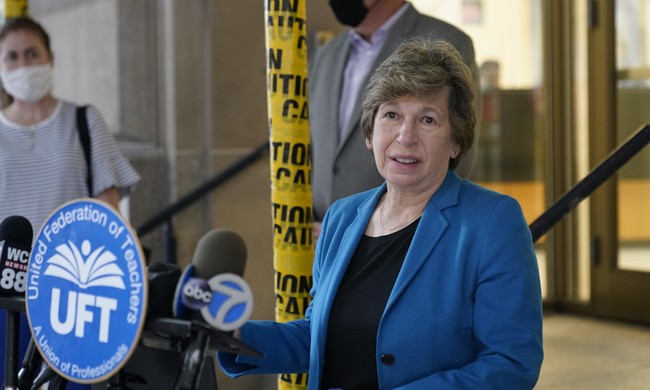
The United Federation of Teachers remains active in fighting charter expansion, pursuing legal action to block transfers for some charter operations. The union argued, “Charter schools drain resources from district public schools, and the cap was created to minimize harm.” That quote reflects the union’s framing, but parents facing a 43 percent third-grade proficiency rate may reasonably wonder whether blocking effective alternatives serves students or protects an entrenched system.
Union priorities and political defenses of the status quo collide with parents’ demands for results. While test scores plunged, union leadership focused resources on maintaining charter limits rather than addressing classroom reading failure. That choice exposes a governance problem: when vested interests are protected, the educational needs of children can get sidelined.
Governor Hochul and the Democrat-controlled Legislature have responded to weak results with additional funding and promises rather than sweeping changes to curriculum, accountability, and management. Repeated funding rounds have not produced consistent gains in literacy, which suggests strategic shifts are necessary. Long-term improvement will require clear measures of program effectiveness, willing accountability for failing approaches, and real options for parents who want better schools for their children.
New York parents deserve straightforward answers and real fixes. Which programs will be cut when they fail? Who will be held accountable for persistent underperformance? More money without structural change looks like more of the same, and New York’s kids cannot wait through another cycle of promises that don’t translate into reading skills.


Add comment