
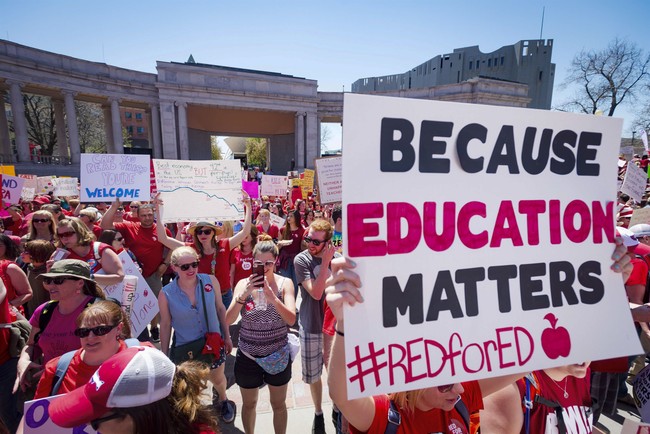
The National Education Association’s newly disclosed federal filings reveal a pattern: teacher dues redirected into platforms and groups that prioritize political activism over classroom results, fueling nationwide campaigns while sidelining the core mission of educating children.
For years many conservatives have suspected that major teachers’ unions play politics far more than they serve students, and the latest documents strengthen that case. These filings show large-scale transfers of funds to organizations and networks that are squarely in the progressive advocacy world, not focused on curriculum or classroom improvement. That matters because when unions divert resources away from direct teaching priorities, taxpayers and families lose out.
The disclosure in question is a Form L-2 that lists the NEA’s payments and grants, revealing sizable sums sent to national and international advocacy networks. Among the notable entries is a substantial payment to Education International, the global union federation that pushes a broad social justice agenda. Critics argue that sending millions overseas to a politicized body stretches the idea of union priorities beyond defending teachers and into shaping global political narratives.
Alongside global transfers, the filings show money flowing to opaque funding vehicles and donor networks commonly linked to left-of-center political operations. These payments include large amounts to groups that operate as dark money conduits, which raises transparency questions for an organization funded by mandatory or heavily encouraged member dues. If dues collected in classrooms are being routed into partisan networks, members deserve to know and decide if that aligns with their values.
The NEA, which boasts more than 3 million members, sent $300,000 to the Sixteen Thirty Fund, a liberal dark money group … and thousands of dollars to the Tides Foundation network, which Fox News Digital previously reported has ties to anti-Israel protests and a variety of far left causes.
The public should find it troubling when a union that claims the mantle of professional education spends heavily on ballot measures and election-related efforts across multiple states. The filings list targeted activity aimed at shaping voter rules and policy outcomes in places like Ohio, Arizona, Wisconsin, and Massachusetts. Unions participating directly in election shaping undermine the idea that public education institutions operate above partisan fray.
These same filings show NEA dollars backing campaigns and initiatives that center identity politics, anti-racism projects, and LGBTQ+ programming—areas that many parents view as cultural agendas rather than basic education. When union leadership treats social policy as its top line item, classroom focus shifts. Teachers and local associations often get sidelined as national leaders prioritize grand political statements and international affiliations.
Some defenders will say unions are exercising their right to political speech and solidarity. That’s true, but it changes the bargain with members and the public when compulsory dues underwrite those choices. Union members who joined to negotiate pay and working conditions now see their money financing broader progressive enterprises. That creates tension between individual member priorities and centralized political activism.
There are also governance and accountability questions. Who on union boards approved these transfers, and were rank-and-file members adequately informed? Transparency is a reasonable demand for any dues-funded organization, especially one that claims to represent diverse educators across urban, suburban, and rural communities. The union’s stewardship of resources should be visible, not hidden behind complex funding networks.
Finally, there’s the educational cost. When leadership energy and dues are devoted to political battles, the day-to-day challenges in classrooms—student literacy, math proficiency, special education services—can get shortchanged. Parents expect school-focused advocacy; they do not sign up for their local education system to be a checkbook for national political projects. That divergence explains why scrutiny of these filings has grown so intense among taxpayers and policymakers.



Add comment