
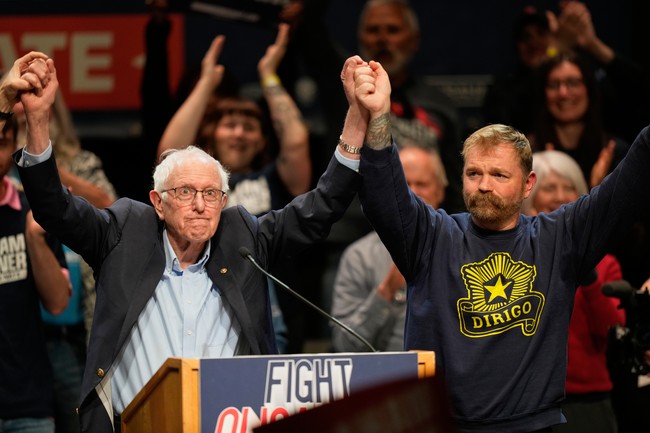
The piece examines how major media outlets and personalities have rallied behind Graham Platner despite serious allegations about his past, including a Nazi-related tattoo, fabrications, and troubling statements, and compiles a non-exhaustive list of outlets and commentators who have downplayed or defended him while questioning the media’s standards and consistency.
After years of seeing “Nazi” thrown around as a political insult, the reaction to Graham Platner exposes a strange double standard in parts of the press. New opposition research has surfaced details about his background and conduct that demand scrutiny, yet many in the media have been quick to soften or dismiss those concerns. That gap between rhetoric and response is the heart of the controversy.
Platner has faced allegations ranging from fabricating parts of his biography to making deeply offensive comments about victims of sexual assault and even suggesting a Purple Heart recipient should have died. On top of that, an image resembling a Totenkopf death camp emblem has been reported as a tattoo near his chest, raising alarms beyond standard political mudslinging. Those facts are what make the media’s tilt toward sympathy notable and consequential.
The pattern here is not about partisan cheerleading alone; it’s about standards. For years, the same outlets and pundits urged harsh judgment when symbols, gestures, or lifestyles could be tied to the far right. Yet when a candidate accused of wearing explicitly Nazi imagery arises aligned with the opposite party, many of those voices shifted to caution, excuse, or outright defense. That flip deserves to be cataloged so readers can track consistency.
Democratic operatives and some party-aligned figures predictably back a candidate they think can beat a Republican incumbent, and that naked hunger for power is hardly surprising. What is surprising is the willingness of some journalists and commentators to shepherd Platner past pointed allegations with interviews that feature few hard follow-ups. When the press fails to interrogate serious claims the way it would for other figures, it undermines trust.
This piece gathers a list of outlets and personalities who, in one way or another, offered leniency or platforms to Platner at moments when tougher scrutiny seemed warranted. The list is not an aggressive blacklist but a record intended to remind readers which outlets embraced a softer line. It exists so future accusations and moral arguments can be tested against recent behavior.
- tried to dismiss the controversies.
- JV LAST not only supports the man who sports a laundry list of controversies and has never held a leadership job, but amazingly, he declares that Platner is presidential material for 2028.
- TIM MILLER contorted himself marvelously to make excuses he would never accept from a Republican.
Some commentators went further than mild excuse-making and offered comparisons or praise that read as extreme given the allegations. One wrote that listening to Platner “was just how scripted he was in that moment. Suddenly, he is like a politician, just like any other person, trying to turn water into wine, effectively.” That line captures how some coverage shifted into near-reverential framing.
Cable and podcast hosts gave Platner room to present scripted defenses with limited pushback, and a number of platforms booked him to address accusations without hard follow-up questions. On certain shows, hosts accepted his answers at face value and moved on, which created the impression of an editorial choice to prioritize optics over probing facts. Platforming without pressure lets narratives settle before facts do.
Other outlets deleted posts that had initially excused or minimized his behavior, creating a record-keeping problem for anyone trying to trace how coverage changed over time. Deleting earlier posts is different from revising reporting after new evidence emerges; it can read like damage control. That kind of media housekeeping makes it harder to hold outlets accountable for early stances.
Not every mention of Platner amounted to defense, but the balance tipped toward sympathetic portrayals in places where skepticism would be expected. Some writers framed the issue as a pragmatic choice focused on electoral math rather than moral judgment, arguing that beating an incumbent took precedence. That calculus may be understandable to strategists, but it remains controversial when the subject involves alleged connections to extremist imagery.
https://x.com/BulwarkOnline/status/2029150209301786766
Several high-profile magazines and programs elevated Platner in cover stories, promos, and interviews at awkward moments, offering him a visibility boost during intense scrutiny. One prominent outlet put him on the cover the same week other damaging allegations were circulating, a choice critics described as poor timing at best. Editorial decisions like that reveal how easily profile and protection can overlap.
Included in this report are individual quotes and snippets from interviews that illustrate the tenor of the coverage, preserved exactly as spoken. Those quotes show how pundits and hosts rationalized their approaches, whether by citing the broader political landscape or by stressing the need for unity against a different political threat. Preserving those words helps readers judge whether explanations ring true.
– brought on Platner to address each of his accusations in scripted fashion and spin his answers with no pushback or follow-ups.
PODSAVE AMERICA platformed Platner on their show to clear his Nazi tattoo controversy. Some of those appearances included denials or reframing that now sit alongside the reported allegations, creating an uneven public record. Those programs will likely be referenced anytime similar moral outrages are alleged in the future.
Other personalities offered context that placed Platner’s controversies into the broader frame of political expediency, arguing that the alternative on the ballot justified toleration. One commentator said, “I look at Platner through the prism of where we are in terms of the Trump administration and the Trump world, given who Trump is, given the allegations against the president, given the way that lots and lots of people in the Republican Party just turned a blind eye and decided, we still want to vote for this guy.” That perspective is explicit about trade-offs.
Overall, this collection aims to document the media behavior around a candidate with severe allegations attached to his name and image. The list will evolve as more instances are identified, and it exists to illuminate how standards shift under political pressure. For readers keeping score, the record is the resource.
— Western Lensman (@WesternLensman)



Add comment