
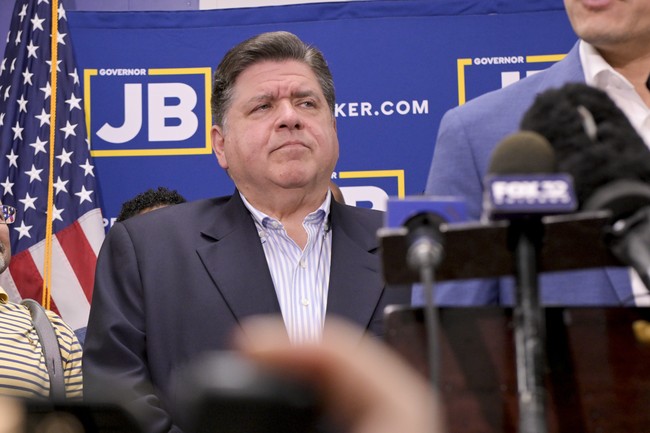
The murder of 18-year-old Sheridan Gorman in Chicago has reopened debate over sanctuary city policies and the political decisions behind them, while drawing attention to Illinois Gov. JB Pritzker’s past behavior that now looks politically tone-deaf and risky for any future national ambitions.
The killing of Sheridan Gorman shocked a city already grappling with violent crime. Reports say the suspect allegedly opened fire as friends ran away, and initial accounts conflict on whether she was shot in the head or the back. When news surfaced that the suspect is said to be an undocumented immigrant, the family’s attorney issued a stark statement: “We are gravely disappointed by the policies and failures that allowed this individual to remain in a position to commit this crime… When systems fail — whether through release decisions, lack of coordination, or unwillingness to act — the consequences are not abstract. They are real. And in our case, they are permanent.”
This case lands politically because it highlights the consequences of policies that put protections for undocumented people ahead of clear public safety measures. From a Republican perspective, sanctuary practices have repeatedly been shown to complicate law enforcement and can leave victims and families exposed. That argument will be front and center in political messaging from opponents who argue that public safety must be the top priority.
For JB Pritzker, the episode is awkward on two counts: policy and optics. First, it invites renewed scrutiny of statewide and local choices that limit cooperation with federal immigration enforcement. Second, it revives past moments that make the governor look out of touch with ordinary concerns about safety and accountability, a vulnerability opponents can exploit in national politics.
In 2025 Pritzker posted videos of himself walking the Chicago lakefront, at times in the early morning, to mock claims about the city’s safety while omitting the security detail that almost certainly accompanied him. Those clips were framed as political theater meant to minimize crime concerns, and critics say they now read as a cheap stunt that ignored real risks faced by residents.
Beyond the optics, there’s the matter of official responses. Neither the governor nor Chicago Mayor Brandon Johnson reportedly issued direct statements about the homicide initially, and the only messaging from the governor’s office came from a spokesperson who argued that the case was being politicized, while also saying, “Our thoughts are with the family, friends, and Loyola University community grieving the senseless murder of Sheridan Gorman. Violent crime has no place in our streets, and we expect the alleged perpetrator to be held accountable to the fullest extent of the law. The Trump Administration needs to stop politicizing heinous tragedies and instead focus on real solutions, like reinstating federal funds to prevent violence that support our public safety efforts.”
Saying the tragedy is being politicized while criticizing critics for raising policy questions looks weak and defensive to many voters. It comes across as a refusal to wrestle with what actually went wrong in systems designed to prevent dangerous people from staying on the streets. Republicans will argue that leadership requires accepting responsibility and proposing concrete fixes rather than blaming opponents for talking about the issue.
Chicago’s decades-long struggle with violent crime is not new, yet each killing renews public frustration about accountability and the effectiveness of local policies. Residents expect officials to work with federal partners when necessary and to ensure that public safety decisions are not driven by ideology over outcomes. This case will be used by critics to underscore perceived failures of Democrat leadership at both city and state levels.
Politically, the Pritzker angle matters because he has been mentioned as a potential national contender. Any national campaign would bring closer examination of his record and past political theater, including those lakefront walks. Opponents will use those moments as examples of tone-deafness that clash with the fears and frustrations of everyday voters who want safer streets and fair enforcement of the law.
Lawmakers and officials on the ground still have work to do to restore trust after incidents like this. That includes clear, timely communication, real cooperation across jurisdictions, and policies that balance humane immigration enforcement with uncompromising protection for citizens. Voters tend to reward leaders who face hard realities and move fast to fix them, not those who dismiss concerns as mere political opportunism.
The family’s pain is undeniable, and the legal process will determine the suspect’s fate. Meanwhile, the political fallout is already unfolding, with Republicans poised to make this a cautionary example of what they see as the costs of sanctuary-style policies and the dangers of political posturing that ignores public safety realities. How Pritzker responds from here could shape both his standing at home and any future national ambitions.


Add comment