
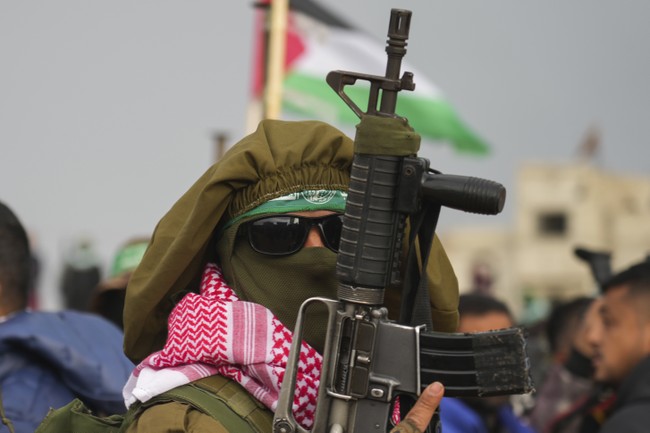
The Israeli Defense Forces reported an airstrike in Gaza City that killed Ra’ad Sa’ad, identified as the head of Hamas’ weapons production within the Al-Qassam Brigades and a planner of the Oct. 7, 2023 attacks on Israel. The strike is presented by Israeli officials as a targeted blow to Hamas’ ability to manufacture explosives and sustain its military networks. This article lays out the reported facts, the official statements attributed to the IDF, and the operational context around Sa’ad’s role and reported activities. It also addresses the potential implications for the fragile ceasefire environment and the ongoing campaign to degrade terrorist infrastructure.
The IDF said the strike removed a senior figure central to Hamas’ weapons manufacturing, a man who allegedly ran the organization’s production headquarters and served as deputy to the group’s declared military chief. Israeli officials described Sa’ad as directly involved in restoring and producing weaponry used against Israeli forces. That characterization frames the action as a precise counterterrorism measure aimed at disrupting the group’s capacity to harm soldiers and civilians.
The Israeli Defense Forces said Saad, a member of the Qassam Brigades, the terror group’s military wing, had been involved in efforts to “restore and manufacture the group’s weapons.”
He served as chief of Hamas’ weapons manufacturing headquarters and is considered deputy commander to the terror group’s latest military chief, Izz al-Din Haddad, the Times of Israel reported.
According to the military’s public statements, Sa’ad was not a low-level technician but one of the remaining veteran senior militants still active in Gaza. The IDF emphasized his long-standing ties to other top operatives and his role in supervising weapons production during periods of supposed lull. Israeli officials argue that eliminating figures like Sa’ad degrades the organizational memory and technical know-how Hamas relies on to rebuild its arsenal.
Beyond organizational rank, the IDF tied the strike to a recent attack that wounded two soldiers, saying Sa’ad’s units were responsible for producing explosive devices used in that incident. Military sources claimed the strike was a direct response to the improvised explosive device attack on Israeli forces in the Gaza Strip. The linkage framed the removal as both punitive and preventive, intended to stop further attacks in the near term.
Boom:
Sa’ad was one of the last remaining veteran senior militants in the Gaza Strip and a close associate of Marwan Issa, the deputy head of Hamas’ military wing. He held several senior positions and was a central figure within the organization’s military leadership.
He was responsible for the deaths of many soldiers through explosive devices manufactured by Hamas’ weapons production units during the war.
In recent months, Sa’ad played a leading role in Hamas’ military wing, including direct involvement in violating the ceasefire agreement. He also oversaw the continued production of weapons in the Gaza Strip during the ceasefire period.
His elimination significantly degrades Hamas’ ability to reestablish its capabilities.
Reports indicate Sa’ad spent time operating in Gaza’s tunnel networks and moved between subterranean and surface positions as the security environment shifted. The IDF narrative suggests he resurfaced and was struck soon after, with an implication that accompanying security personnel were likely killed as well. This pattern—where senior operatives shelter underground and re-emerge to command or inspect facilities—is one of the recurring challenges for counterterrorism operations.
While the IDF framed the strike as a clear operational success, analysts on the ground note the larger strategic picture remains complex. Removing a single leader can disrupt short-term operations, but the organizational depth, local recruitment, and external support networks make complete eradication unlikely. The military insists it will continue targeting leaders and production networks to raise the costs of militant activity and protect civilians and soldiers.
That said, the strike also raises questions about the fragile nature of ceasefire arrangements and how targeted killings impact negotiation dynamics. Officials acknowledged uncertainty about how this removal will affect the existing temporary agreements between Israel and various intermediaries. The reported role Sa’ad allegedly played in violating ceasefires underscores the tension between punitive military actions and efforts to stabilize a volatile border environment.
From a Republican viewpoint, the decision to act reflects a hardline stance: allow no safe harbor for those who plan and produce instruments of terror. The approach prioritizes decisive, kinetic operations aimed at dismantling leadership and technical capacities. Critics will point to the perennial problem of militants re-emerging, but supporters argue that steady pressure and targeted strikes are necessary to protect citizens and deter future atrocities.
The IDF’s messaging is blunt and unapologetic: military leaders responsible for attacks will be pursued and eliminated. For those concerned with operational detail, the strike is one example among many in a sustained campaign to neutralize commanders and weapons facilitators. For the wider public, it serves as a reminder that the fight against organized terror in Gaza remains active and that the Israeli military intends to keep applying pressure on networks that threaten its security.
The enduring reality is that figures involved in weapons production and attack planning are high-value targets precisely because they enable future violence. Removing them does not erase the problem, but it complicates an adversary’s ability to quickly regenerate lethal capability. The IDF’s stated aim is straightforward: reduce the threat by targeting those who make and direct it, and do so with precision when possible.
The consequences for the ceasefire, the local population, and the broader regional dynamics will unfold in the coming days and weeks. For now, the public record reflects an operation the Israeli military describes as a necessary step in breaking the logistical backbone of a lethal militant campaign. The balance between tactical success and long-term strategy will determine whether such strikes produce sustained security gains or merely temporary setbacks for those who continue to wage terror.



Add comment