

House members voted to roll back the emergency declaration that underpins the administration’s tariffs on Canada, and six Republicans joined Democrats to pass a resolution 219 to 211. The move exposes an intraparty clash over trade authority, constitutional checks, and local economic ties while setting up an almost certain Senate standoff and a potential presidential veto.
The House action forced a direct choice between presidential trade policy and congressional authority over tariffs. Republicans in favor said this was about the Constitution and protecting local economies tied to cross-border commerce. Those opposed framed the tariffs as essential leverage for national security and economic gains. The short-term political fallout will matter, but the bigger fight is over whether Congress reasserts its role in trade policy.
The resolution targeted the national emergency declaration used to justify tariffs on Canada, arguing that Congress should control trade policy rather than leaving sweeping authority in the hands of the executive. Lawmakers voting to undo the emergency stressed that Article I vests Congress with the power to regulate commerce and impose tariffs. Opponents warned such a move undercuts tools used to pressure foreign partners and to address security threats tied to illicit flows across borders.
Six House Republicans crossed party lines to join Democrats and secure passage, a detail that underscored the depth of concern in some districts about how tariffs affect local economies. The vote tally was 219 to 211, and one Democrat joined most Republicans in opposing the resolution. That split showed the map of politics on this issue does not cleanly follow party lines and that local interests and constitutional instincts can override national messaging.
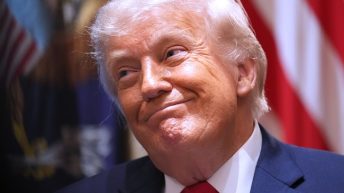
President Trump responded sharply as the vote was unfolding, putting members on notice about electoral consequences. He warned members that voting against tariffs would be punished at election time and referenced headline economic claims tied to his trade policies. The president framed tariffs as delivering market gains and national security leverage, making clear he viewed this as not just policy but political capital.
“Any Republican, in the House or the Senate, that votes against TARIFFS will seriously suffer the consequences come Election time, and that includes Primaries! Our Trade Deficit has been reduced by 78%, the Dow Jones has just hit 50,000, and the S&P, 7,000, all Numbers that were considered IMPOSSIBLE just one year ago. In addition, TARIFFS have given us Great National Security because the mere mention of the word has Countries agreeing to our strongest wishes. TARIFFS have given us Economic and National Security, and no Republican should be responsible for destroying this privilege. PRESIDENT DONALD J. TRUMP”
Members who defended the roll-back emphasized separation of powers and the need for Congress to make trade choices openly. Rep. Jeff Hurd said the debate is rooted in constitutional authority and warned against letting emergency measures become permanent trade policy tools. That line of argument appeals to conservative principles about limited executive power and preserving representative control over taxation and tariffs.
“Today’s vote is grounded first and foremost in the Constitution. Article I gives Congress the authority to regulate commerce with foreign nations and to levy tariffs… Those delegations were never intended to serve as a permanent vehicle for sweeping, long-term trade policy.”
Rep. Dan Newhouse tied his objection to local economic realities, noting the tight ties between his state’s economy and Canada. He argued that constituents who depend on cross-border trade deserve a say when tariffs are imposed that can ripple through supply chains and regional markets. That perspective reflects a practical, district-first approach many Republicans claim as part of responsible representation.
“Washington State’s economy is heavily intertwined with that of our neighbors to the North… Equally important is the fact that Congress should not let its own hands be tied on our Constitutional authority to levy tariffs.”
Rep. Don Bacon urged Congress to reassert its role in trade policy, saying it was time for lawmakers to speak up on tariffs. He framed the vote as a matter of congressional responsibility rather than partisan betrayal. Members who bucked the president have emphasized conscience and constitutional duty as the guiding principles for their choices.
Other Republicans who voted with Democrats have not publicly laid out detailed defenses, leaving space for political messaging and local explanations in coming days. The resolution now moves to the Senate, where the dynamics will shift and where a presidential veto is likely to be a central consideration. Expect both procedural fights and headline-grabbing rhetoric as the matter advances.
The episode reveals a fault line in Republican politics between loyalty to presidential trade strategy and a constitutionalist impulse to guard congressional prerogatives. For elected Republicans, the calculus balances local economic consequences, conservative principles about limited executive power, and the political risks of defying a popular party leader. That tension is likely to surface again in other trade and emergency-authority fights ahead.
Add comment