
The controversy over Delaney Hall, an ICE facility in Newark, has been filled with loud protests, partisan claims, and visits from politicians and officials who say they saw very different things. This piece lays out what Republican voices and former enforcement officials reported after touring the site, counters key Democratic talking points, and preserves eyewitness descriptions of conditions and services inside the facility. It sticks to on-the-ground observations, direct quotes, and the practical legal point that unlawful entry is a crime subject to detention and removal. Below are the reported facts and firsthand reactions from officials who inspected Delaney Hall.
Democrats have pushed a narrative painting Delaney Hall as a site of abuse and inhumane treatment, and that messaging sparked protests and confrontations at the facility over recent weeks. Newark city leaders and some congressional Democrats demanded closure, framing their visits as fact-finding missions even while relying on emotional appeals. Republican critics say those public performances were political theater meant to score points rather than accurately report conditions.
House Minority Leader Hakeem Jeffries appeared at the facility and declared that people at Delaney Hall had “no criminal record,” implying detention there was unjustified. That claim ignored a basic legal reality: illegal entry is a federal offense that can justify detention and removal proceedings. Department of Homeland Security communications pushed back on the narrative, emphasizing the law and the reasons certain individuals are held by ICE.
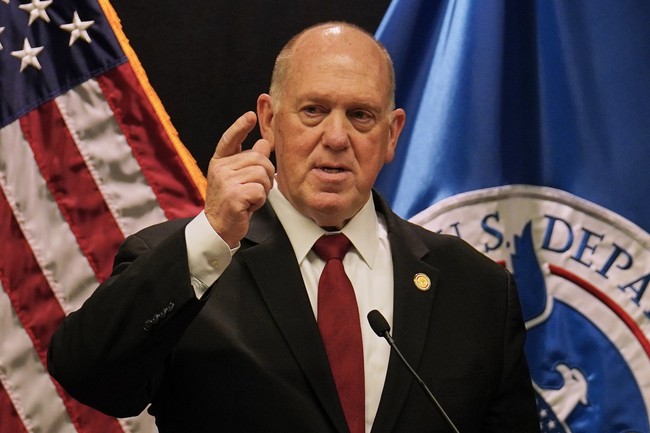
Former Border and Immigration officials traveled to Newark to examine the facility and respond to the criticism. Tom Homan, who served as acting director of ICE, described his visits in blunt terms and disputed the claims of mistreatment. His account emphasized direct observation rather than secondhand reports, and he expressed frustration at what he called misleading portrayals by protesters and some politicians.
Homan even staged a surprise visit where he ate the same meal provided to detainees and detailed exactly what he had on his tray: “And I made sure my tray equaled their tray! I had spaghetti and meat sauce. I had beans. I had green beans. I had bread and rolls. I had drinks. I had dessert. The food was good.” That line was delivered to underline that the food service looked standard, not the basis for claims of starvation or neglect.
He dismissed the so-called hunger strike narrative, pointing out that people who chose not to eat from the facility trays were able to buy commissary items. Homan said the facility was orderly, that he inspected the areas, and that allegations of systemic abuse did not match what he found on site. “It’s all a false premise,” he declared when addressing critics who claimed detainees were suffering from neglect.
Beyond Homan, Republican Representative Jeff Van Drew toured Delaney Hall to see conditions for himself and reported what he saw in terms of services and facilities. His assessment focused on cleanliness and available medical and legal resources rather than inflammatory rhetoric. Van Drew cataloged concrete amenities and argued that conditions were being misrepresented for political gain.
I toured Delaney Hall today to see the facts for myself.
https://x.com/EricLDaugh/status/2061773936082207043
What I saw was clean, organized, and well-run.
Clean dorms. On-site doctors, nurses, and dentists. A law library. A regular library. A gym. A soccer field. Meals for allergies, kosher requirements, religious needs, and medical restrictions.
So let’s stop pretending this is about conditions.
Van Drew called the staged protests and dramatic press events “bad political theater” and accused opponents of “just lying to us” about what they found. That blunt assessment reflects a broader Republican view that criticism of ICE operations often sacrifices accuracy for headlines. Lawmakers on the right say administrative responsibility and public safety require detention when statutes demand it, and that such facts get lost in theatrical protests.
Multiple visitors emphasized that people legally subject to detention would not be released simply because of political pressure, noting statutory obligations that guide ICE decisions. Officials insisted that any detainees with criminal histories or who present removal cases would remain in custody as required by law. That stance underscores the distinction between political advocacy and the mechanics of immigration enforcement.
The exchanges at Delaney Hall show how quickly site visits can become battlegrounds for competing narratives, with each side cherry-picking images and quotes to feed broader political agendas. For Republican visitors and former enforcement leaders, the focus remained practical: see the facility, verify conditions, and point out where claims diverge from reality. Their message was straightforward—evaluate the facts first, then make policy arguments.



Add comment