
This article covers the Trump administration’s strike that killed Tren de Aragua leader Niño Guerrero, Secretary of War Pete Hegseth’s comments equating the tactics to those used against ISIS and al-Qaeda, the formation of the Americas Counter Cartel Coalition, and the argument that coordinated kinetic and financial pressure can dismantle transnational terror and cartel networks in the Western Hemisphere.
President Trump announced that Niño Guerrero, the leader of the Venezuela-based Tren de Aragua, was eliminated in a “swift and lethal kinetic strike” carried out by U.S. Southern Command in coordination with Venezuela. That action marks a clear shift toward using direct military options against terrorist leaders operating inside partner nations, rather than relying solely on extradition or legal processes. The move reflects an administration willing to apply hard power when intelligence and diplomatic conditions align.
https://x.com/RapidResponse47/status/2065602168569139322
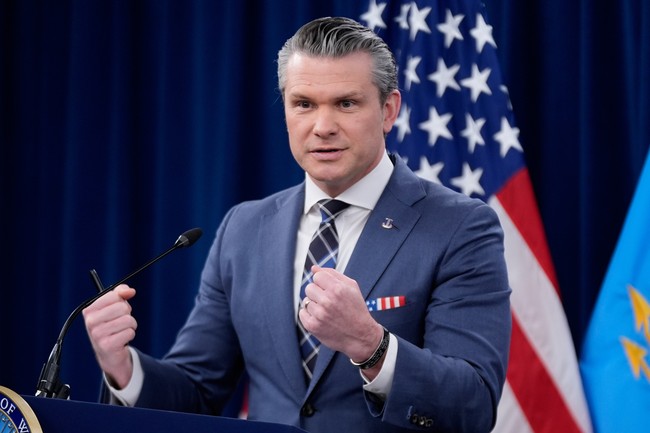
On Face the Nation, Secretary Pete Hegseth framed the strike as consistent with methods used to remove al-Qaeda and ISIS leadership in the Middle East. He emphasized that the same playbook—intelligence-driven, targeted kinetic action—now applies to narcoterrorist organizations in our hemisphere. Hegseth argued this sends a loud message to cartels and terror groups that they will be hunted down.
Host Margaret Brennan asked why Guerrero wasn’t captured and brought to the U.S. to face charges, noting he had been indicted in the Southern District of New York. Hegseth responded that Maduro’s status as a de facto head of state was a different calculus, and that risking elite forces on a live-capture mission isn’t always the prudent choice. When partner governments invite U.S. forces in and provide coordination, lethal options can be the fastest way to remove an immediate threat.
“[T]hey invited our military in because they have a foreign terrorist organization on their soil in Tren de Aragua. The founder and leader, we were able to identify where he was and kill him, just like we would kill al-Qaeda or ISIS, and we did in the Middle East. We treat these foreign terrorist organizations the same way, just like we do with drug boats when we identify they’re run by those FTOs. So that’s a great development.”
Brennan then pressed on whether similar operations might follow in Ecuador and Guatemala, where governments are already cooperating with the United States. Hegseth said yes, pointing to a broader regional effort to hunt down and dismantle networks that traffic drugs and sponsor terror. He framed this cooperation as the Americas taking back control of the hemisphere from criminal and terror networks that harm American communities.
“Yes, they should. It’s called the Americas Counter Cartel Coalition, A3C, and we’re forming it with partner governments all around Central and South America to go after, defeat, and destroy foreign terrorist organizations, drug cartels. And all those countries you named are stepping up to work on partnerships with the United States, where we work with their governments and their militaries with their special capabilities and our special capabilities to hunt terrorist networks in our own hemisphere, just like we showed we were very good at with ISIS and al-Qaeda in the Middle East for 20 years.
“It’s an incredible reinforcement of the Monroe Doctrine, now the Donroe Doctrine. We’re taking back control of our hemisphere and ensuring the poisoning and attacks on the American people end. So, it’s- it’s a beautiful, it’s a beautiful military thing to behold, other countries coming to us to work with us, and we’re going to take full advantage of it.”
The Americas Counter Cartel Coalition is a 17-nation military alliance established at the Shield of the Americas Summit in March 2026. That coalition commits partners to coordinate intelligence, share special capabilities, and, where necessary, execute combined operations to destroy transnational criminal organizations. The emphasis is on rapid, coordinated action to decapitate leadership, disrupt logistics, and sever financial ties that enable violence.
Part of A3C’s charter is to deprive these groups of “access to financing or resources necessary to conduct their campaigns of violence.” The strategy pairs kinetic pressure with financial warfare, sanctions, and asset freezes to collapse the networks that fund terror and trafficking. Removing both the personnel and the money aims to make these organizations unsustainable over the long term.
Some commentators and users online have pointed out that applying the same tactics to domestic groups designated as terror threats would produce similar results. One social post argued for synchronized law enforcement and military pressure, coupled with asset freezes, to dismantle domestic extremist networks and their international enablers. That view reflects a growing appetite on the right for decisive measures against violent political extremism.
The full post reads:
Since the president designated domestic terror groups such as antifa as actual terror groups and they have international ties…I’d love to see SOCOM raids snatching those black mask bitches up and kinetic strikes as well as @SecScottBessent & @SecRubio freezing the assets of every person funding the domestic terror groups from the middle management up to the domestic/international bigwigs.
I would love to see it happen all at once. I’m sure you have drawn the network of domestic terror groups and who organizes, trains, equipped and execute riots/violence around the country. With speed, surprise, and violence of action I would like to see overnight the international pieces literally vanish and the domestic pieces suddenly find themselves dead broke and in handcuffs.
One big worldwide shock and awe campaign against antifa and similar domestic terrorist groups.
Every one of them should not feel safe at any time.
The debate now is whether the combination of lethal action and financial pressure can systematically dismantle both international cartels and domestically linked terror factions. Proponents say decisive force and targeted sanctions create cascading effects through leadership decapitation and funding freezes. Opponents will argue about sovereignty, legality, and escalation, but the current administration is clearly moving to leverage both military and economic tools aggressively.
As these policies unfold, expect coordinated operations, tighter financial controls, and increased military partnership across the hemisphere. The administration’s message is straightforward: organizations that threaten U.S. citizens and interests will find no safe harbor, and those who fund or enable them will be targeted. The question now is how effectively the coalition can translate that promise into sustained results on the ground.


Add comment