
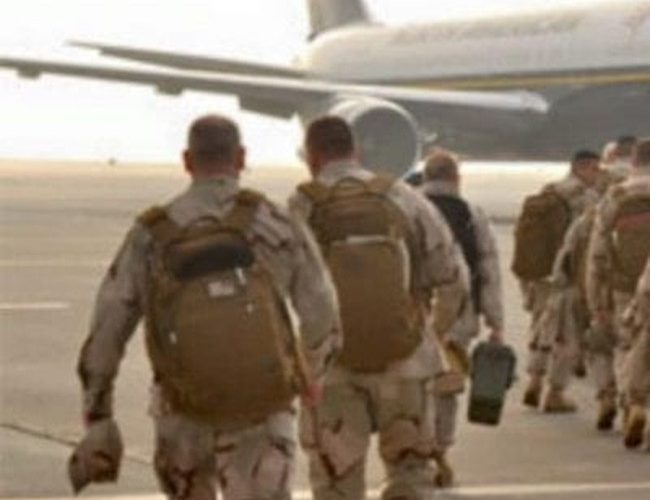
I remember Memorial Day through the eyes of a Green Beret wife who lived near Fort Bragg; this piece revisits a community shaped by deployments, the sudden knocks at doors that never came for some, the brittle bravery at memorials, and the long, private aftermath for those who stayed behind.
I lived close to Fort Bragg for nearly two decades and the military presence shaped daily life in our rural neighborhood. After 9/11 the tempo changed and deployments became a regular, painful rhythm for families around us. Small things like Little League games or bedtime stories were often missing because dads were overseas, and some never returned.
Tiffany and I met through our boys in Cub Scouts, and I saw how hard it was for her to hold the home together while her husband, a Green Beret, was deployed. I didn’t grasp the depth of the trauma until she wrote about a Memorial Day when her unit lost members in one deployment. With her permission, her words are shared here in full.
In the early days of the war I remember watching the news religiously. I was always shocked at how much information the media would give about the location of our guys. It really bothered me. And, of course, we could find out in almost real time if we had lost another Green Beret.
I remember a particular day when I heard a news bulletin telling of not one but two fatalities from our very small unit. My heart sank. The phone tree was abuzz, with all of us trying to find out. Was it me? Would I hear the knock on the door? As every military wife has done, I imagined my response. What I would say or do? How would I react? Would I cry, yell, tell them to leave? Ask them in? What would be best for my children? Step outside?
Thankfully that knock did not come for me that day. It did for two other wives.
I knew I had to go to their memorial service. I would want other wives to show support if it had been me, so alone I decided to go.
I got up that morning feeling brave. I got dressed and did my makeup, yet thought that seemed strange. I’m not sure why. I drove to the Special Forces chapel alone. I quietly walked inside and found my seat on a pew in the back half. I wasn’t comfortable sitting up close to the family. I was concerned that so many seats were empty, but most of our guys were gone, so I understood.
She describes the odd, stark visuals of a military chapel and what those images meant once you understood what was at stake. The stained-glass images of armed soldiers once seemed incongruous in a sanctuary, but over time they made a different kind of sense: a reflection of souls in conflict, the closeness and distance from God in a war zone.
Looking around at the windows I found it so strange then that the stained glass included soldiers with guns in a church. Guns and church didn’t seem to go together.
Now I understand. Those windows show the depth of man’s soul in a battle. There is probably not a place closer to God – or seemingly further from Him – on this earth.
Shortly before the memorial began a very long line of young soldiers entered the chapel, filling every available space. It was standing room only. I later found out they pulled students from the local training unit over as a show of support. I watched these young guys and wondered what they were thinking.
I don’t remember much of what was said that day, but I clearly remember the final roll call. The command calls the name of each soldier on the team. (12) Each soldier answers “Here, Sgt Major” until they get to the fallen soldier. Their name is called, and when there is no answer there is the volley of gunfire.
The impact of that silence and the ceremonial volley is described precisely and painfully. One wife’s wail at that moment haunted Tiffany, and the memory lodged deep enough to alter how she lived afterward. The images she carries are sensory and immediate: sounds, the weight of being held up by others, and the private collapse that followed.
I will never forget the agonizing wail from the wife of one soldier that day. My heart hurt for her. I feel horrible pain inside just remembering that sound. I realized that volley symbolized the last sound her husband heard before he was killed. What were his last thoughts? That sound is deafening. Did he know that was it? Did he have a chance to think of her? Was he in pain? I figured these might be her thoughts. They were holding her on her feet now. It was so hard to watch I closed my eyes.
I quickly walked away from that chapel, feeling a lot less brave. I got into my car and quietly sobbed.
I wish I had never gone that day. Fear enveloped my life, fear of that wailing pain. I tried to outrun the fear. I couldn’t run fast enough. I tried to pray my way out of the pain. The sleeplessness clouded my mind. I could no longer eat or drink, certain my knock would come.
Eventually I chose to end my marriage. I couldn’t wait for this certain end. I loved him too much. I wallowed away in a bottle, to the shock and disgust of most I knew. My mind was twisted with the sorrow of the sound of the wife’s cry. It haunted me, and does to this day.
Those months were the longest of my life. I know what I felt, and also knew that my pain could never amount to hers.
I am beyond grateful that my husband made it home that deployment. Many did not. It was a rough year for our unit. He came home, broken himself, to a wife who could hardly hang on.
How grateful I am that together with the blessings of our temple marriage and the power of the atonement we were able to be healed of the wounds inflicted that deployment. But every year on Memorial Day I remember that wife. I remember her pain and her sacrifice. I remember her son, and the loss he must have felt. I remember they gave all.
I think people forget that most soldiers do not join thinking they will fight this particular political foe. They join to protect America. They don’t pick a side. It isn’t about that to these patriots. It’s protecting their home and fellow citizens. Leave the politics to the politicians and hold them accountable. But love the soldier. He loves America.
She adds that Memorial Day is a tough season for many veterans who replay battles and question survival. Remembering the fallen should include remembering the families left behind and the quiet, ongoing costs of service. When we honor those who died, we honor the parents, spouses, siblings, and children who carry the loss every day.

Add comment