
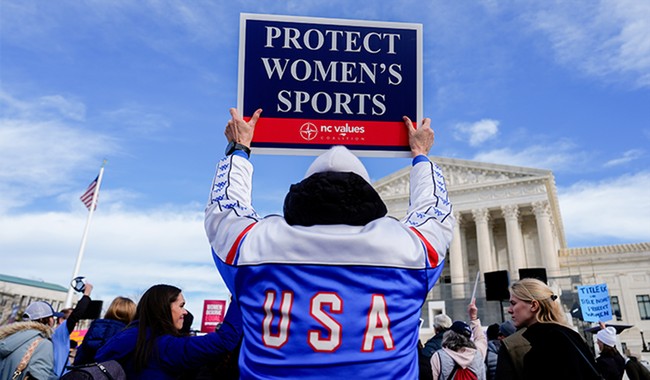
The Senate spent a rare weekend session debating the SAVE America Act and a set of amendments meant to secure elections and protect women’s sports, resulting in a party-line failure to advance a Tuberville amendment that would bar biological males from competing in women’s athletics; the vote recorded 49 yeas, 41 nays, and 10 not voting, and the debate exposed clear Democratic opposition to the proposal while Republicans framed the move as defending fairness for female athletes and election integrity.
The session focused on several high-profile items tied to the SAVE America Act, including voter ID requirements, limits on unsolicited mail-in ballots, restrictions on transgender medical care for minors, and a proposal to bar biological males from women’s sports. Republican senators laid out these priorities as common-sense protections for elections and girls’ athletics, arguing they respond to real concerns from constituents. Democrats opposed the measures and framed their votes as defending transgender rights and Title IX interpretations. The clash made for sharp political theater on the Senate floor during a weekend set aside for crucial votes.
The key moment came when Sen. Tommy Tuberville offered an amendment that would have codified President Trump’s executive order to ban transgender women from participating in women’s sports at federally funded schools. That amendment failed to overcome a filibuster, falling short of the 60 votes needed to invoke cloture and proceed to final passage. The final tally read 49 Republicans in favor and 41 Democrats and allied independents against, with ten senators absent. Republicans emphasized that the vote put opponents on record about where they stand on fairness in sports for women and girls.
Fox News reporting and official roll call records showed the outcome and the partisan divide plainly. The list of nay voters included all present Democrats and two independents who caucus with them, while the 10 senators not voting were noted on the roll. Republicans framed the result not as a defeat of the issue but as a way to document which senators oppose measures intended to protect female athletes. The vote also reinforced GOP messaging that the party will continue pressing these subjects in committee and on the floor.
Sen. Tuberville made his position clear ahead of the vote, arguing the broader SAVE America Act is critical to ensuring only citizens cast ballots in U.S. elections. He said he would use every tool necessary to pass the measures and described the legislation as among the most important to reach the Senate in a long time. His remarks tied the election-security provisions to a larger narrative about protecting American institutions and prioritizing citizen voters. Republicans used that framing to link election integrity to cultural questions important to their base.
After the vote, Republican leaders and allies repeated that the measure was about fairness and safety for female athletes. RNC Chairman Joe Gruters issued a statement that included the exact language: “Men should not compete in women’s sports. It is unfair, unsafe, and a direct assault on equal opportunity for female athletes. President Trump has made it clear that women’s sports are for women, but Senate Democrats voted to let men take roster spots, playing time, championships, and scholarships away from female competitors. Democrats are rejecting basic fairness and abandoning the very women they claim to support.”
Sen. Marsha Blackburn, a co-sponsor of the amendment, highlighted concerns that Democrats’ votes signaled a broader willingness to prioritize ideological positions over protecting girls’ opportunities in school sports. Republicans urged voters to note which senators opposed the measure when making decisions this fall. The strategy was straightforward: use roll call votes to build a record that can be referenced in campaigns and in public debate about what protections lawmakers actually support for women and girls.
Democrats countered that the amendment threatened transgender rights and raised Title IX questions, arguing federal law and inclusion should guide policy. That defense did not persuade Republicans, who said the policy disrespected biological distinctions that matter in sports competition. The fight illustrated a persistent cultural divide, with each side appealing to different values—fairness and safety versus inclusion and rights—while the legislative mechanics of filibuster and cloture shaped the immediate outcome.
The weekend session included other votes tied to the SAVE America Act and linked amendments, and Republicans signaled they would continue pressing these issues in the coming days. The immediate effect of the Tuberville amendment’s failure was procedural: the amendment did not become law. The political effect, from a Republican perspective, was to clearly record opposition from Senate Democrats to a policy many GOP voters support, setting up continued debate and campaign messaging ahead of the next election cycle.
The Senate calendar remained active with additional votes planned tied to the same legislative package, and GOP leaders framed that schedule as necessary to deliver results for voters who want secure elections and protections for women’s sports. For Republicans, each roll call is both policy action and political signal, and weekend sessions like this one are being used to force clarity on where senators stand. The debates brought attention to the priorities shaping the GOP agenda heading into future contests and kept the focus on fairness, safety, and election integrity.



Add comment