
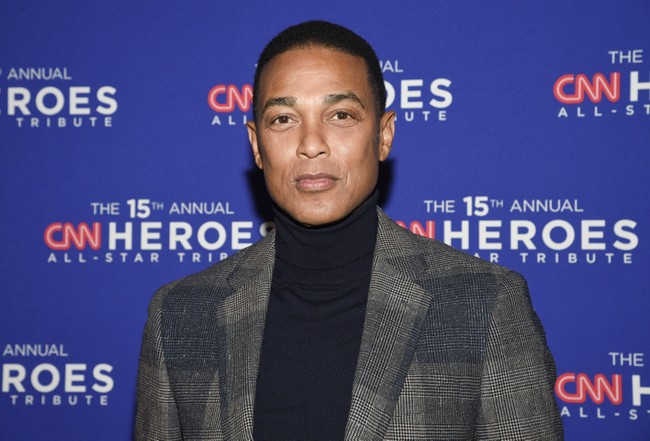
This article examines Don Lemon’s role in the Minnesota church incident, lays out the facts and quotes now public, and explains why his actions raise serious legal and ethical questions while preserving the original quoted material and embed placeholders.
New video evidence and public statements have shifted this from a messy protest story to something that appears coordinated and legally risky for Don Lemon. His own words and on-camera behavior suggest he was more than a detached observer, and those details matter when federal civil rights enforcement is being discussed. The Justice Department has already signaled it will pursue cases where places of worship are invaded, which raises the stakes here. What follows is a clear recounting of the relevant moments and why they’re consequential.
Before the church was entered, a group of anti-ICE activists reportedly organized a targeted action that surprised worshippers during service. The group’s leader later listed co-sponsors and motives publicly, which only makes prior coordination easier for prosecutors to document. Lemon’s comments recorded before the event indicate he was on the scene with organizers and described an operation in terms that imply active involvement. Those pre-event remarks are important because they undermine a simple claim to journalistic distance.
When asked whether Lemon was merely documenting events, his own transcript presents a different picture. He described doing “reconnaissance on the ground” and spoke about following a group that was “gearing up for resistance and protest.” The language used—about operations, surprises, and following the group—suggests foreknowledge and a role beyond passive reporting. The legal difference between observing versus coordinating can hinge on exactly this sort of language and behavior.
LEMON: Into Minneapolis a little bit ago and did some reconnaissance on the ground, speaking to an organization here that is gearing up for resistance and protest. I’ve been surprised, pleasantly surprised with the community coming together, diverse community. If you see this and you first pull up and you’re like, “Wait a minute, which operation are we at,” and as it turns out, because we’re like, “Well, this is kinda MAGA-coded, right,” so the American flag or whatever,
But these are resistance protesters that are planning an operation and we’re going to follow them on. I can’t tell you exactly what they’re doing, but it’s called Operation Pull-up, and it’s Nakema Armstrong, and she has been doing this since George Floyd, Dante Wright, and others, where they surprise people, catch them off guard, and hold them to account. And that’s what we’re doing here, and then after that, after we do this operation, you’ll see it live. These operations are surprise operations; again, I can’t tell you where we’re going.
He didn’t show up after the fact: he appears to have been part of the planning phase and then present as the action unfolded. After the group entered the building, Lemon did not withdraw to a clear journalistic distance but instead engaged with the pastor and those inside. Even if a reporter claims they expected the protest to remain outside, once the invasion began there were immediate choices available—leave, call authorities, or refuse to participate. Lemon stayed and engaged.
In the footage inside the church, Lemon challenges the pastor and frames the intruders as exercising constitutional rights while the pastor protests the disruption of worship. His exchanges include the exact lines preserved below, and those words contribute to the impression he was not merely chronicling an event. Saying “After we do this operation” in a pre-event comment and then remaining inside during the disruption is a problematic combination for anyone asserting observer status.
PASTOR: This is unacceptable. It’s shameful. It’s shameful to interrupt a public gathering of Christians in worship.
LEMON: But, their repost will…
PASTOR: I have to take care of my flock, my family…
LEMON: Okay, but listen, we live in, there’s a constitution, the First Amendment to freedom of speech and freedom to assemble and protest.
PASTOR: We’re here to worship Jesus because the hope of these cities, that’s the hope of the world is Jesus Christ.
LEMON: I’m going to be very respectful. Please don’t push me.
PASTOR: We’re here to worship Jesus. That’s why we’re here. That’s what we’re about.
LEMON: Do you think Jesus would be understanding and love these folks?
PASTOR: We’re about spreading the love of Jesus…
LEMON: But did you try to talk to them?
PASTOR: No one is willing to talk. I have to take care of my church and my family, and also ask you to leave this building.
LEMON: You don’t want us to chronicle what happened?
PASTOR: We’re here to worship
LEMON: I always worship, I’m a Christian
The tone and persistence of Lemon’s questioning during the incident came across to many as supportive of the intruders rather than protective of the congregation. That impression matters because intent and conduct are central to potential charges when private property and worship services are involved. The comparison to other cases where journalists entered restricted spaces is not perfect, but it underscores that claiming “I was reporting” does not automatically shield a person from prosecution. Context and conduct are key.
There will be debate about journalistic immunity and about what constitutes participation versus reporting, and federal prosecutors will sort those legal lines out. The Justice Department has highlighted that invading houses of worship can trigger federal civil rights enforcement, which means the recorded coordination and on-site behavior will be closely examined. This incident sits at the crossroads of protest tactics, private property rights, and the limits of claiming press protection.
Evidence now on the public record raises straightforward questions about Lemon’s role, his words, and the choices he made while inside the church. Those questions will be relevant if federal or state authorities pursue charges related to the invasion and occupation of a place of worship. For now, his recorded statements and conduct are the primary facts everyone will evaluate as events unfold.
Add comment