
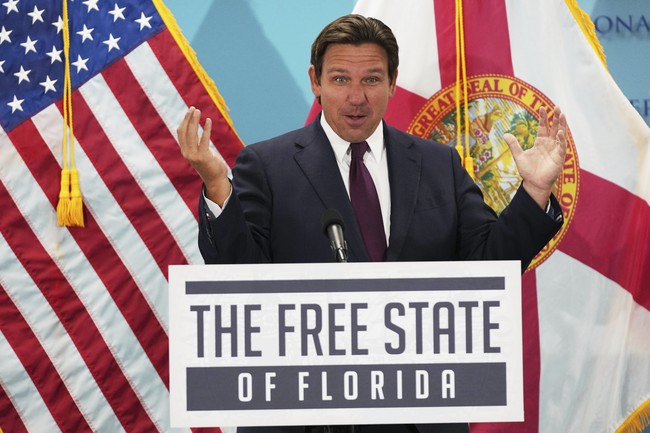
This piece looks at Gov. Ron DeSantis signing Florida’s version of the SAVE Act, the politics around voter ID, the legal challenges that followed, and why state-level action matters when federal efforts stall.
Requiring ID to vote is a straightforward principle: if we expect people to present identification for many routine activities, asking for it at the ballot box is common sense. Support for voter ID polls strongly, and governors like Ron DeSantis are moving where Congress has not. The debate has shifted from whether identification is reasonable to which side will control the narrative and the courts.
DeSantis did not wait for the stalled federal process; he signed a state law that tightens the rules around registration and candidate disclosures. The law includes provisions aimed at verifying U.S. citizenship for voter registration, tightening ID requirements, and expanding penalties for election-related offenses. That approach reflects a broader conservative view that election integrity is best defended at the state level when the federal system is gridlocked.
This legislation strengthens the security, transparency, and reliability of Florida’s election system.
The Florida SAVE Act builds on our historic successes by requiring the verification of U.S. citizenship for voter registration, updating identification requirements and enforcement tools, and expanding penalties for election-related violations—including foreign interference and petition-related misconduct.
Opponents predictably called the move an attack on voting rights, using charged language to try to frame the policy as exclusionary. Those critiques often ignore the everyday reality that most eligible voters already possess the IDs needed to participate in civic life. The fight isn’t just about identification; it’s about which institutions enforce the rules and who benefits from the current system.
DeSantis also required greater transparency for candidates, including disclosure of dual citizenship and stock trading for congressional hopefuls. Those steps are pitched as ways to ensure voters know whether candidates have competing loyalties or financial conflicts. In a time when trust in public institutions is strained, many conservatives see disclosure requirements as a necessary check on potential influence and foreign interference.
As expected, litigation followed almost immediately from left-leaning groups challenging the new law in federal court. The legal complaints argue the law will keep eligible voters from participating because of access to documents. From a conservative standpoint, however, the lawsuits are predictable roadblocks thrown up to stop reforms that would make the system more secure and transparent.
Florida now joins several other states that have pursued SAVE-style measures, showing a pattern: when federal momentum stalls, states take the reins. Those state laws vary, but the shared goal is clear—make it harder for bad actors to manipulate registration rolls or for foreign actors to influence outcomes. Critics call that voter suppression, but supporters view it as closing obvious security gaps.
In addition, this law brings greater transparency to the candidate qualifying process by requiring all candidates in Florida to disclose dual citizenship and requiring Congressional candidates to disclose stock trading activity.
In Florida, we will always stand up for election integrity and hold accountable the bad actors who would subvert our electoral processes.
The back-and-forth over voter ID and related reforms is emblematic of a larger political tug of war: conservatives emphasize rules and safeguards to protect elections, while opponents emphasize access and the potential for disparate impact. Both sides use surveys and anecdotes to bolster their cases, but the practical question remains: who will implement and defend the rules on the ground? For Republicans focused on secure elections, state action is the clear answer.
Critics will continue to file lawsuits and try to paint reforms as partisan maneuvers designed to suppress turnout, but the underlying policy debate centers on balancing accessibility with security. Ensuring every legal vote is counted while preventing illegal influence is not a partisan fantasy; it is a basic responsibility of governance. When Congress is gridlocked, governors who act to strengthen systems win praise from voters who want reliable elections.
The political theater—headlines, lawsuits, and sound bites—won’t end soon, but the substance of the debate is plain to see: safeguards like ID verification and candidate disclosure are tools meant to protect the integrity of elections. As more states take similar steps, expect continued battles in courtrooms and in public opinion. For those who prioritize secure, transparent elections, state-level measures are a decisive path forward.

Add comment