
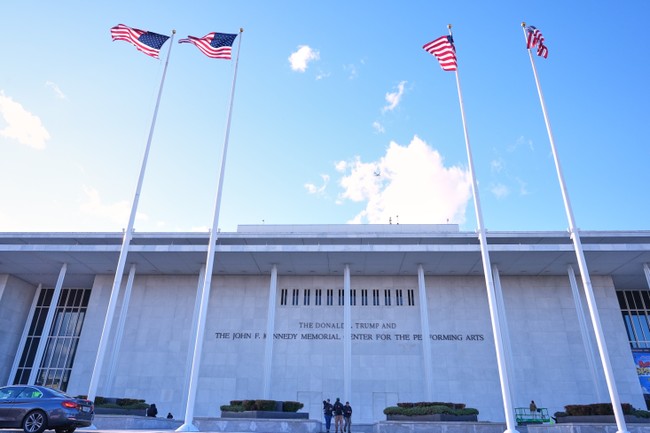
The Kennedy Center controversy shows a lot about political priorities: a board voted to add President Donald Trump’s name after fundraising and restoration efforts, critics erupted, and a small protest followed — a mix of culture wars, partisan theater, and real money that fixed a neglected landmark. This piece walks through the reaction, the key players involved, and the facts about restoration and fundraising while keeping the focus on how politics shaped the response.
The timing and tone of the backlash made one thing clear: critics were more invested in scoring points than in solving problems. Democrats’ public anger over the name change looked less like a debate about cultural stewardship and more like a reflexive attack on anything tied to Trump. That pattern has political costs when voters care about results over rhetoric.
The board’s decision to add the president’s name followed a campaign to stabilize the Kennedy Center’s finances and repair its facilities. Officials involved say that the restoration work and fundraising efforts brought the building back from disrepair, putting it on firmer footing. Those are concrete outcomes, and they complicate the simplistic narrative that the name change was purely political vanity.
One media figure delivered an especially loud reaction and made the spectacle even more political. “Journalist” Jim Acosta didn’t even pretend to have any objectivity and threw a major tantrum on Friday. He declared that “sh**” was “coming down” once the Trump team was done. The center’s president responded with a measured explanation of the restoration and the improved finances, undermining the theatrics with plain facts.
That exchange highlights a recurring dynamic: outrage amplified by media personalities when actual administrative fixes are at stake. Angry rhetoric often drowns out the underlying service work that keeps institutions running. Citizens who care about culture and civic assets have reason to look past the headlines and judge by outcomes, not sound bites.
Unsurprisingly, protesters showed up after the board vote, small in number but loud in intent. Among those lamenting the change was Sen. Chris Van Hollen, who described the move as a “horror” and decried what he called a “desecration.” He suggested it was only a question of when the name might be removed, framing the situation as a long-term battle rather than an administrative decision.
That reaction raises a fair question: if the building had been allowed to deteriorate, who benefited from neglect? Restoring a cultural institution takes resources, organization, and the ability to secure donations. The decision to attach a benefactor’s name is longstanding practice when private and public support combine to save a landmark, and it often reflects a pragmatic compromise to preserve the art and performance spaces the public uses.
The protest also intersected with immigration politics in a way that undercut critics’ credibility. Opponents pointed to past decisions by Van Hollen that clashed with his current outrage, reminding observers that partisan outrage tends to pick and choose which actions merit condemnation. Online responses made that point bluntly, and one social-media post captured the sentiment directed at the senator.
When critics denounce restoration efforts while having supported other controversial policies, their moral authority is weakened. That inconsistency is politically useful to opponents and damaging to the credibility of anyone trying to make a principled case. Voters notice when rhetoric does not match prior actions, and they penalize that gap.
Video and images from the protest showed that it was earnest, if not massive, and gave opponents material to amplify on social platforms. The demonstration underscored how symbolism and spectacle can overshadow the less glamorous work of fundraising and facility upkeep. Yet for those who actually care about the Kennedy Center’s future, the repairs and financial stabilization matter far more than a naming fight.
Officials tied to the restoration report significant private fundraising tied to the work, with documented amounts in the seven figures that went toward repair and programming. The figures cited by the center’s representatives showed major private and corporate donations that funded the renovation and addressed infrastructure needs. Those donations, paired with advocacy to secure federal assistance, were central to making the building usable and safe again.
For political observers, the episode is a concise lesson: partisan theater rarely fixes problems, but fundraising and administration do. The Kennedy Center outcome—money raised, repairs completed, operations shored up—gives a practical metric to weigh against the angry rhetoric. In the end, voters who prioritize stewardship will judge which approach actually preserved the institution.
What remains are the facts of what was done, who paid for it, and how elected officials and media figures responded. The fight over a name may play well on cable, but the work of preserving national cultural sites depends on results. That practical reality matters to taxpayers, artists, and anyone who wants these venues to thrive.


Add comment