
The Democratic Senate primaries are already shaping into a competition over identity badges rather than ideas, with multiple candidates touting historic personal labels as their chief qualifications while policy debates take a back seat.
After a difficult 2024 for Democrats, you might expect a course correction. Instead, many Democratic Senate hopefuls are doubling down on identity-first campaigning, treating demographic milestones as political capital instead of focusing on bread-and-butter issues voters care about.
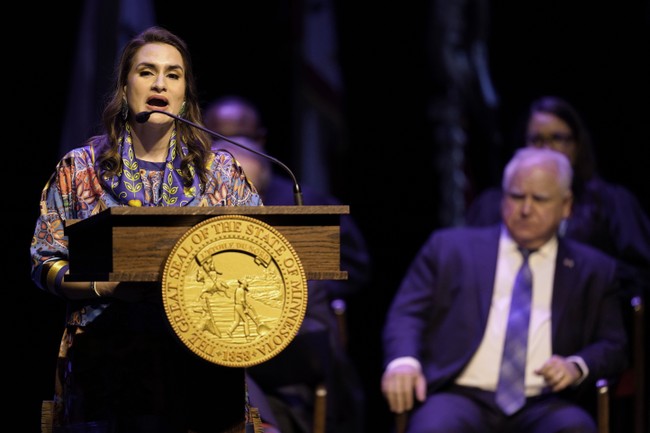
In Minnesota, the primary has become a display of who can claim the most noteworthy personal firsts. Rep. Angie Craig emphasizes being a lesbian mother and frames that as a historic credential, while Lt. Gov. Peggy Flanagan highlights her Native American heritage and party leadership role. Both candidates are leaning into identity as the central selling point rather than detailing how they would fix tangible problems facing Minnesotans.
Craig is running to be “the first lesbian mom ever elected” to the U.S. Senate, treating that label like a policy achievement. Flanagan stresses that she “was the first Native American woman to chair a national party committee in history” and markets her membership in the White Earth Nation as proof of authenticity and authority.
This sort of identity one-upmanship isn’t limited to Minnesota. In Michigan, Abdul El-Sayed has been pitching himself as “the first and only Arab and Muslim voice in the entire US Senate ever,” making religious and ethnic identity his headline credential. Turning demographic distinctiveness into the central campaign message risks sidelining discussions about jobs, public safety, and economic growth that most Americans prioritize.
In New Hampshire, Rep. Chris Pappas has courted the LGBTQ+ Victory Fund and leaned into being gay as a campaign asset, describing his run as a chance to install what he calls an “out-gay man” in the Senate. He’s even used sentimental messaging about growing up gay in New Hampshire to frame his campaign narrative, tapping identity as a shortcut to historic significance.
Iowa’s Democratic primary shows a similar pattern, where candidates emphasize personal identities to stand out. State Rep. Josh Turek highlights being “the first permanently disabled member of the Iowa House,” while rival Zach Wahls continues to reference his viral youth activism defending his two mothers’ right to marry. These personal stories are potent, but they are being used more to signal virtue than to lay out governing plans.
Across these contests, labels are marketed like qualifications. Candidates recite historic firsts and unique backgrounds as proof they belong at the top of the ticket, even when voters are clearly more interested in results than representation alone. The pattern is unmistakable: identity becomes the headline, policy elides into the fine print, and voters are left with rhetoric instead of roadmaps.
That strategy comes with political risk. Republican observers argue that emphasizing identity over substance is a formula for electoral failure, pointing to the 2024 outcomes as evidence that broad swaths of Americans rejected identity-driven politics. NRSC regional staff have made this point bluntly, insisting Americans “want leaders who deliver results” and that divisive identity tactics will not resonate with most working families.
Democrats’ insistence on outcompeting one another for woke credentials also fuels intra-party tensions. When the primary conversation centers on who can claim the most marginalized status or the most symbolic first, it invites attacks about being out of touch with everyday concerns like inflation, border security, and local crime. That fracture narrows the party’s appeal right when it needs to expand it.
Campaigns that double down on identity above policy risk alienating pragmatic voters who want tangible solutions. Candidates touting historic labels may energize a small base, but they often fail to build the broader coalitions needed to win statewide contests. The result is a politics of symbolism that leaves crucial policy debates underexplored and unaddressed.
There is also a credibility gap when historic firsts become the primary selling point. Voters expect elected officials to demonstrate competence and to outline clear plans for governing. When identity becomes the lead qualification, opponents can easily paint those campaigns as devoid of real-world experience or direction, reducing complex public issues to mere points of cultural signaling.
Not every candidate defined by identity lacks policy chops, but the focus on labels creates a campaign environment where substance struggles to break through. That dynamic benefits the opposition, which can frame the contest around practical outcomes and effective governance while casting identity-based appeals as performative.
As 2026 approaches, the Democrats’ reliance on identity-first messaging will be a test of electoral instincts. If these primaries continue to prioritize symbolic victories over policy specifics, the party may repeat mistakes that alienated voters last cycle. The central question remains whether candidates will return to substantive debate or keep treating historic firsts as the main ticket to victory.
“Hard-working Americans don’t care what you look like or your sexual preferences; they want leaders who deliver results,” Puglia said. “But radical left Democrats have nothing to offer the American people except divisive identity politics.”
For now, the primaries read as a competition of identity badges rather than a serious search for capability, leaving many observers to wonder whether the party has learned anything from recent defeats or simply plans to double down on the same approach.
@chrispappasnh Growing up gay in New Hampshire, I never imagined I could live openly — let alone run for U.S. Senate. But my community showed me what’s possible.



Add comment