
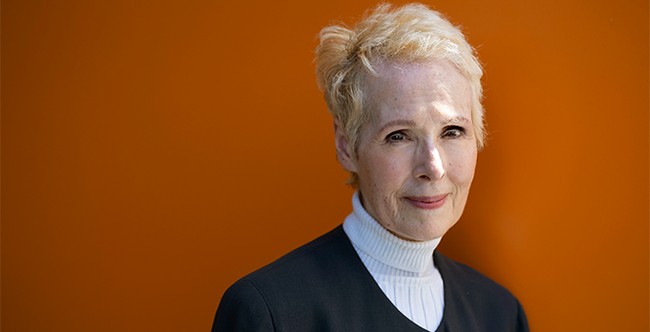
The Justice Department reportedly opened a criminal inquiry into E. Jean Carroll over allegations of perjury tied to her 2022 testimony, then the U.S. Attorney’s Office in Chicago issued a firm denial that it has any such investigation, sparking questions about who is handling this matter and why the reporting around it is so conflicted.
Reports circulated that the DOJ referred the Carroll matter to federal prosecutors in Chicago after concerns arose about her deposition and testimony in civil litigation that led to verdicts against former President Donald Trump. The referral supposedly connected to a nonprofit tied to one of Carroll’s supporters who has links to Chicago, which fueled speculation that the Northern District of Illinois might be involved. Those reports suggested the inquiry would examine whether Carroll committed perjury during litigation that already drew national attention and political heat.
Shortly after those stories ran, the U.S. Attorney for the Northern District of Illinois issued a categorical denial, calling any suggestion his office opened an investigation “categorically false.” That flat, public statement makes it clear the Chicago office wants to quash the idea that it is probing Carroll. The denial landed hard and fast, but it did not end the coverage or the questions about who at Main Justice is steering sensitive referrals.
The following is a statement by Andrew S. Boutros, United States Attorney for the Northern District of Illinois:
https://x.com/NDILnews/status/2060124784978010186?ref_src=twsrc%5Etfw
“In light of wide-spread reporting and intense media and public interest into the E. Jean Carroll matter in New York, the Chicago U.S. Attorney’s Office can confirm that it has not opened—and has never opened—a criminal investigation into E. Jean Carroll. Any claim to the contrary is categorically false.”
Even with that denial, other outlets published content asserting Chicago prosecutors were involved, and those pieces repeated lines about the referral and connections to a Chicago-based nonprofit. The competing narratives matter because this case intersects with a former president, high-profile civil verdicts, and partisan pressure that makes impartial handling essential. When reporting conflicts with an explicit denial from a U.S. attorney, readers deserve clarity about sources and chain of authority within the DOJ.
The Chicago U.S. Attorney, Andrew Boutros, has faced criticism tied to missteps in a separate local prosecution known as the Broadview Six, and detractors seized on that to question the office’s credibility. Former Chicago Mayor Lori Lightfoot, who once served as a federal prosecutor in that same office, voiced concerns about the office’s reputation and alleged errors in grand jury handling. Those criticisms have only sharpened scrutiny of any high-profile matter the office might touch.
Chicago U.S. Attorney Andrew Boutros, who is currently facing criticism for his office’s handling of the “Broadview Six” case in the city, is now leading an investigation into E. Jean Carroll, sources confirmed to NBC News.
Carroll is an 82-year-old New York woman who won a settlement against Donald Trump after accusing him of sexual assault.
The revelations that Boutros is investigating Carroll come amid growing fallout over the unraveling of the Broadview Six trial.
In a statement issued Thursday afternoon, Boutros denies that any investigation has been opened by his office, calling reporting by NBC News, CNN and other outlets “categorically false,” according to his office.
Critics argue that when an office has a recent track record of procedural errors, any suggestion it is handling politically charged work invites skepticism and claims of politicization. The tension here is twofold: first, that referrals originating from Main Justice should be transparent in who receives them and why; second, that local credibility matters when national politics is involved. The public wants to know whether DOJ referrals are driven by law or by outside pressure.
Officials in Washington have been largely quiet on the record about who authorized or received any inquiry tied to Carroll, and at least one senior Justice official recused from related litigation has stepped back from involvement. That absence of public, detailed comment leaves room for speculation and media narratives that may or may not match internal DOJ processes. For veterans of the department, internal referrals and recusal decisions are routine, but their secrecy in sensitive matters fuels distrust.
In the meantime, the denial from Chicago sits alongside persistent reporting that suggested otherwise, and the mismatch raises practical questions about source attribution and editorial caution. When outlets report conflicting accounts about a criminal inquiry, it distorts public understanding and elevates partisan instincts over careful factual grounding. Readers deserve straight answers about who actually holds jurisdiction in a case tied to a former president and a high-profile accuser.
As this episode unfolds, watch for further statements from Main Justice and any formal filings or grand jury activity that would make an investigation visible. Until such public markers appear, assertions about specific offices leading a criminal probe should be treated with caution, especially when a U.S. attorney has already denied involvement. The stakes are high when national politics and prosecutorial discretion intersect, and Americans have a right to expect rule-of-law clarity rather than contradictory headlines.


Add comment