
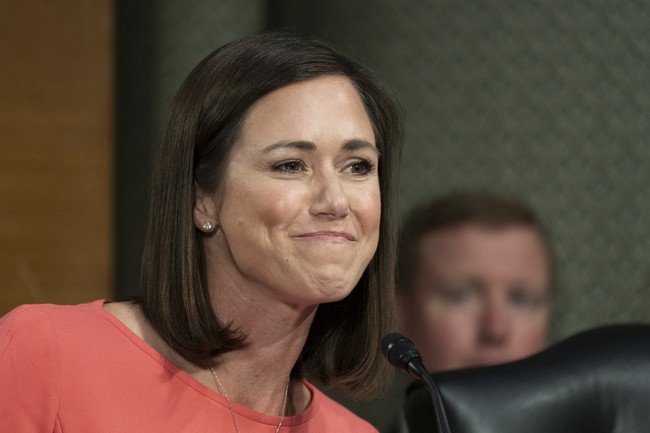
The House advanced a three-year extension of Temporary Protected Status for Haitian nationals, a move cheered by some Democrats and a handful of Republicans, but Senate Republicans including Sen. Katie Britt say the measure is “dead on arrival.” This piece walks through reactions from key GOP senators, concerns about precedent and enforcement, and the political fallout for members who crossed the aisle.
The discharge petition in the House moved forward with bipartisan support, prompting celebratory posts from its backers. Senator Katie Britt responded sharply, making clear she and other Senate Republicans will oppose making temporary protections permanent. The clash highlights a GOP split over immigration enforcement and the broader consequences of expanding TPS beyond its original intent.
This is dead on arrival in the Senate.
Temporary Protected Status is just that: temporary. Beyond that, 91% of all Haitian TPS holders entered the country illegally.
In the last election, the American people rejected mass migration policies that effectively grant amnesty to illegal aliens. It’s past time to put our own citizens FIRST.
“Dead on arrival” is not just rhetoric; it signals an intention to block the measure from even reaching a Senate vote in many GOP senators’ view. Senators like Britt and Tommy Tuberville have already signaled definitive “NO” votes, and several others on the Republican side voiced public displeasure after the House action. The practical effect is that the House effort may stall in the upper chamber while the legal battles and executive actions carry on.
Critics of the House move point to local impacts seen after earlier TPS arrivals, arguing that communities faced strains on services and job competition. Reports of increased demands on small towns and workplaces fed a backlash in states like Alabama and Ohio, where constituents felt the pain firsthand. Those experiences drove some Republican officials to emphasize enforcement and prioritizing American workers before expanding protected populations.
Some House Republicans who voted with Democrats defended their decision as a humanitarian response to Haiti’s conditions, but that rationale collided with hardline GOP concerns about precedent. The worry is simple: making TPS effectively permanent would encourage future waves of migration and undercut legal immigration pathways. For many conservatives, policy must balance compassion with sovereignty, law, and economic protection for citizens.
Several Senate Republicans were explicit in their opposition, arguing that TPS must remain temporary and that the House bill amounts to backdoor amnesty. They framed the vote as politically risky for the House members who supported it, predicting voter backlash in districts where enforcement and border security are top issues. The Senate’s role, according to these senators, is to prevent a permanent reclassification that would destabilize immigration norms.
Legal processes also complicate the picture: the Trump administration moved to terminate TPS for Haiti and that decision faced courtroom challenges, with the Supreme Court scheduled to hear related arguments. Until legal questions are resolved, GOP senators argue it is premature to lock in a multi-year extension that could negate ongoing executive and judicial processes. That legal backdrop strengthens the Senate’s case for inaction.
Other GOP senators echoed the same tough stance and framed this as a defense of citizens and working families. They warned that expanded TPS would worsen wage pressure, housing scarcity, and strains on healthcare and social services. Those themes resonated with voters who see immigration policy as directly tied to everyday economic and civic stability.
Senators who opposed the bill painted the House move as political theater meant to embarrass Speaker Mike Johnson and the administration rather than offer workable policy. They pointed to the timing and the political optics as evidence that this was about scoring points, not crafting durable immigration solutions. That assessment fed the narrative that the bill lacked the necessary bipartisan Senate support to move forward.
It’s called TEMPORARY protected status (TPS) for a reason.
The Senate will not expand TPS. The House’s bill is an insult to the millions of people patiently waiting in line & a tacit approval of Biden’s border invasion where TPS became de facto amnesty. Republicans will not continue to allow wage suppressing illegal migration to destroy working Americans with high prices, healthcare shortages, housing scarcity, and degradation of our social safety nets.
Rank-and-file Republicans who voted for the extension now face criticism from primary voters and conservative commentators who see the move as a betrayal of enforcement promises. Political operatives warn that an anti-incumbent mood could make these members vulnerable in primaries or general elections, especially in districts that pressed for stricter immigration controls. The immediate political calculation for those members is uncertain, but the backlash is already visible online and in conservative circles.
Beyond politics, lawmakers continued to debate the moral and practical dimensions of TPS policy: whether a multi-year extension helps vulnerable people or creates policy incentives that undermine orderly immigration. Senators opposed to the bill insist that compassionate solutions must not reward illegal entry or create lasting programs that supplant comprehensive reform. That tension frames the ongoing GOP approach to immigration policy moving into the next cycle.
Re the 7 GOP members of the house who are going to vote on a bill to extend TPS for Haiti, this is a vote for their re-election in their districts.
The bill will never get a vote in the Senate, and Trump would veto it even if it did and it passed.
The Supreme Court is going to hear the TPS termination cases on 4/29, and I don’t think the opinion will be one of the last ones to come out in late June.
I expect it will be 7-2 or 8-1, likely on jurisdictional grounds that Congress cut-off the jurisdiction of District Courts to consider the claims raised.
The House vote is meaningless.
For now, the Senate’s posture and ongoing legal proceedings suggest the House measure faces a steep uphill climb. Republican leaders in the Senate are signaling they will defend temporary status as a limited tool, not a pathway to permanent residency. The next steps will likely be legal rulings and continued political maneuvering as both parties make their case to voters.

Add comment