
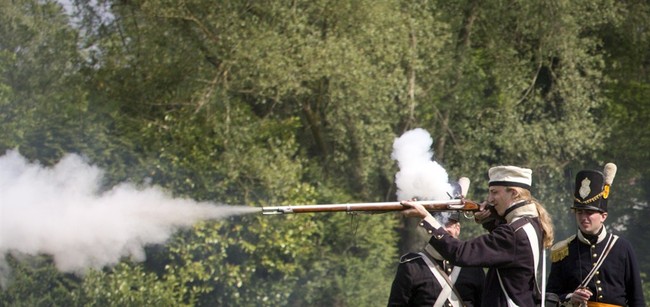
The Associated Press ran a piece fretting that Revolutionary War–era muskets, classified as antiques, are exempt from modern gun rules, and that claim has sparked a predictable reaction from gun-rights supporters who point out the practical differences between black-powder arms and contemporary firearms.
We often see overreaching proposals from the other side of the debate, but treating centuries-old flintlock muskets like modern weapons makes little practical sense. These arms are historically important and legally categorized differently for reasons that matter to collectors, museums, and historians. The debate should focus on reality, not fearmongering about artifacts.
The AP’s piece highlights ballistic potential and legal exemptions in a way designed to alarm. It quotes that a 1776 musket can fire a lead ball at roughly 1,000 feet per second and notes many antique or replica guns are not treated as firearms under federal law. That statement is technically accurate but lacks the practical context that separates those old designs from contemporary, concealable, magazine-fed weapons.
Black-powder muskets are large, heavy, and awkward compared with modern handguns and rifles. Loading one requires pouring a measured charge of loose powder, ramming a ball home, seating a patch, and priming the lock, which makes the effective rate of fire one or two rounds per minute for most users. That reality drastically limits their suitability for criminal misuse.
Then the article inserts a broader claim meant to shock a casual reader, and it places a video clip front and center to underline the point .
A musket from 1776 can fire a lead ball at a velocity of around 1,000 feet per second. Imagine what that can do to a human body. Yet under federal and most state laws, it’s exempt from gun regulations.
Many antique or replica guns aren’t considered firearms and even convicted felons can own them.
That blockquote captures the talking points, but it skips over why lawmakers carved out these exceptions in the first place. Antique classifications exist so historians and collectors can preserve and study artifacts without jumping through the same hoops required for modern firearms. These carve-outs are not an invitation to criminals; they acknowledge the very different uses and handling requirements of historical pieces.
Ashley Hlebinsky, Firearms Historian: I think people would be kind of interested to know that when you look at the firearms with the revolution, flintlock musket or the flintlock rifles… that they are actually technically, in terms of legal standards and the federal government, not legally a firearm. They’re classified as an antique. It is actually not nearly as heavily regulated as a modern firearm. And what I mean by that is that today, you don’t necessarily need a background check for it in most states. It was created to essentially not burden historians, collectors, museums, and other law-abiding gun owners from collecting these significant pieces of history.
Continuing voiceover: It seems silly to put restrictions on something that would be such a terrible weapon if you wanted to kill people. You can kill more people quickly with a car than you can with a musket.
Jason Monhollen, 2nd North Carolina Regt. Regulating a weapon like this is regulating life and death, right? Whoever holds this holds that power.
Those quoted remarks are fine as historical observation, but they are not an argument for sweeping new restrictions. The practical obstacles to using muskets for criminal ends are significant: size, weight, noise, smoke, and the time-consuming reload process all make them poor tools for modern violent crime. Criminals choose ease and speed, which is why contemporary, compact guns are a far greater concern for public safety.
Even among antique-design firearms there are distinctions worth noting. Some cartridge firearms older than 50 years can receive special Curio & Relic designations and may be transferred to licensed collectors with different paperwork rules. That system exists because licensed collectors already undergo background checks, which provides a layer of accountability without burdening legitimate preservation efforts.
Regulating historic arms like they were modern tactical weapons is an exercise in symbolism, not safety. If policymakers want to reduce violence, they should target tools and behaviors that actually facilitate it: illegal trafficking, straw purchases, and the easy access criminals have to compact, high-capacity firearms. Chasing muskets because they sound scary on camera is a poor use of political energy.
Critics will argue that any loophole is unacceptable, and they will use emotional imagery to press for broader bans. But policy should be informed by how weapons function in real life, not by hypotheticals or theatrical video segments. The sensible approach respects both public safety and the legitimate needs of historians and collectors.
The AP piece stirred attention, and that attention will predictably spawn calls for regulation. Lawmakers should resist symbolic overreach and instead focus on common-sense measures that address modern criminal use of firearms while preserving historical study and lawful collecting.



Add comment