
I’ll explain how a leading Michigan Democrat’s record on policing and honesty drew bipartisan scrutiny, show specific exchanges where claims were challenged, include exact quotes from interviews, examine the broader implications for the party, and present the key video evidence that sparked the debate.
Abdul El-Sayed, a top Democrat in the Michigan Senate primary, has found himself under an unusual level of pressure from mainstream outlets after his public statements collided with archived interviews and social media posts. CNN dug into his past remarks and surfaced material that contradicts his current denials about advocating to defund police. That pushback matters because voters want clarity on public safety and fiscal priorities.
During an interview, El-Sayed pushed back on the label “physician” despite holding an M.D. from Columbia, saying his choice of words wasn’t the point. He told a national host he was more interested in discussing health and education than job titles. That exchange left anchors and viewers asking why precision in public statements seemed optional.
CNN’s reporting turned to El-Sayed’s past comments on policing and social investments and found examples that undercut his recent denials. The network presented clips and quotes showing him embracing a version of “defund the police” rhetoric in 2020. Once those clips surfaced, El-Sayed’s campaign suddenly faced a credibility test that is hard to shrug off in a general election environment.
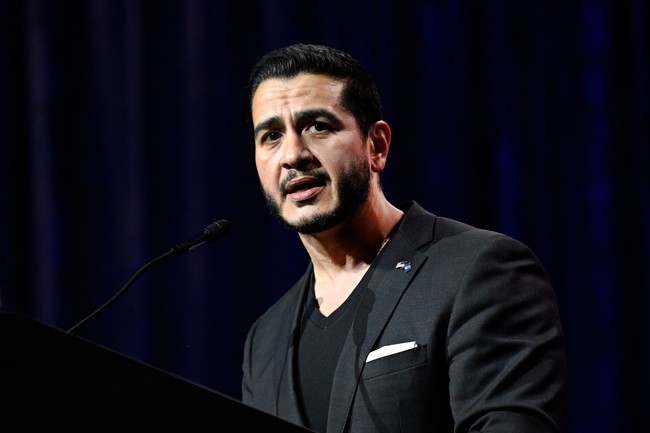
When confronted on CNN by correspondent Manu Raju, El-Sayed grew visibly agitated as taped remarks were played back and questioned. He attempted to reframe what he meant by the phrase, arguing the label had been misunderstood. That defense did not neutralize the recordings; instead, it highlighted a growing pattern where phrasing and intent are being parsed by voters and reporters alike.
El-Sayed then offered a longer explanation that tried to recast “defund” as a narrowly targeted objection to certain kinds of equipment transfers. He argued the focus was on war surplus gear sold to local departments after Iraq, not on stripping funding for core police functions. The distinction mattered to him, but it didn’t erase the earlier rhetoric that critics point to as proof of support for broader budget cuts.
“You know, what’s interesting about that comment is I go as far as defining what I mean by that,” El-Sayed said. “Do you disagree with investing in libraries and public services and social services? You fixate on the word ‘defund,’ but what I’m talking about is war material that we made too much of during the war in Iraq. And then, because we had too much of it, we had to find somewhere to sell it. So we sold it to a whole bunch to local police departments.”
He continued to insist the conversation should center on broader public safety investments rather than a single slogan. “Now, if you want to keep talking about one particular word that was in vogue that I tried to define at the time, sure. But I think if we’re having a serious conversation about public safety, you’ll see that my perspective is in keeping with exactly what most people who are rational about this question are talking about, and what they want.”
“Now, if you want to keep talking about one particular word that was in vogue that I tried to define at the time, sure. But I think if we’re having a serious conversation about public safety, you’ll see that my perspective is in keeping with exactly what most people who are rational about this question are talking about, and what they want.”
That explanation does not sit well with voters who equate “defund” with substantial budget reductions that hamper policing capacity. In cities that tried budget slashes and reassignments, many residents saw crime and disorder spike, and local leaders scrambled to restore resources. Those outcomes give Republicans a clear line of attack in the race: argue that rhetoric from the left has real-world consequences.
Campaigns are not fought in a vacuum, and candidates’ past words are fair game when they run for higher office. El-Sayed deleted tweets supporting the movement before launching his Senate bid, a move opponents highlight as evidence of opportunism. Deleting public posts doesn’t erase the impression left by earlier advocacy and recorded interviews.
Democrats who still flirt with defunding face a strategic problem: the phrase remains toxic with many voters who prioritize safety. Some on the left have tried to soften it by redefining the term as a call for different spending priorities, but that semantic shift often smells like political triage. Plain talk about budgets and outcomes tends to resonate more than clever redefinitions during a heated campaign.
Prominent progressives have offered blunt takes that undercut any attempt to rebrand the term. One high-profile Democratic congresswoman once stated directly, “Defunding police means defunding police.” That line underlines why Republican challengers can credibly frame the debate around clarity and accountability rather than abstract policy debates.
Video clips and transcripts are central to this dispute, and the embed below shows the exchange that helped make the story stick. Voters watching the footage can judge for themselves whether the candidate’s later explanations match what he said earlier.
https://x.com/DSA_Watch/status/2076318214053659040
In a tight midterm atmosphere, Republicans see a clear playbook: use documented statements to pressure Democrats who waver on public safety issues. The broader lesson for campaigns is straightforward — past remarks live forever, and voters reward straightforwardness over evasive framing. Candidates who try to rewrite their histories risk getting pinned by the record.



Add comment