
The White House pushed back hard against a media narrative that painted President Trump as absent during the government shutdown, arguing responsibility lies with Senate Democrats and highlighting the president’s active diplomacy and public comments during the crisis.
Television hosts and certain outlets ran with a simple line: Trump was “MIA” during the shutdown. That claim came into focus after a Morning Joe contributor promoted an Atlantic piece saying the president was ignoring the crisis, and it spread quickly on social platforms. Conservatives saw this as a predictable media angle that ignored Senate math and the role of Democratic votes in keeping key measures from passing. The White House and its supporters fired back, saying the attack was both misplaced and unfair.
The core point often left out by critics is procedural: ending a shutdown requires 60 votes in the Senate for most measures, and the president does not cast those votes. Yet coverage tended to frame the situation as if the president alone could reopen the government. That framing shifts responsibility away from Democratic senators who voted against clean continuing resolutions and other stopgap measures. For many Americans watching, it looked like selective reporting rather than an objective accounting of who held leverage in the chamber.
Critics also ignored the public record of President Trump’s actions. White House accounts highlighted engagements and meetings scheduled during the period and insisted the president repeatedly addressed the shutdown and called for compromise. The rapid response team was blunt on social media, even calling the commentator a “dumb***.” That bluntness underscored how frustrated conservatives were with what they saw as biased coverage that elevated partisan talking points over facts.
Beyond social media skirmishes, the White House pointed to tangible diplomatic wins occurring while coverage focused on the shutdown line. Officials touted trade deals, investment commitments, and discussions on critical minerals and security agreements secured during a presidential trip. Supporters argued these achievements mattered as much as legislative maneuvering in Washington and deserved coverage rather than simplified narratives that painted the president as absent from public life.
Meanwhile, opponents of the White House strategy kept pressing for responsibility on the administration. Democrats argued that presidential leadership should prioritize reopening the government and that more visible pressure could have been applied to allied senators. That argument has resonance among some voters who want federal services restored quickly. But it fails to address the Senate’s specific voting rules and the repeated Democratic votes against clean funding measures.
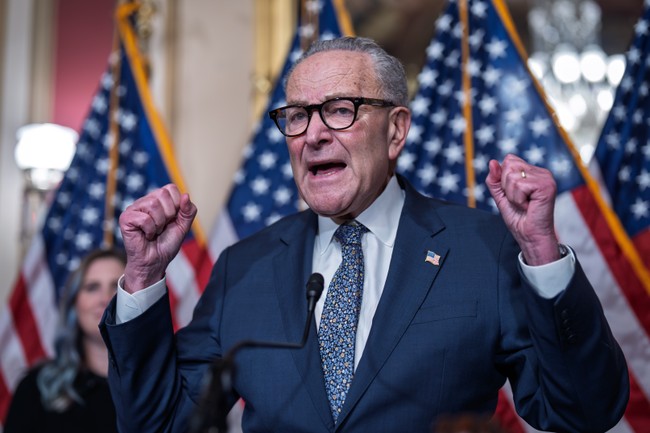
The dispute quickly became political shorthand, with conservatives dubbing the standoff the “Schumer Shutdown” to emphasize who they say engineered the impasse. That label captures a political judgment and frames the debate in partisan terms, but it also reflects the GOP message that Senate Democrats and their leaders chose to block funding rather than accept negotiated terms. Messaging like this aimed to make clear who conservatives believe is responsible for furloughs, disrupted services, and the economic ripple effects of a closed government.
Public-facing back-and-forths included calls from the president for Democrats to “stop the madness,” and footage and statements of meetings aimed at finding compromise were circulated by the White House. Critics called those gestures insufficient, while allies argued they were proof the president was engaged and actively seeking resolution. That split in perception fed media cycles and social feeds, amplifying the partisan lens through which many Americans viewed the shutdown.
The policy stakes were concrete: votes defeated measures that would have kept military pay, SNAP benefits, and federal employee salaries flowing without attached policy riders. Conservatives emphasized the immediate human toll of those votes and accused Democrats of leveraging ordinary Americans’ livelihoods for political aims. Democrats countered by insisting on policy priorities and concessions they deemed essential, and the resulting stalemate reflected deep national divisions on both substance and tactics.
Beyond blame and sound bites, the shutdown debate highlighted a broader disconnect between media narratives and constitutional mechanics. When coverage centers on a single personality without showing how votes in the Senate determine outcomes, the public gets an incomplete picture. Republicans pushed back to correct that imbalance and to make the procedural truth clear: the president could not single-handedly reopen the government without Senate support.
Responses to the media narrative were not limited to the White House. Conservative commentators and many Republican officials amplified the message that Democrats bore responsibility and pointed to votes and statements as evidence. Online exchanges and television segments became battlegrounds for shaping public opinion, with each side accusing the other of misrepresenting events and motives. The fight over narrative became as important as the fight over legislation.
One stark editorial observation circulated among conservative outlets: “The Schumer Shutdown is here. Rather than put the American people first, Chuck Schumer and the radical Democrats forced a government shutdown for healthcare for illegals. They own this.” That blunt phrasing summarized the GOP line and underscored how charged the rhetoric had become. For many conservatives, the emphasis was on clarifying responsibility and keeping attention on the votes that led to the closure.
Voices on both sides kept trading criticism, and the shutdown continued to be a wedge issue in political messaging. As the back-and-forth played out, the central procedural fact remained simple: without the necessary Senate votes, a president cannot unilaterally reopen the government. That truth drove the White House defense and framed much of the conservative response to media coverage that labeled the president absent or indifferent during the crisis.



Schumer and Jeffries this is all your creation you choose to shut down the government you’re the ones holding the bag of screwing the American people no one else except all democrats you’re loosing your on voters by the millions everyday and they will never return to the democrats party because you care more about illegals and foreign countries than the people who pay your outrageous salaries. America benefits all benefits belong only to born American citizens we are the ones who pay all the bills in this country America benefits belong only to Americans citizens you forgot your oaths America first and now your all finished democrats can never ever be Trusted ever again. You screwed the pooch for the last time your all finished.