
Checklist: Analyze Putin’s meeting with Iran, examine the strategic risks to the region, consider nuclear implications, weigh the U.S. posture, and highlight what a Republican perspective demands.
Vladimir Putin hosting Iran’s foreign minister in Moscow is not a casual meeting; it’s a geopolitically fraught handshake during active regional conflict. That meeting came as Operation Epic Fury unfolds, raising questions about Russia’s motives and what support it might actually offer Tehran. From a Republican viewpoint, this is another sign that rivals of the United States are consolidating influence where American interests and allies are most vulnerable.
The public lines offered by Moscow were predictably reassuring; Putin claimed Russia “intends to maintain” strategic relations with Iran and is “ready to do everything in its power to achieve peace in the Middle East.” Those words sound fine in a press release but ring hollow when paired with an ally that still bankrolls terror and a partner that has a long record of aggression. For conservatives who prioritize strength and deterrence, rhetoric is not a strategy.
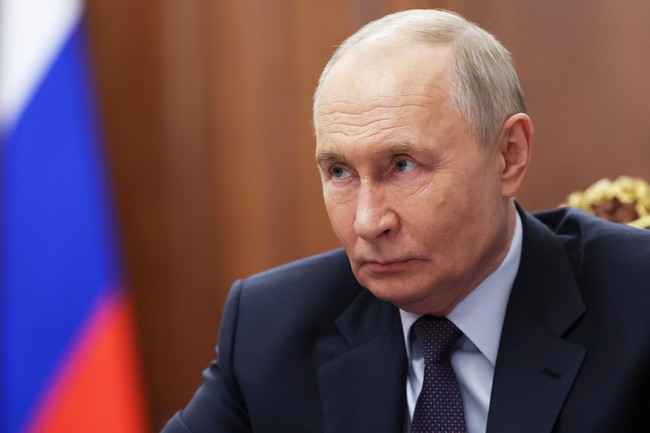
Russian President Vladimir Putin hosted Iran’s Foreign Minister Abbas Araghchi in Moscow on Monday, with the two countries reaffirming their deep ties and pledging to work together amid Tehran’s war with the U.S. and Israel.
Putin said Moscow “intends to maintain” its strategic relations with Iran, Russian state-owned media TASS reported, adding that Russia is ready to do everything in its power to achieve peace in the Middle East.
Notably absent from the public readout was any meaningful mention of Russia’s own war in Ukraine and the strain it places on Moscow’s military capacity. That omission matters because it shifts the conversation to what Russia still controls: a massive nuclear arsenal. Conservatives who understand deterrence see the risk that even indirect cooperation could change the balance of power in the region overnight.
There is a sober, unsettling possibility that Moscow could offer Tehran material support that stops short of overt conventional intervention. Russia’s strategic calculus is driven by interest, not ideology, and trading diplomatic cover for concessions that erode U.S. security would be a logical if dangerous choice for Putin. From a Republican lens, we must assume adversaries exploit gaps in resolve until we close them.
Putin also said he had received a message from Iran’s Supreme Leader Mojtaba Khamenei, who reportedly was injured and disfigured from the initial U.S. and Israeli attacks against Iran’s leadership. Those attacks killed Khamenei’s father and the previous Supreme Leader, Ali Khamenei.
The Russian leader asked Araghchi to convey to the supreme leader his “gratitude for this message and best wishes for his health and well-being.”
Talk of messages and well-wishes between authoritarian leaders feels like a sideshow when real weapons are in play. Russia still fields a huge nuclear inventory—something no nation should casually expand into a volatile theater. One or two warheads in the wrong hands or delivered under the wrong pretext would create catastrophic outcomes for U.S. forces, regional partners, and global stability.
History shows strange partnerships form when paranoia and pragmatism collide; Iran and Russia have long collaborated where it suits them, regardless of ideological fit. But Americans must not accept a new normal where Tehran gains leverage from Moscow while U.S. influence wanes. Republicans who value American strength insist on clear, credible deterrence that prevents escalation and protects allies.
Araghchi said relations between Moscow and Tehran represent a “strategic partnership at the highest level” and will continue to develop “regardless of circumstances,” TASS reported.
That language should set off alarm bells in Washington. “Strategic partnership at the highest level” implies long-term coordination, not a temporary alignment of convenience. From a conservative standpoint, the U.S. must respond with forceful diplomacy and a readiness to back words with meaningful action, so rivals learn that aggression and arms proliferation carry real costs.
Strategic clarity is the Republican prescription: strengthen alliances, keep forward-deployed deterrence robust, and ensure adversaries cannot gain a nuclear or conventional edge. Russia’s outreach to Iran is a reminder that strength matters and that vacuums are always filled by those willing to act without regard for democratic norms or human rights. The choice for the United States is to be decisive or to cede ground.
There is no room for wishful thinking when nuclear risks and regional instability rise simultaneously. Republicans argue that credible deterrence and unambiguous support for allies are the only reliable ways to keep escalation limited and prevent a broader conflagration. If opponents believe the U.S. will hesitate, they will test that belief until it is proven wrong.


Add comment