
The new survey and oversight reports show a clear public view: voters blame government fraud and mismanagement for pushing up everyday costs. Officials and state auditors are reporting billions in improper payments, and the administration has launched a nationwide push to root out abuse in federal benefits programs. Lawmakers and state treasurers argue that weak accountability turns fraud into an invisible tax on households, and a federal task force aims to pursue cases regardless of size. This article lays out the key findings, state examples, official reactions, and the new federal enforcement approach.
Eighty-seven percent of voters say they are concerned about fraud or misuse of taxpayer money, and 83 percent believe fraud contributes directly to higher taxes and rising costs for families, according to a national survey from Deep Root Analytics. More than half of respondents said too little fraud is being stopped and called for stronger investigation. Those numbers reflect growing frustration that waste and improper payments are not just abstract losses but real drivers of higher prices and tax burdens.
State financial reviews have turned up substantial amounts of improper payments and recoveries that officials say should not be ignored. In its 2025 oversight report, the State Financial Officers Foundation documented major recoveries and strengthened safeguards across dozens of states. The report credits state auditors, treasurers, and comptrollers with protecting funds and stopping significant amounts of waste.
SFOF members protected over $28 billion in state funds and stopped approximately $5.7 billion in waste, fraud, and abuse.
Specific state examples underline the scope of the problem. Kentucky auditors flagged more than $836 million in Medicaid payments that did not go to eligible recipients, a figure that translates into lost taxpayer dollars and program distortion. North Carolina uncovered over $1.04 billion in unused salary allocations across agencies, while audits in Utah identified more than $518 million tied to fraud, waste, and abuse in public programs. Those are concrete sums that officials say ultimately affect state budgets and the taxpayers who fund them.
In March, the president issued an executive order directing a nationwide crackdown on fraud in federal benefits programs, arguing that enforcement failures have contributed to rising costs for Americans. The order moves to coordinate federal agencies and elevate the search for improper payments and deceptive claims. The administration highlights state-level scandals as evidence that more aggressive enforcement is warranted.
“Fraud and mismanagement in these programs constitutes theft of hard-earned tax dollars and contributes to rising costs for health care, housing, utilities, and groceries.”
The order cites a sprawling case in Minnesota as an example of how large and complex schemes can become when oversight lapses. Prosecutors there estimate suspected Medicaid fraud could reach into the billions, and investigators uncovered a separate child nutrition fraud tied to bogus meal claims. Officials say those cases illustrate how weak controls in one place can create systemic losses that ripple into higher costs for families everywhere.
The Feeding our Future scheme stole nearly $250 million intended to feed needy children by submitting fraudulent claims for meals that were never served.
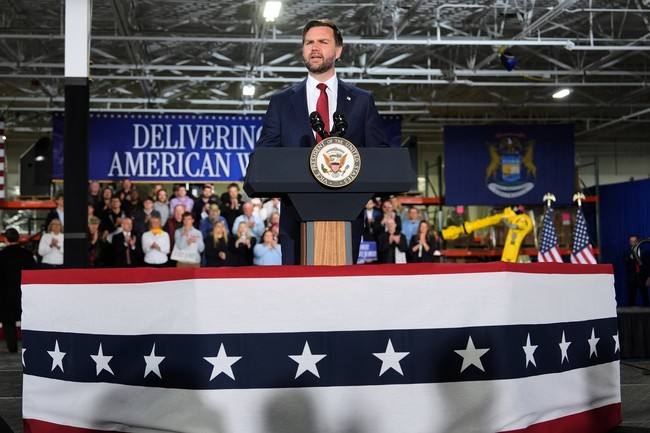
The new federal task force will be led by Vice President J.D. Vance and include Treasury, Justice, Health and Human Services, Homeland Security, and other agencies. The stated goal is to close enforcement gaps and pursue fraud of all sizes, so smaller-dollar scams do not get ignored in aggregate. Officials describe the effort as restoring accountability and limiting the invisible tax that fraud imposes on households.
At an April 1 event, Vice President Vance criticized prior enforcement approaches that deprioritized cases below certain dollar thresholds and pledged that the administration will not allow those cases to disappear in the cracks. He promised to ensure that prosecutors and agencies treat fraud seriously regardless of per-case value, and that those responsible face consequences.
“When you have fraud being committed in this country, the Department of Justice has largely turned a blind eye towards it if it’s under a certain dollar amount. One of the things Colin is going to do is make sure that no fraud, no matter how big or how small, is ignored.”
Leaders in the oversight community emphasize the connection between accountability and household finances. SFOF CEO OJ Oleka put it plainly: “Americans rightly understand that fraud is the invisible tax worsening the affordability crisis.” Utah Treasurer Marlo Oaks framed the issue in everyday terms, saying households bear the costs when oversight weakens.
“When accountability weakens, the financial burden ultimately falls on households. Efforts to reduce the cost of living and to strengthen oversight are closely connected.”
Public sentiment appears to back tougher action: roughly 70 percent of voters support more aggressive fraud investigations, and a majority point to government spending and policy choices as drivers of rising costs. That political pressure is shaping how federal and state officials prioritize audits, prosecutions, and interagency coordination. The conversation now centers less on whether fraud matters and more on how aggressively to pursue it and close gaps that allow improper payments to persist.
Officials and auditors say that strengthening oversight, improving data sharing, and expanding investigations can protect taxpayer dollars and relieve pressure on household budgets. For many voters, the case is simple: stopping fraud is a practical step toward lowering the invisible costs families face every month. The new task force and state actions will test whether coordinated enforcement can translate into measurable savings and tighter protections for public dollars.

Add comment