
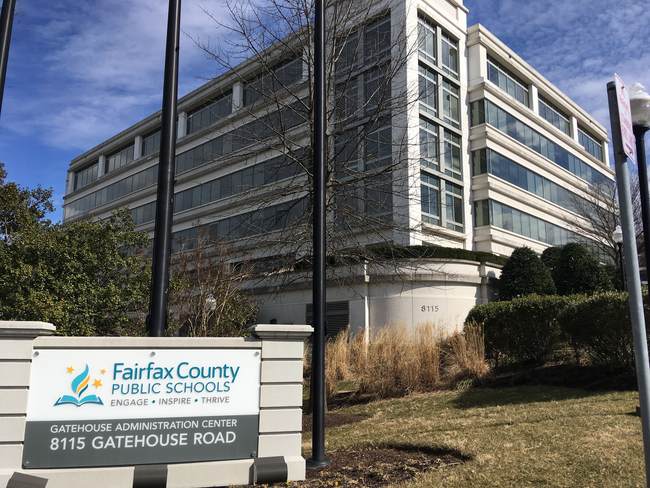
Virginia’s law letting English learners stay in high school until 22 has created a risky mix of adults and teens in classrooms, and a recent arrest in Fairfax County has focused national attention on how immigration policy, prosecutorial decisions, and education rules intersect with student safety.
This isn’t just a local squabble — it’s a policy problem that affects parents, taxpayers, and the rule of law. A 19-year-old man accused of groping multiple teenage girls at Fairfax County High School shows how loose borders and permissive local policies can collide in dangerous ways. The facts raise clear questions about who belongs in a high school hallway and how officials are handling immigration-related criminal cases.
The accused, identified as Israel Flores Ortiz, reportedly entered the country in 2024 and was released into the community under federal policies that lacked proper supervision. Fairfax County prosecutors moved to release him, but a judge denied that request, keeping him in custody while the case proceeds. Local law enforcement has also signaled limits on cooperation with ICE detainers unless there is a formal judicial order.
Parents and school communities are asking why a grown man was attending high school at all, and the answer lies in Virginia Code § 22.1-5. That section allows students for whom English is a second language who first enroll in Virginia after turning 12 to remain in high school until age 22 if state funding is provided for those programs. The policy was likely intended to give displaced young people a fair shot at completing high school, but it has an unintended consequence when adult men wind up in school corridors with teenage girls.
The political context matters. Federal border policies over the last few years — and decisions by local prosecutors — play into who ends up on school rosters. Prosecutors who prioritize release over public safety invite controversy when violent or sexually inappropriate conduct is alleged. Parents deserve prosecutors who put victims and communities first, and school districts that set clear, age-appropriate boundaries for attendance.
SHOCKING: Virginia public schools are allowing foreign migrant non-English speakers to enroll in their high schools up to the age of 22.
Under Virginia law, the standard cutoff for high school is age 20, but a special exception for English Language Learners who first enroll after turning 12 lets them stay until they turn 22 — with no tuition charged if state funding is provided
Virginia Code § 22.1-5(D) explicitly states: “School boards may accept and provide programs for students for whom English is a second language who entered school in Virginia for the first time after reaching their twelfth birthday, and who have not reached 22 years of age on or before August 1 of the school year. No tuition shall be charged such students, if state funding is provided for such programs.”
Taxpayers are also in the picture. ESL programs require resources — staffing, translation, and specialized curriculum — and when funding stretches to older enrollees, it redistributes education dollars away from other needs. Families whose children are navigating overcrowded classes and stretched services have a right to ask whether policy adjustments are needed to protect both learning environments and safety.
There are practical fixes that respect the intent to help non-English-speaking youth while protecting minors. School systems can set stricter enrollment screening and supervision standards for older ESL enrollees, and local officials can ensure adults are not placed in unsupervised settings with teenagers. Prosecutors can make victim safety their top priority and cooperate with federal authorities when detainers or formal judicial orders are appropriate.
The broader immigration backdrop can’t be ignored. Enforcement, border control, and the handling of recent arrivals determine who appears in local communities and schools. “Thanks to President Trump, illegal immigration into our great country has virtually stopped. Despite the radical left’s lies, new legislation wasn’t needed to secure our border, just a new president.” That view reflects the belief held by many that stronger federal action is the key to preventing these kinds of problems at the local level.
At the end of the day, parents expect schools to be safe places where teens can learn without fear. Allowing adults with alleged criminal behavior to mix freely with students undermines that trust. Lawmakers, school boards, and prosecutors should be willing to adjust policies so that the original goal of helping vulnerable young people does not come at the cost of student safety.
(Special education students may legally remain in school until age 22 and are typically supervised throughout the day, which highlights how supervision and structure can mitigate risks when older students are present on campus.)



Add comment