
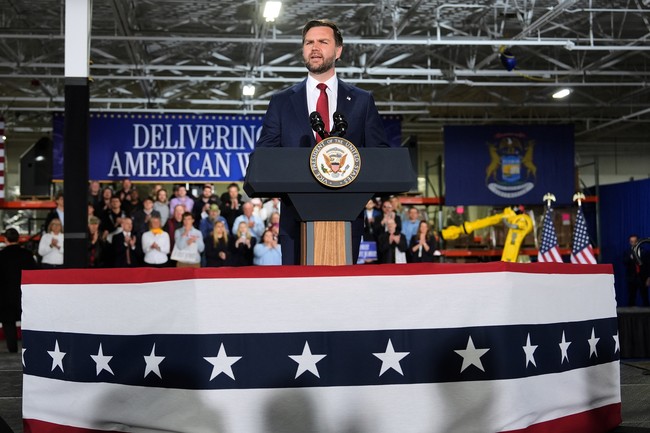
This article outlines Vice President JD Vance’s midterm message in Michigan, arguing that Republican policy under Trump restored industry and practical prosperity while Biden-era decisions caused higher costs and insecurity; it highlights Vance’s focus on manufacturing, working-class concerns, and safety, and it includes his exact quoted remarks that frame the choice voters face this November.
Vice President JD Vance is carrying a focused message into Michigan that speaks directly to the Rust Belt and working-class communities. He stresses that what people feel at their kitchen tables—grocery bills, energy costs, and job opportunities—tracks with concrete policy choices. Vance frames the current improvement as the result of a deliberate turn back to American industry and energy priorities.
He argues this recovery did not happen by accident but followed a return to Trump-era priorities that put American workers first. That is the core of his pitch: policy matters and leadership changes outcomes. Vance told a manufacturing crowd in Auburn Hills that the difference is visible where people actually work and live.
He casts the upcoming midterms as a clear, real-world choice for voters between continued recovery and a return to higher costs and less security. For him, this is not abstract economic theory but the lived experience of households and communities. The message ties national policy to local realities in a straightforward way.
“What is really at stake in this election in November is fundamentally, we’ve done so much good… but the Democrats threatened to take us straight back to where we were just a few short years ago… everything from groceries to our home electricity bill was going up… under Joe Biden.”
Vance repeats that voters already lived through the consequences of the prior administration’s policies and that they remember the pain of rising prices and shrinking stability. He points to everyday anxieties about safety and whether families can feel secure in their neighborhoods. The argument is meant to be immediate and visceral, not academic.
The focus moves beyond paychecks to public safety and social order, with Vance arguing those concerns are linked to political choices in Washington. He emphasizes that a secure home and a stable community are part of the same contract that economic policy must uphold. The vice president frames his message as defending a normal, dependable American life.
“It’s not just about the economics… It’s also about peace and security… being safe in your own home… that is what Joe Biden and his leadership… tried to take away the most from us.”
Where the case is most tangible, Vance points to autos and manufacturing, the sectors that define Michigan’s economy. He wants voters to see hiring, production, and investment as the result of policy shifts that encouraged domestic output. The claim is that Republican leadership stopped treating industry as a problem and began rebuilding it instead.
Vance contrasts Republican policies with what he describes as Democratic hostility toward domestic manufacturing and American energy, including the push toward mandates and regulations that he says constrained production. He frames the Trump return as permission for manufacturers to invest, hire, and expand without being penalized for making traditional American products. That contrast is central to his appeal among factory towns.
He stresses tax policy as another concrete benefit: changes that, in his telling, left more money in workers’ pockets and lowered the cost of doing business. Vance talks about cuts and reforms that made hiring easier and investment more attractive. He ties those policy shifts directly to the kinds of paychecks and jobs voters care about most.
The political pitch is simple: the midterms will decide whether the Rust Belt keeps climbing back or slides back under policies that, according to Vance, harmed it. He frames the choice as between continued rebuilding under Republican priorities and a reversal to the inflation, insecurity, and regulatory pressure of the previous years. For voters who measure government by what they see at work and at home, that is a tangible decision.
Beyond rhetoric, Vance points to measurable signs in vehicle sales and factory activity as evidence that the economic direction has changed. He urges people to connect those indicators to policy rather than dismissing them as random fluctuations. The goal is to make the connection between Washington action and local outcomes unmistakable.
Ultimately, Vance’s speech in Michigan reads as both a diagnosis and a promise: a diagnosis of what he says went wrong under Democratic leadership and a promise that Republican governance will keep rebuilding manufacturing, restore stability, and protect working- and middle-class life. That promise is aimed squarely at voters who want to see real-world results in their communities and on their paychecks.


Add comment