
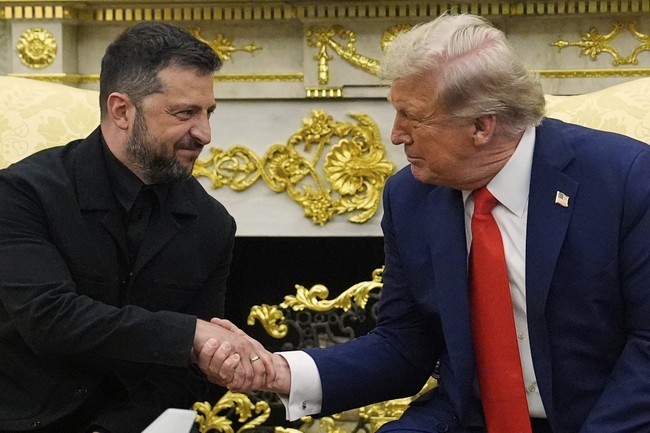
This article explains fresh reports that Ukraine has accepted the main elements of a peace framework tied to President Trump’s proposal, outlines who took part in talks, notes what remains undecided, and highlights key quoted statements from Ukrainian officials confirming progress toward a deal.
Recent reporting indicates quiet but consequential diplomacy involving Ukrainian, Russian, and U.S. representatives that could reshape the long-running conflict that began in 2014 and escalated in 2022. Officials say the sides agreed on “core elements” of a settlement after discussions in Geneva, pointing to a potential pathway off the battlefield. Details remain thin, but the tone coming from Kyiv has shifted toward pragmatic engagement rather than outright rejection. That shift reflects the realpolitik many leaders now acknowledge as necessary to end open combat.
Rustem Umerov, secretary of Ukraine’s National Security and Defense Council, provided direct public confirmation of progress in Geneva and credited U.S. involvement. The following statements are presented exactly as released: “Ukraine has agreed to the core elements of a peace proposal brokered by the Trump administration, with some details still to be worked out, a U.S. official confirmed Tuesday to NewsNation’s Kellie Meyer.” Umerov then said, “[We] appreciate the productive and constructive meetings held in Geneva between the Ukrainian and U.S. delegations, as well as President Trump’s steadfast efforts to end the war.”
Ukraine has agreed to the core elements of a peace proposal brokered by the Trump administration, with some details still to be worked out, a U.S. official confirmed Tuesday to NewsNation’s Kellie Meyer.
Rustem Umerov, secretary of Ukraine’s National Security and Defense Council, that Ukrainian and U.S. delegations agreed on “the core terms” of the agreement presented in Geneva.
“We appreciate the productive and constructive meetings held in Geneva between the Ukrainian and U.S. delegations, as well as President Trump’s steadfast efforts to end the war,” Umerov wrote in a post on the social platform X.
“Our delegations reached a common understanding on the core terms of the agreement discussed in Geneva,” he continued. “We now count on the support of our European partners in our further steps.”
“We look forward to organizing a visit of Ukraine’s President to the US at the earliest suitable date in November to complete final steps and make a deal with President Trump,” he added.
The announcement followed reports of discreet meetings held in Abu Dhabi involving representatives from the three countries, moves that insiders describe as off-radar diplomacy aimed at producing a foundation for formal talks. For months, competing proposals and public posturing have complicated the search for a settlement, but behind-the-scenes talks now seem to be narrowing the options. Sources suggest the original 28-point framework floated publicly has been trimmed, and negotiators are focusing on a shorter, more politically viable set of provisions. That trimming appears intended to remove items that would have been immediate deal-breakers for Kyiv.
According to various accounts, the draft has been reduced from 28 points to about 19, with some of the most controversial clauses removed. Provisions reportedly on the chopping block include broad amnesties for actions during the war and proposals that would have sharply reduced Ukraine’s armed capabilities. What remains unclear is whether territorial questions, like the fate of parts of the Donbass or the status of Crimea, are settled or still on the table. Observers who have tracked negotiations warn that any final agreement will almost certainly require Ukraine to accept difficult realities on territory and security guarantees.
Another persistent element of the early proposals was language restricting Ukraine’s path to NATO membership, a point that provoked strong reactions from Kyiv and many European capitals. At this moment, sources differ on whether such a restriction will appear in the final arrangement, and no consensus has emerged publicly. Kyiv has signaled it will seek European support to balance any concessions it makes, insisting partners must help protect Ukraine’s sovereignty while enabling a durable ceasefire. That balancing act will be central to whether a deal is viable politically at home for Ukrainian leaders.
Talks planned around an expected Ukrainian presidential visit to the United States in November could be the next critical milestone if both sides wish to finalize terms. Umerov explicitly mentioned arranging such a presidential visit to complete remaining steps and meet with President Trump. If that trip takes place, it will be watched as a diplomatic turning point and a test of whether the proposed framework has enough domestic and international support to hold. For many in Washington and Kyiv, that meeting represents the clearest opportunity to convert fluid negotiations into a binding agreement.
The situation is still fluid and will likely generate more reporting as details emerge and partners weigh in. For now, the public signals from Kyiv and Washington suggest momentum toward a negotiated settlement built around the core terms discussed in Geneva. Those core terms, once fully disclosed, will determine whether this diplomatic push ends the war or merely pauses it while new tensions simmer beneath the surface.

Mʏ ʟᴀsᴛ ᴘᴀʏ ᴄʜᴇᴄᴋ ᴡᴀs 8500 ʙᴜᴄᴋs ᴡᴏʀᴋɪɴɢ 10 ʜᴏᴜʀs ᴀ ᴡᴇᴇᴋ ᴏɴʟɪɴᴇ. My younger brother friend has been averaging 11k ʙᴜᴄᴋs for months now and he works about 22 hours a week. I cant believe how easy it was once I tried it out…….
Tʜɪs ɪs ᴡʜᴀt I ᴅᴏ__________ PayAtHome1.Com