
I’ll report that President Trump said he received another Iranian offer, explain his public remarks and posture toward military options, include his Truth Social comment, outline the pressure from U.S. sanctions and blockades, and present expert warnings about Iran’s dire economic and social situation.
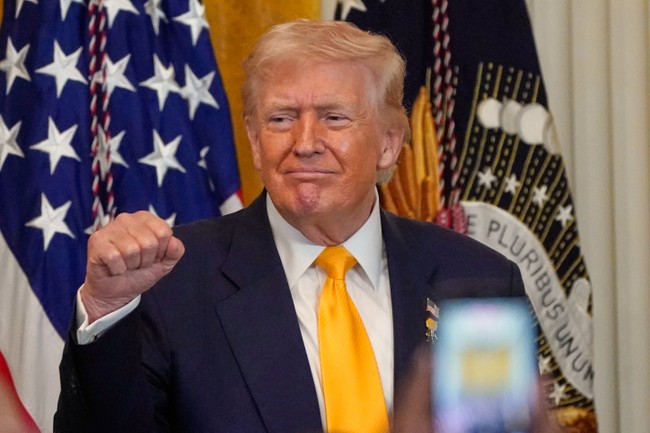
President Donald Trump told reporters on Saturday that he had been presented with a new proposal from Iran and that he would review the precise wording. He said he was looking at the offer while on his plane and promised to update the press later, noting that “They told me about the concept of the deal. They’re going to give me the exact wording now.” That line framed his stance as cautious but engaged, signaling willingness to consider terms that meet American goals.
Trump emphasized that the U.S. did not have to cut a deal immediately, but he argued that any immediate U.S. withdrawal would leave Iran decades to rebuild its capabilities. He remarked that it would take Iran 20 years to recover if the United States left now, and he stressed a broader goal: “We’re going to do it so no one has to go back in two years or five years.” That comment sounds like a commitment to durable outcomes rather than temporary fixes.
The president also made clear military force remains on the table if Iran misbehaves. After a reporter asked if he would resume strikes, Trump chastised the question and warned that action could happen “if they [Iran] ‘misbehave’ or ‘do something bad.'” He left that option open, keeping diplomatic talks and credible deterrence in play at the same time.
On Truth Social, Trump questioned whether any proposed deal would satisfy U.S. demands, reiterating his view that Iran must pay a steep price for decades of hostile behavior. He wrote that he “can’t imagine that [the deal] would be acceptable in that they have not yet paid a big enough price for what they have done to Humanity, and the World, over the last 47 years.” That post reinforced his stance that concessions must be meaningful and that symbolic agreements will not do.
Observers noted signs that Tehran is feeling real pressure. Multiple offers in quick succession suggest a regime under strain, trying to find whatever terms might persuade the United States to lift a tightening blockade. From the Trump administration’s perspective, those repeated approaches are evidence that the sanctions and naval posture are producing leverage that did not exist at this scale in decades.
Miad Maleki, a former senior sanctions strategist and senior fellow at the Foundation for Defense of Democracies, recently told an American news program that U.S. sanctions and military blockades are having the intended effect. He argued the leverage facing Iran now is comparable to the pressure seen only during the Iran-Iraq war, noting the regime is encountering severe shortages and constraints that threaten its domestic stability.
He noted the U.S. has a level of leverage not seen since 1979, with the regime facing pressure comparable only to the Iran-Iraq war in the 1980s.
While the Iranian dictatorship has historically ignored public opinion, Maleki warned that the regime is running out of time, facing imminent oil storage issues and gasoline shortages.
To suppress domestic uprisings, the Iranian government has shut down the internet for nearly two months, costing the economy roughly $50 million daily. In addition, the U.S. blockade is draining an estimated $435 million per day in lost imports and exports.
“They might be able to continue in a matter of days and weeks, but I don’t think they can continue to stay in this kind of situation more than a month or two,” Maleki said.
Those numbers, if accurate, paint a picture of an economy bleeding cash while political control becomes more expensive to maintain. Internet shutdowns and fuel shortages both bite into daily life and can erode the social compact, increasing the possibility Tehran will make concessions to relieve pressure. From a policy standpoint, sustaining leverage until a deal meets American objectives appears to be the core strategy.
The sequence of offers and public comments highlights two concurrent approaches from Washington: apply maximum pressure while keeping a door open for a settlement that permanently removes threats. That posture allows the president to claim negotiations are possible without signaling weakness, and it keeps Iranian leaders guessing about whether concessions will be accepted without further costs. For now, the administration seems focused on extracting terms that prevent a short-lived pause and instead deliver long-term security gains.


Add comment