
Checklist: emphasize Trump’s Pennsylvania speech on affordability; report economic claims and metrics; include administration statement and quoted passages exactly; note policy goals and political framing; preserve the embed token location.
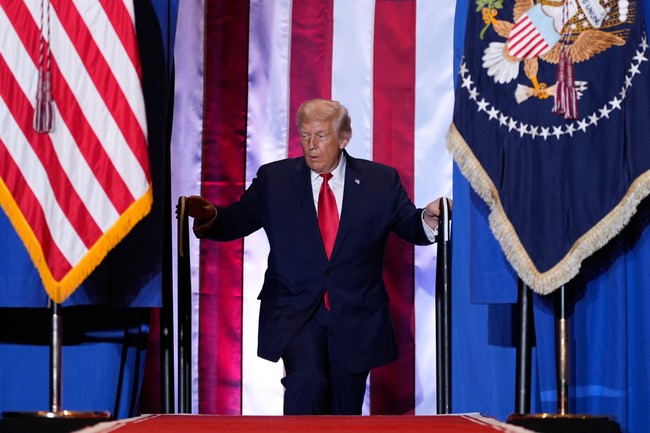
President Donald Trump spoke in Mount Pocono, Pennsylvania, to promote a message centered on affordability and the economy. He opened warmly by wishing the crowd a Merry Christmas and used the occasion to highlight what he says are concrete improvements since he returned to office. The remarks focused on lower gas prices, rising real wages, and plans to tackle health insurance and grocery costs. The event and the accompanying White House statement framed these changes as a direct contrast with the prior administration.
Trump touted the drop in gasoline prices as one of the most visible signs of relief for working families. He pointed out that average pump prices have fallen substantially and stressed the practical impact of that drop on household budgets. The president also made a case that his policies have helped push real wages higher, allowing Americans to keep more of what they earn. He tied these trends together as proof his administration is delivering on affordability.
In his speech he addressed groceries and the cost of living more broadly, arguing that families are seeing meaningful easing on day-to-day expenses. He signaled policy moves aimed at improving health insurance affordability and access, framing them as part of a larger plan to reduce household financial strain. The tone combined policy detail with political urgency, presenting affordability as the central issue for voters this year. Trump emphasized that the work is ongoing and that future actions will aim to lock in these gains.
The White House released a statement alongside the speech that catalogued several areas of economic progress and pledged more to come. That statement cast the prior administration as responsible for a cost-of-living crisis and presented the current administration’s gains as corrective. It listed inflation, wages, gas prices, housing, and groceries among the measurable improvements Republicans say have returned. The statement also credited tax cuts, deregulation, investment, and deficit reductions as contributing wins.
Since taking office, President Donald J. Trump has made substantial progress reversing the inflation and cost-of-living disaster he inherited from the recklessness of the Biden Administration. Inflation has been cut by more than half, gas prices have fallen sharply, real wages are growing again, and key household expenses are finally heading in the right direction.
But President Trump is also clear: there is still important work ahead to ensure every American feels the full benefit of lower costs. While Democrats attempt to con Americans into believing they’re the champions of affordability, the reality is that Democrats created the problem — and President Trump is stopping at nothing to fix it.
The administration statement then enumerated specific economic indicators to support its case, spotlighting inflation trends and wage gains. It contrasted a period of high inflation with what it describes as rapid normalization under current policies. That contrast was presented as the foundation for claims that Americans are now experiencing lower prices and better purchasing power. The statement employed blunt political language to emphasize responsibility and accountability.
- Under Biden, inflation averaged nearly 5% and hit 9.1% amid the worst inflation crisis in decades — fueled by the Radical Left’s obsession with spending.
- In President Trump’s second term, inflation has dropped to an average of just 2.7% — the critical first step in reversing Democrats’ cost-of-living disaster. In fact, under President Trump, Americans have even seen the first overall price decline since 2020.
The statement highlighted wages next, arguing that real incomes fell under the prior administration but are now rising. It claimed that Americans had lost purchasing power before and that current trends are reversing that loss. The administration quantified those gains, giving a sense of the income improvement households could expect to feel. That emphasis on tangible gains underpins the broader affordability argument.
- Under Biden, Americans workers lost over $2,900 in purchasing power because inflation rose faster than wages.
- In President Trump’s second term — even after accounting for higher prices — Americans’ real wages have grown by nearly 4% — or nearly $700 — and are on track to grow by nearly $1,200 after his first full year in office.
Gas prices were singled out as a highly visible win, with the statement stressing how much pump prices have fallen nationwide. It noted that prices are at multi-year lows in many states and emphasized the effect lower gas bills have on family budgets. The administration framed this as measurable proof that policy choices can quickly translate into everyday relief for drivers. The gasoline argument was used to underscore the broader theme that affordability is improving.
- Under Biden, gas prices were the highest they had ever been — even after he drained our strategic reserves to artificially decrease prices.
- In President Trump’s second term, gas prices have fallen to the lowest average price in 1,682 days and Americans on track to spend the lowest amount of their disposable income on gas in the last two decades. In fact, average gas prices have dipped below $3 per gallon in 36 states, below $2.75 per gallon in 20 states, and below $2.50 per gallon in five states — with prices below $2 per gallon at some stations in at least four states.
The administration also pointed to housing, groceries, tax changes, deregulation, and deficit discipline as parts of its affordability narrative. Officials framed these moves as part of a sustained effort to undo what they call disastrous policies from the other side. Politically, the emphasis is clear: affordability will be the rallying cry as Republicans head into upcoming elections. The claim is that these economic improvements will resonate with voters focused on pocketbook issues.
The Trump Administration will not rest until the high prices that resulted from Democrat policies are fully reined in. We’re making progress — and the best is yet to come.
If affordability becomes the defining economic argument of 2025, Trump’s team is betting this message will mobilize their voters and persuade swing constituencies. The speech and the statement together packaged a simple, repeated theme: lower costs, stronger wages, and continued action. Expect affordability to be cast as the centerpiece of the political debate as Republicans press the point in the months ahead.
Add comment