
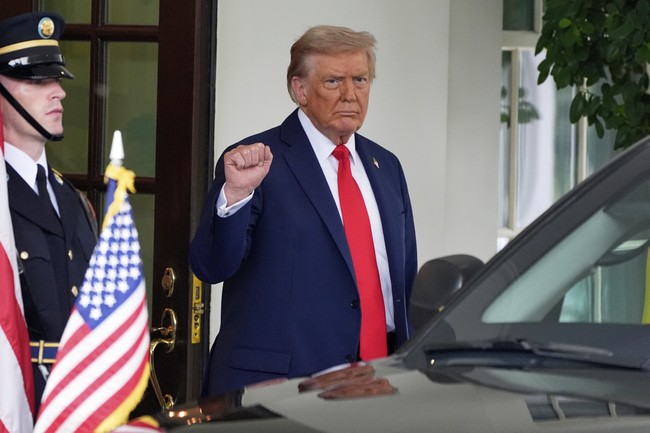
President Trump made a brief stop in Qatar during an Asia trip and used a press moment on Air Force One to highlight recent Middle East developments, meet with Qatari leaders, and press for the return of hostages and their remains while signaling that U.S. leverage remains a central tool in enforcing any peace terms.
On a tight itinerary in Asia, President Trump paused in Qatar and greeted the Emir and the prime minister right on Air Force One. That quick meeting drew attention because it combined diplomatic theater with concrete pressure points, namely hostages and regional stability. The president framed the encounter as a sign the U.S. remains engaged and capable of shaping outcomes.
The Emir, Tamim bin Hamad Al Thani, opened with a warm, candid line in front of reporters: “I want to welcome you, Mr. President. As soon as I found out he was coming to refuel, I said I’m not going to allow him to take off unless I can come say hello. So, thank you very much, Mr. President, (inaudible).” That informal tone underscored the personal relationships at play in high-stakes diplomacy. Such moments matter because they show leaders can move beyond protocol and get things done.
I want to welcome you, Mr. President. As soon as I found out he was coming to refuel, I said I’m not going to allow him to take off unless I can come say hello. So, thank you very much, Mr. President, (inaudible).
President Trump returned the compliment with a mix of praise and strategic framing, stressing alliances and recent progress. He said, “The Emir is one of the great rulers of the world, not just the Middle East. He’s loved, beloved and respected by his country. I don’t know, what’s more important? Being loved, or respected? You have a preference? You have both. You’re one of the few. And the Prime Minister has been my friend, and a friend to the world. And we’ve done a lot together in the last… especially in the last year. What we’ve done is incredible. Peace in the Middle East. And they were a very big factor in it. So I just want to thank you. I was thinking, we’re landing here, to fuel up, and it’s such an honor to have you on the plane. I know you don’t do this often. “
The Emir is one of the great rulers of the world, not just the Middle East. He’s loved, beloved and respected by his country. I don’t know, what’s more important? Being loved, or respected? You have a preference? You have both. You’re one of the few. And the Prime Minister has been my friend, and a friend to the world. And we’ve done a lot together in the last… especially in the last year. What we’ve done is incredible. Peace in the Middle East. And they were a very big factor in it. So I just want to thank you. I was thinking, we’re landing here, to fuel up, and it’s such an honor to have you on the plane. I know you don’t do this often.
Emir Hamad Al Thani: This is the first time.
President Trump: I think this is the first time. But it’s an honor. We have a great.. It’s a great ally, they are a great ally, and these are two great men. And as long as we’re together and you have those cameras rolling, I just want to say we express our thanks, and you have a safe Middle East right now. And you’re going to keep it that way for a long time. And you’re going to keep it that way for a long time. A very long time.
Beyond the cordial remarks, the meeting put pressure on Hamas by spotlighting the return of hostage remains as a litmus test for cooperation. President Trump used his Truth Social account to call attention to that issue and to warn that failing to comply would provoke consequences from the partners building this peace. The post was explicit about expectations and timelines while linking enforcement to broader disarmament demands.
In his post, the president warned that the peace would be conditional and that actors who did not meet obligations would face action. He wrote, “We have a very strong PEACE in the Middle East, and I believe it has a good chance of being EVERLASTING. Hamas is going to have to start returning the bodies of the deceased hostages, including two Americans, quickly, or the other Countries involved in this GREAT PEACE will take action. Some of the bodies are hard to reach, but others they can return now and, for some reason, they are not. Perhaps it has to do with their disarming, but when I said, “Both sides would be treated fairly,” that only applies if they comply with their obligations. Let’s see what they do over the next 48 hours. I am watching this very closely.”
The scene on the tarmac and on the plane highlights a Republican approach to foreign policy: mix personal diplomacy with clear leverage, then hold partners to account. That method aims to transform short meetings into durable outcomes by reminding adversaries there are real consequences. When rhetoric is backed by policy tools and credible threats, it can bend behavior without committing to endless ground operations.
For now, the shooting has paused and diplomatic channels are active, giving the administration breathing room to press other priorities in the region and on the trip. The immediate test will be whether returns of remains happen swiftly and whether verification mechanisms are allowed to function. Success here would reinforce the idea that firm, connected diplomacy gets results.
Observers should expect the White House to keep public pressure while using quieter channels behind the scenes to secure compliance. Keeping cameras on procedural wins matters politically and practically, especially when the goal is to prevent renewed violence and preserve gains. This stop in Qatar was short but symbolically weighted, mixing friendship with a clear reminder that words must be matched by action.
Add comment