
Early voting in Texas has begun and the state’s hotly contested GOP Senate primary is unfolding without a Trump endorsement, leaving a high-stakes contest between Sen. John Cornyn, Attorney General Ken Paxton, and Rep. Wesley Hunt wide open as ballots start to be cast.
Early voting opens the 2026 primary cycle and Texas has become the focal point for Republicans watching who will carry the party into November. The absence of a clear signal from President Donald Trump matters because his backing can quickly consolidate support, steer donors, and focus activist energy in red-state contests.
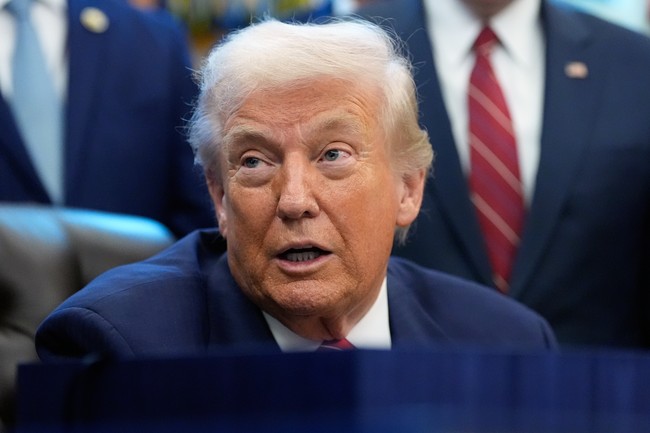
Speaking to reporters aboard Air Force One, Trump made plain he has not decided who to endorse in the Texas contest. “I just haven’t made a decision on that race yet. It’s got a ways to go,” Trump told reporters. “I like all three of them, actually.”
That statement is significant, not casual. In recent cycles, a Trump endorsement has often been decisive, turning messy primaries into near-formalities and closing the door on chaotic intra-party fights. His neutrality here keeps multiple paths open, and that uncertainty feeds both opportunity and concern across the GOP.
“They’ve all supported me, they’re all good and you’re supposed to pick one. So we’ll see what happens, but I support all three.”
Texas is not a typical primary; it’s the earliest major test of 2026. Campaigns have spent months organizing, opening donor lines, and building ground operations, and early voting locks in a slice of the electorate before the race can fully unfold. That makes the timing of any endorsement crucial: before ballots drop, it can change dynamics; after ballots are in, its power is diminished.
The field is a study in contrasts. Cornyn is a long-serving incumbent seeking an unprecedented fifth term and running on experience and steady leadership. Paxton has cast himself as a tougher conservative, leaning into combative messaging that appeals to the base. Hunt brings a generational angle and a fresh face, aiming to pull support from both establishment and insurgent voters.
Polling across the state shows a split field with a significant undecided block, which means a runoff is a realistic outcome if no candidate clears 50 percent on primary day. That makes every vote, every endorsement, and every organizing push more consequential; a late consolidation behind one name could decide who advances to the general election while a fractured result could force a prolonged two-person fight.
Inside Republican ranks, there is genuine anxiety about the cost of a bruising primary. Party leaders worry that a draining three-way contest could sap resources and leave the eventual nominee weakened ahead of a general election. For a party that must defend seats and hold the line in November, avoiding self-inflicted damage matters as much as individual policy differences.
Neutrality from a dominant national figure is not neutral in effect. When the leader of your party withholds a choice, it signals to donors and activists that the field should settle itself, and that can prolong infighting and uncertainty. Texas Republicans are watching closely because the outcome will shape not just who sits in the Senate, but how unified the party will be when the real fight starts.
The calendar accelerates the stakes: early voting already underway, a primary set for March 3, and the reality that many ballots will be cast before any last-minute moves can change the math. With three viable candidates and a sizable undecided electorate, timing will determine leverage and influence in ways that simple rhetoric cannot reverse.
Republican voters in Texas face real choices without a presidential nudge, and that places pressure on activists and donors to pick sides now or accept a runoff. Whether Trump eventually endorses one of the candidates or continues to sit on the sidelines could reshape the contest, but the immediate consequence is a campaign environment where every turnout operation and every late swing vote counts more than usual.
“Republican leaders have been frustrated by Trump’s decision not to explicitly back Cornyn over his opponents, seeking it as an unnecessary risk of making the once solidly Republican seat a real competition.”
With redistricting and national attention adding to the background noise, Texas will serve as a gauge for how well the GOP can manage contested primaries without sacrificing general election strength. The state will show whether grassroots energy and local organization can substitute for a top-line endorsement or whether leadership intervention remains the quickest path to party unity.
For now, the immediate facts are straightforward: early voting is underway, the field is divided, and party leaders want clarity. How this plays out will depend on the choices voters make in the coming days and whether national influence steps in at a moment when every ballot matters. Neutrality in a competitive primary is a choice with consequences, and Texas voters are about to feel them.


Add comment