
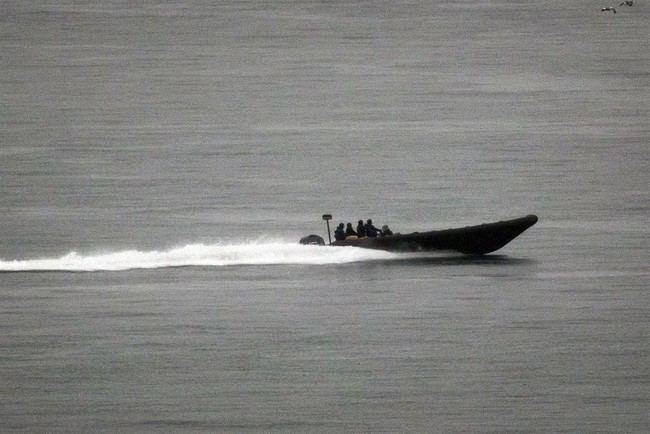
The debate over the War Powers Resolution has flared up again after a senior administration lawyer told Congress the White House does not consider its strikes on Venezuelan-linked drug cartels to be “hostilities” under the statute, and therefore will not seek congressional approval or extend any 60-day clock. Critics in both parties loudly objected, arguing the administration is sidestepping constitutional checks, while defenders say the law is toothless and often ignored by presidents of both parties. This piece walks through the legal claim, the political response, historical context about how presidents have treated the War Powers Resolution, and why Republicans see the pushback as politically motivated. The controversy centers on whether interdiction in international waters counts as hostilities, whether Congress can realistically enforce the statute, and whether partisan attacks are masking a popular policy to go after the president.
Some members of Congress reacted with predictable outrage when T. Elliot Gaiser, head of the administration’s Office of Legal Counsel, briefed them that the strikes did not meet the statutory definition of hostilities and that the administration would not seek to extend a deadline or win congressional approval. That briefing set off statements from senior Democrats and a smattering of Republicans who either genuinely worry about limits on war-making or see political advantage. “The administration appears to be blowing through the 60-day limit,” said a senior congressional aide, and other critics piled on with severe language about abuse of authority.
Prominent Democrats accused the administration of illegal behavior and constitutional peril in tones meant to alarm the public and pressure the Pentagon. “In any normal administration, somebody would be fired for this kind of abuse,” said Virginia Sen. Mark R. Warner, and Rep. Gregory W. Meeks declared, “The administration is, I believe, doing an illegal act and anything that it can to avoid Congress.” Even Massachusetts Democrat Seth Moulton warned of risk to troops, saying he hoped the admiral involved “recognize the constitutional peril that you are in, and the peril you are putting our troops in.”
Some Republicans joined the chorus, asking for documents and legal rationale, though many on the right view this as political theater. Sen. Roger Wicker and Sen. Jack Reed publicly noted delays by the Defense Department in providing requested materials, but the core dispute is not about paperwork so much as whether the War Powers Resolution actually constrains presidential military action. From a conservative perspective, the Constitution vests the commander-in-chief authority in the president, and Congress using this statute to micromanage overseas interdiction is both impractical and unconstitutional.
History matters here because presidents have rarely treated the War Powers Resolution as binding unless it suited them politically. The law was adopted during the Nixon era and has been invoked formally only rarely, with Gerald Ford citing it once during the Mayaguez incident. Other interventions, like Grenada and Panama and the Balkan operations, proceeded without strict adherence. Presidents of both parties have pushed back against the statute’s premise that Congress can strictly control the introduction of forces into hostilities.
The statute itself defines conditions that trigger its constraints, and the administration’s lawyers argue those conditions are not met in this interdiction campaign. The law lists three relevant scenarios, including introduction into hostilities and deployment into the territory, airspace, or waters of a foreign nation while equipped for combat. The administration insists strikes aimed at cartel operations in international waters do not equate to the sort of “hostilities” Congress envisioned, and that practical realities of drug interdiction fall outside the War Powers framework.
1) into hostilities or into situations where imminent involvement in hostilities is clearly indicated by the circumstances;
(2) into the territory, airspace or waters of a foreign nation, while equipped for combat, except for deployments which relate solely to supply, replacement, repair, or training of such forces; or
(3) in numbers which substantially enlarge United States Armed Forces equipped for combat already located in a foreign nation;
There is a realistic blunt instrument available to Congress if it objects: stop funding. The constitutional lever that limits presidential action on military matters is Congress’s power of the purse, not a statute that presidents routinely sidestep. If members of Congress truly believe an operation crosses a lawful line, they can pass and fund alternative measures, or attempt to pass a resolution and override a veto. That is messy politics, but it is the actual constitutional remedy.
Republicans see much of the Democratic clamor as theater intended to hobble a policy that enjoys broad public support: going after transnational criminal networks that traffic drugs into American communities. Given how unpopular cartel violence and fentanyl are, the partisan vigor in opposing interdiction raises questions about motives. If politics are the driving force, attacking the president for using his executive authority to protect citizens looks less like constitutional oversight and more like score-settling.
Throughout modern presidencies, the War Powers Resolution has functioned as a political cudgel more than a judicially enforceable limit. Presidents have asserted that their constitutional authority to conduct military operations cannot be surrendered to Congress, and Congress has often preferred the optics of rebuke to the hard work of funding battles. The upshot is practical: unless Congress is prepared to press the matter through appropriations or litigation with real consequences, this will remain a recurring argument without decisive resolution.
Practical questions remain, including the legal analysis of what constitutes hostilities and where international waters fit into the statute’s language. For now, the administration is betting that the legal reading favors its interdiction campaign, while opponents are betting public outrage and congressional pressure will create political constraints. That political contest, not the statute alone, will determine how far the executive branch can go in pursuing cartels abroad.


It ONLY comes down to “favors its interdiction campaign,” as the Commander in Chief and all Congressional Members have taken a sworn oath of office to Protect these United States and the American Citizens, which at the President’s orders is doing!
End of story, all Evil Major Drug Cartels that have or are pushing deadly drugs into America MUST be Obliterated! Send in the arsenal of Ship and Aircraft Firepower to get her done! Wipe these Enemies off the face of the earth!
Keep It Up and “blow them all to Kingdom Come!”