
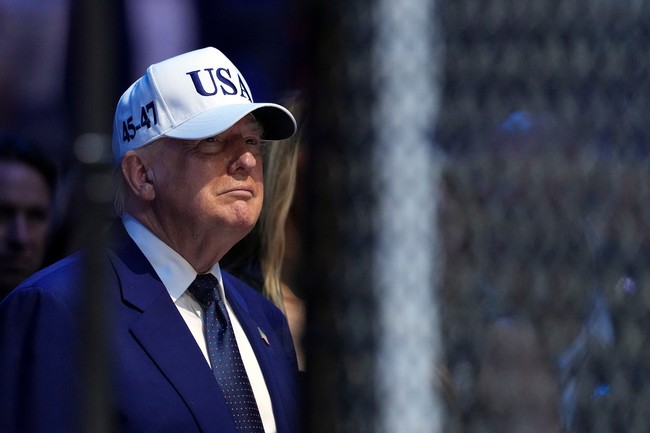
President Trump and UAE President Sheikh Mohamed bin Zayed met to announce a new memorandum with Iran that the administration says sharply differs from the Obama-era JCPOA, framing the new pact as a barrier to a nuclear Iran while stressing no U.S. cash obligations and renewed Gulf Arab cooperation.
At a joint press event, President Trump highlighted contrasts between the agreements and insisted the new memorandum is fundamentally defensive. He argued the previous JCPOA opened a path to a weapon, while this arrangement is intended to block that path and constrain Iran’s nuclear ambitions. The president promised to walk the press through the document soon and stressed America has no financial obligations under this deal, contrasting it with prior payouts.
https://x.com/RapidResponse47/status/2066865489075183832
The president said:
It’s a very important document, and unlike Obama, who could have destroyed the Middle East with the horrible JCPOA, it was the worst agreement. That was a road to a nuclear weapon. Mine is a wall against a nuclear weapon. And now I see these people, “we already had one.” You paid a fortune for it; we paid nothing. We don’t pay them. There was some statement, we’re going to spend $300 million; no, we’re not. We’re allowed to go in and invest if we wanted to, someday in the future. We have no obligation whatsoever. Could be that Iran will turn out to be successful. They have oil. But, ah, if we left a week ago, just left, before the last two attacks, it would have taken them 20 years to rebuild. But I’ll go over the document with the media in a couple of days.
Officials pointed to specific elements meant to ensure verification, oversight, and limits on enrichment capabilities, framing these as core to preventing nuclear breakout. The administration also emphasized the political architecture around the deal, claiming it builds Gulf cooperation in a way critics of the JCPOA said was missing. Even with safeguards, they cautioned that verification and enforcement will be essential given the regime in Tehran.
Beyond the text itself, U.S. diplomats and Gulf partners are betting that a unified regional approach changes incentives for Iranian behavior. The White House message is that economic and diplomatic levers have been arranged differently this time, and that the Gulf states view the plan as a check on Tehran rather than an empowerment. That regional buy-in is being presented as a long-term strategic shift rather than a short-term fix.
Vice President Vance addressed the differences at a separate appearance, underscoring the administration’s claim that past deals handed Iran leverage and cash. He stressed that the Gulf nations dislike the old deal and support the new framework, framing the memorandum as a diplomatic realignment. Vance suggested the plan could have generational impact by binding Arab partners together against destabilizing behavior.
Vice President Vance also spoke out on the deal, in an
The vice president said:
What’s interesting is, there’s been a lot of chatter, of course, about this peace deal with Iran, and one of the questions I’m most often asked is, “how is this different from the Obama JCPOA?” And there are all of these answers I could give. Number one, we’re not giving them a red cent of American money. Obama gave them over a billion dollars and a pallet of cash. There are all these substantive differences; I actually think the most important difference is, you know what those Gulf Arab countries thought about the JCPOA? They hated it. Because they thought it empowered Iran to be a bad actor. You know what they think about the President Trump peace plan? They love it. Because they think it’s turning over a new leaf to a new Middle East. So, there are so many big differences between our policy and the previous administration’s, but what we’ve done here is (to) actually unite the Gulf together; that could have transformative impacts, not for the next couple of years, but the next couple of generations.
Commentators note that the region has been shaped for decades by the Islamic Republic’s export of revolution and sponsorship of terror, and any policy that blunts that influence could shift regional dynamics. The administration argues that a deal combining restrictions with regional unity will make it harder for Iran to fund proxies and pursue destabilizing programs. Skeptics counter that only rigorous, continuous verification will determine whether the agreement truly holds Iran back.
There is also a political angle: supporters frame the memorandum as a durable policy achievement that reflects a tougher stance and closer ties with Gulf partners. Detractors warn that any future administration could alter the approach, and that long-term success depends on implementation and enforcement rather than headlines. For now, supporters see the pact as a pivot away from the compromises critics blame on the prior administration.
For decades, presidents have talked about fixing threats but often fell short; this administration says it is taking concrete steps to eliminate the Iranian nuclear threat and build a new regional order. The claim is that, by avoiding direct cash transfers and by knitting Gulf states together, Washington has created a stronger framework to deter Tehran’s worst ambitions. Whether the arrangement delivers that outcome will depend on follow-through, inspections, and the political will to hold Iran accountable.

Add comment