
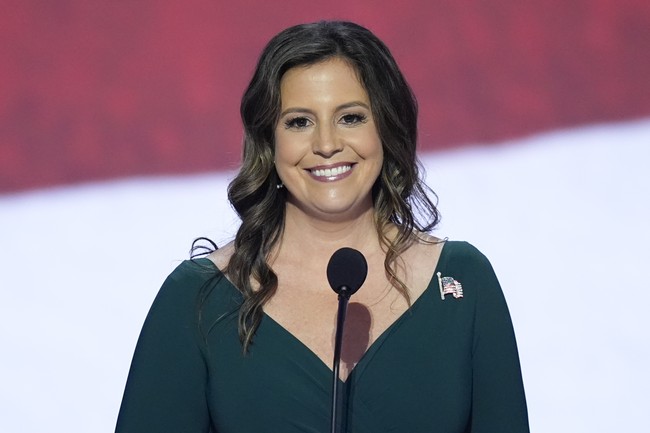
I’ll outline why Elise Stefanik’s recent polling surge matters, what the independent swing means, how Governor Hochul’s numbers are weakening, where Stefanik can press an advantage, and what to watch as the 2026 New York governor’s race unfolds.
The latest polling shows a meaningful shift: Independents are tilting toward the Republican side, and that movement is enough to close part of the gap between Rep. Elise Stefanik and Gov. Kathy Hochul. A decline in Hochul’s approval rating — reported near 43 percent — opens an opportunity for a disciplined challenger to make gains in a state where voter habits can change when the alternative feels credible. This is early, but early trends matter when they point to a direction campaigns can target.
Independents are the swing that decides statewide contests, and their drift matters more in a cyclical year when national moods and local frustrations converge. Polling indicates that 48 percent of voters would prefer “somebody else” over Governor Hochul, and among that bloc a majority would rather see a Republican in Albany. If that sentiment holds, a focused Republican campaign can convert curiosity into turnout by explaining how a change in leadership would actually improve policy and day-to-day governance.
Governor Hochul’s slide is not just a number; it’s a narrative weakness. Voters notice mixed messaging on major issues and a perception of weak management, and those impressions harden unless challenged. A challenger who points to concrete failures and contrasts them with a coherent, optimistic alternative can make the abstract idea of change into a tangible choice for voters tired of the status quo.
Rep. Stefanik can exploit these openings by sharpening messaging on bread-and-butter themes that resonate with New Yorkers: public safety, taxes, jobs, and the cost of living. She should also establish a clear contrast on competence and priorities, showing how a Republican approach would deliver practical relief rather than more talking points. Above all, campaigns that win statewide in New York do so by persuading independents and mobilizing disaffected voters, not by relying solely on base enthusiasm.
Political campaigns are about discipline and execution; rhetoric matters, but it must be backed by organization, field work, and a plan to neutralize inevitable attacks. Stefanik’s team will have to prepare for a crowded air war and relentless scrutiny while keeping a ground game that turns favorable polling into ballots. That means turning soundbites into policy specifics and ensuring volunteers and voters know how to vote and why it matters.
Messaging needs teeth, not just volume. A crisp, relentless critique of mismanagement paired with realistic solutions is more persuasive than vague outrage. Rep. Elise Stefanik should be telling her campaign team one thing right now: “Sharpen up your teeth.” That line isn’t theater; it’s a call to tighten the operation and hit the electorate with a clear, repeatedly delivered case for change.
Hochul will not cede ground easily, so Stefanik must anticipate counterattacks and preempt framing that paints any Republican alternative as chaotic. The smart play is to own competence and accessibility while offering targeted proposals that address the problems New Yorkers feel most directly. If Stefanik can show she knows the state’s issues and has a credible plan to improve them, independents who are leaning away from Hochul could be persuaded to support a new direction.
Fundraising, endorsements, and early infrastructure will determine whether the poll movement is temporary or the start of a real trend. A campaign that converts favorable headlines into district-level organization and voter contact can capitalize on momentary shifts. On the flip side, failure to build a robust operation will let a lead slip back to an incumbent who still controls key institutional levers.
National attention will follow any credible shift in New York, and that brings both resources and scrutiny. Stefanik’s team should be prepared to accept national help on terms that bolster rather than swamp a localized, issue-oriented message. Staying rooted in the state’s immediate concerns will keep the campaign focused and reduce the risk of getting lost in national theater.
In short, the poll is a signal, not a verdict, and the coming months will show whether this movement is the start of a larger realignment or a temporary blip. What matters now is disciplined campaigning, relentless focus on swing voters, and a clear alternative that contrasts competence with the incumbent’s weaknesses. If Stefanik does the work, that 43 percent approval figure and the “somebody else” sentiment become more than statistics; they become a path to winning.
Editor’s Note: The Democrat Party has never been less popular as voters reject its globalist agenda.



Add comment