
The article tells the story of Joe Abraham, who lost his daughter Katie in a deadly crash allegedly caused by a previously deported illegal immigrant, and describes how Democratic senators and state leaders responded, or failed to respond, to his plea for accountability.
Joe Abraham went to Washington to speak about his daughter and to confront elected officials about policies he believes contributed to her death. He testified before the Senate Judiciary Subcommittee and later encountered one of his senators, who he says appeared not to know about the case despite it happening in her state. That sense of being ignored fueled his frustration and deepened his grief.
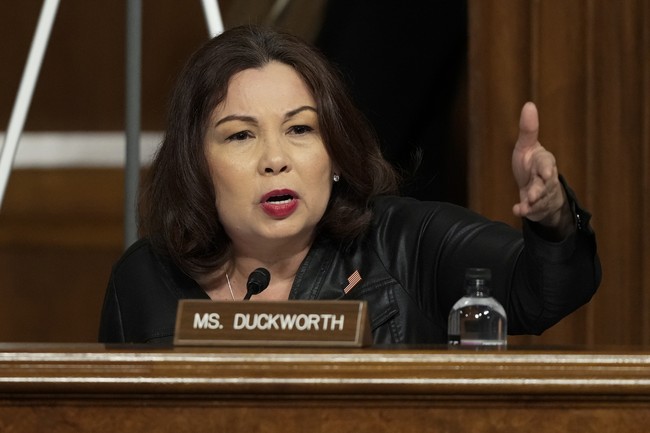
According to Abraham, when he told Senator Tammy Duckworth why he was in the capital and explained what had happened to Katie, her initial reaction was to claim she was “unaware” of the tragedy. He asked to speak further so she could understand how the family had been affected by policies she supports, and what he received instead was what he describes as a perfunctory outreach from a staffer. Abraham “politely declined” the offer, seeing it as hollow consolation rather than genuine accountability.
Abraham also points to Senator Dick Durbin, a senior member of the Senate Judiciary Committee, as having offered no recognition at all. He says he sat just feet away from Durbin during a committee hearing that lasted hours, where Durbin did not acknowledge Katie while other senators did. That absence, Abraham notes, is hard for any grieving parent to understand and even harder to accept from people in positions of power.
There is a political angle Abraham does not shy away from: he believes Democrats are protecting policies that enable repeated illegal entry because they view newcomers as potential future voters. From his perspective, the calculus of party survival takes precedence over addressing consequences when those consequences involve citizens being killed or maimed. That calculation, he argues, creates a cold distance between victims and their supposed representatives.
Abraham singled out Illinois Governor JB Pritzker as well, criticizing his long-standing support for sanctuary policies that, in Abraham’s view, place political branding above public safety. He says those policies are defended without sufficient attention to the victims left in their wake. For families like his, the political defense of sanctuary policies reads as an unwillingness to confront real-world harm.
Abraham framed the problem as less about party labels and more about responsibility. He accused policy defenders of deflecting blame, “to reframe, to point elsewhere, or to emphasize competing narratives — rather than to pause and accept responsibility where it is due.” That exact line captures his sense that officials prefer talking points to taking ownership.
“Too often, those who have advanced or defended these policies are reluctant to fully grapple with their consequences. Instead, there is a tendency to reframe, to point elsewhere, or to emphasize competing narratives — rather than to pause and accept responsibility where it is due.”
He added, “This is not about partisanship. It is about responsibility and responsiveness.” Those words underline his demand for elected officials to treat victims as people first, not political variables. Abraham wants lawmakers to be accountable to citizens who live with the aftermath of policy choices.
The collision itself, according to the account Abraham shared, was brutal: Katie, 20, was in a car rear-ended at roughly 80 mph by a driver who had been deported previously, was allegedly driving drunk, and was using an alias. The crash killed Katie instantly and claimed a second life the following day while leaving three others with serious injuries. The details of the accident, as told by Abraham, are a stark reminder of the human toll behind debates about immigration and enforcement.
For Joe Abraham and his family, political explanations ring hollow without concrete changes in policy and clearer accountability from leaders. He says the emotional distance he feels from those charged with representing him “has never felt more real” as his family continues to live with this loss. That sentiment closes the chapter of his public appeals for recognition and raises questions about how elected officials respond to constituents who are victims of violent acts tied to immigration enforcement failures.

Add comment