
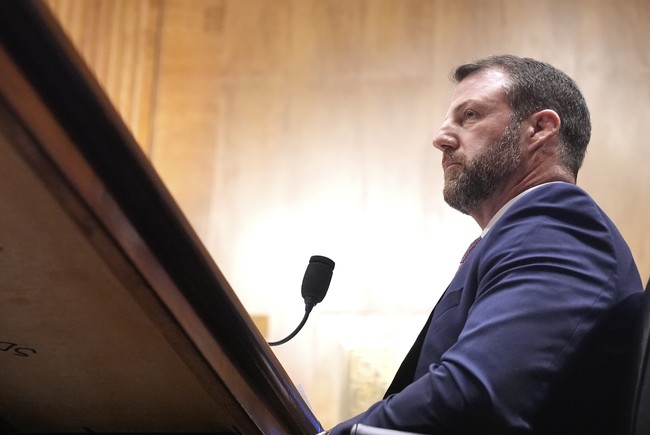
The confirmation hearing for Markwayne Mullin to lead the Department of Homeland Security revealed a familiar clash: bureaucratic dysfunction, a porous border, politicized oversight, and a call for practical leadership that restores enforcement and morale at DHS.
The Senate hearing was presented as a showdown, but the real issue is competence at DHS and a clear strategy to secure the border. Too often these sessions turn into partisan theater instead of focusing on how to stop illegal crossings and support front-line personnel. Americans expect results, not grandstanding.
Mullin arrives as an outsider to the administrative class, a former plumbing contractor, collegiate wrestler, and MMA fighter who emphasizes practical outcomes over process. That background matters in a department hamstrung by layers of bureaucracy and an appetite for “processing” rather than preventing illegal entry. His straightforward approach aligns with voters who want enforcement and accountability.
Criticisms have centered on Mullin’s blunt manner and loyalty to the president’s border policies, but clarity is not a flaw in an agency that needs decisive leadership. A secretary who sets firm priorities can cut through micromanagement and restore focus to core missions like border control and disaster response. For many conservatives, law enforcement and national security should come first.
The hearings occurred amid a broader fight over DHS funding, one where Democrats pressed for restrictions on ICE and CBP operations as part of negotiations. Holding funding hostage while pushing bans on standard enforcement tools creates a dangerous precedent for national security. Republicans argue that security cannot be used as leverage for political aims that weaken enforcement.
Federal agents have been squeezed by political brinkmanship, with TSA officers and Border Patrol agents forced into uncertainty and operational strain. When the people tasked with protecting citizens face pay delays or weakened authority, public safety suffers. Leadership at DHS must defend personnel and ensure they have the resources and legal tools to do their jobs.
Debates about accountability and tragic incidents involving individual officers have shifted discourse toward punitive narratives that paint all federal law enforcement with the same brush. No conservative opposes oversight, and Mullin has indicated openness to measures like body cameras and independent reviews. Distinguishing responsible oversight from the “lawfare” aimed at hamstringing officers is essential to maintain effective policing.
Part of the problem has been a culture of avoidance where agencies prioritize compliance paperwork over outcomes that actually stop crime and prevent corruption. Mullin’s promise to restructure FEMA and empower front-line workers shows a willingness to make practical changes rather than cosmetic ones. That kind of managerial focus is what DHS needs to get back to its mission.
Political litmus tests that demand refusal to deport those here illegally would disqualify any nominee from a law-and-order administration in the eyes of the left, making confirmation battles perpetual. The Senate should weigh qualifications based on the ability to secure the homeland, not on who wins the latest partisan headline. Leadership should be judged by operational improvements, not partisan purity tests.
Success at DHS will be measured by tangible results: fewer illegal crossings, better coordination with state and local partners, and morale restored among agents and officers. Mullin’s past shows a mix of toughness and practical problem solving that could translate into better management of the department. It’s time to put policy into practice and stop treating national security as a political game.
Restoring order at a sprawling agency requires someone who will prioritize enforcement, fix broken processes, and back the men and women on the front lines when they act to protect the public. Mullin has pledged to let the law mean what it says and to move beyond the “micromanagement” that has distracted DHS from its mission. That focus, combined with transparency measures that respect both accountability and operational necessity, could make a real difference.
Immediate confirmation would allow a new secretary to start repairing damaged systems and to provide leadership for an agency that has been politicized and worn down. The country deserves a DHS led by someone committed to securing borders, defending communities, and supporting the professionals who do this difficult work every day.
ALSO SEE: Mullin’s Emotional Moment Underscores Urgency of DHS Funding Fight
Elissa Slotkin, Other Dems Turn Up the TDS Meter at Markwayne Mullin’s DHS Confirmation Hearing


Add comment