
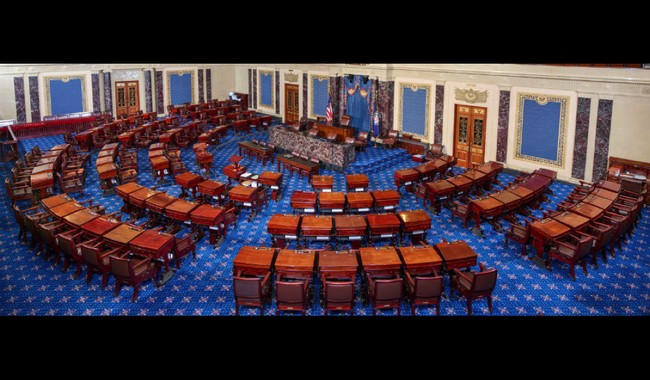
The Senate’s recent vote-a-rama nudged the SAVE America Act a tiny bit closer to reality, driven by a flipped vote and renewed talk about using the filibuster or changing Senate rules to secure election-integrity measures that Republicans insist are common-sense. The action was small but meaningful, and it highlights the tactical choices GOP leaders face: force a talking filibuster, strip the 60-vote threshold, or keep chipping away at wins wherever possible. This piece lays out what happened, who moved, and why conservatives see urgency in acting now while they can. It also notes the political risk of waiting for Democrats to control the Senate and eliminate procedural safeguards Republicans value.
The SAVE America Act, a signature priority tied to President Trump, got a lift during a long Senate vote-a-rama tied to an immigration enforcement package. What changed was a single senator switching her position on the original text, creating the narrow conditions for a 50-vote count on one amendment attempt. That flip matters because in the Senate even one vote can reshape the bargaining table and alter the options leaders consider going forward.
During the Senate’s marathon “vote-a-rama” to advance the GOP’s $70 billion immigration enforcement package, Republicans tried twice to attach the Safeguarding American Voter Eligibility (SAVE) America Act to the massive bill.
They failed both times, with a cohort of Republicans joining Senate Democrats to stymie the effort, which was destined to fail either way given that the amendments from Sen. Lindsey Graham, R-S.C., and Mike Lee, R-Utah, had to break through the filibuster.
Republicans attempted to tack the SAVE reforms onto the larger measure twice, and the first try collapsed when several Senate Republicans defected. Skeptics warned a filibuster was the natural barrier, and those concerns proved prescient: getting past 60 votes or sustaining a talking filibuster remains a heavy lift. Even so, the political optics of a senator moving to support election-integrity language energizes the base and changes tactical conversations.
Graham’s attempt was to attach the modified version of the SAVE America Act, which included several policy additions, like barring men in women’s sports, that Trump demanded months ago.
Four Republicans, Sens. Susan Collins, R-Maine, Lisa Murkowski, R-Alaska, Mitch McConnell, R-Ky., and Thom Tillis, R-N.C., voted against it. Their defections prevented the bill from even getting 50 votes, a prerequisite for success if Republicans were to launch a talking filibuster.
But Lee’s attempt did hit 50 votes, with Collins flipping her vote to support the original version of the SAVE America Act.
That switch created a path for an alternative amendment to pass the 50-vote mark, though it still fell short of clearing final procedural hurdles. For conservatives, Collins’ flip shows there’s potential to build a coalition for the core SAVE provisions without the extra policy baggage that scared off some votes. It also underscores that momentum can shift quickly in the Senate, and that strategic restraint or boldness can both be warranted depending on how the floor looks minute to minute.
At the heart of the fight is the filibuster and whether Republicans will deploy it as an offensive tool or cling to it defensively. A talking filibuster would force senators to stand and speak to sustain floor time until Democrats yield or the majority breaks, but that gambit requires unity and stamina. Some GOP leaders worry about staying linked together under a barrage of Democratic amendments designed to alter the bill or draw political blood.
Conservatives like Lee have pushed Senate Majority Leader John Thune, R-S.D., to launch a talking filibuster to grind down Senate Democrats and pass the legislation at a simple majority threshold.
But Thune hasn’t pulled the trigger out of concern that Republicans wouldn’t stay together to bat down a deluge of Democratic amendments that could substantially change the legislation or target other elements of Trump’s agenda.
There’s a growing chorus that the 60-vote rule is the real obstacle and should be scrapped if Republicans want lasting reforms. Many conservatives argue that waiting for Democrats to control the Senate and eliminate the filibuster on their terms would be disastrous. The strategic choice is clear: act now to lock in election-integrity laws or risk letting the opposition set the terms when they regain power.
Political calculations matter: polling on voter ID and similar measures tends to show broad public support, and Republicans see an opportunity to pass widely popular reforms while they can. The debate will continue on Capitol Hill, but the recent vote-a-rama showed that even small shifts in allegiance can reopen doors and force leaders to rethink tactics. The coming weeks should reveal whether Republicans choose gradual wins or an institutional showdown to secure the SAVE America Act.


Add comment