
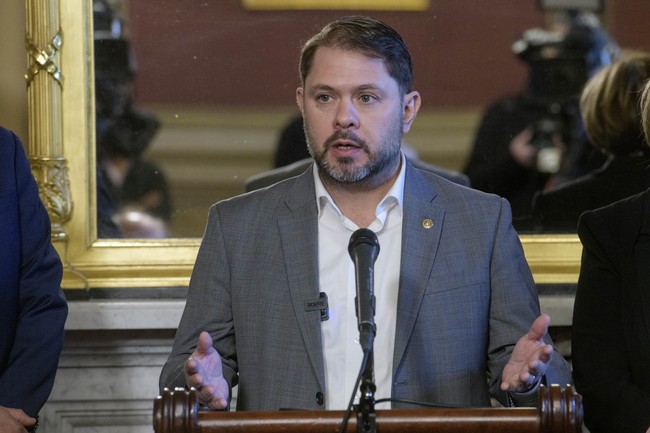
Sen. Ruben Gallego is facing fresh scrutiny after reporting showed his campaign and leadership PAC funds paid for family travel, childcare reimbursements, and a high-dollar Super Bowl fundraiser tied to his longtime friend Rep. Eric Swalwell, raising questions about judgment, vetting, and how donor money is being used as he eyes national ambitions.
New reporting found Gallego’s campaign and his leadership PAC covered trips that included family vacations to theme parks, beach destinations, and major cities, which now look awkward for a senator who might run nationally. The issue is not presented as a clear legal violation, but it is a public-relations problem that grows when a politician moves from state or Senate contests to a possible presidential stage. Critics say what might have been overlooked in local politics becomes a big deal under national lights.
Records show the leadership PAC paid for travel involving Gallego’s family to Disney World, Disneyland, Miami, Chicago, and St. Barts, and that his committees spent more than $18,000 on child care reimbursements and direct payments since 2019. One line item even listed $400 to a relative for babysitting during a campaign fundraiser. Those numbers don’t automatically mean laws were broken, but they feed a narrative about entitlement and loose stewardship of donor dollars that opponents will exploit.
Federal Election Commission rules allow some campaign travel and child care expenses if they can be tied to political purposes and aren’t personal use, while leadership PACs enjoy broader discretion. That technical flexibility matters to fund managers, but voters care about optics and priorities, not legal fine print. When a potential presidential contender uses donor money for what looks like family perks, it raises questions about judgement beyond mere compliance.
Gallego defended the spending to reporters, framing it as ordinary and permitted, and pointing to economic realities facing families. He told Politico, “This is not breaking news,” and added, “With the rising costs of child care and the burden it has on the budgets of American families, Democrats and Republicans in Congress and the White House alike regularly travel with their wives and children, as is permitted by the FEC.” Those lines are exact and he repeats a common Democratic talking point about childcare costs, but they do not erase the problematic optics.
The Super Bowl fundraiser tied to Swalwell compounds the political headache. Gallego and Swalwell ran a joint committee called the Swallego Victory Fund that hosted a Super Bowl LVII event in Arizona in February 2023, shortly after Gallego launched his Senate campaign. The committee spent roughly $34,700 on event tickets and another $2,700 on a pregame brunch, with tickets priced at $5,000 including the brunch and a standalone brunch ticket at $1,000; the event raised more than $56,000 around that weekend.
Gallego’s team insists the fundraiser complied with applicable rules and that tickets were sold at “fair market value,” and argued that hosting donors at sporting events is normal across the aisle. As his spokesperson said, “Tickets were purchased at fair market value,” and that hosting donors and supporters at sporting events is “a common, bipartisan practice.” Those exact quotes are part of the record, but for skeptics, high-dollar sporting fundraisers feel out of step with everyday voters.
Another layer making this stickier is Gallego’s prior closeness to Swalwell, who was once described publicly by Swalwell as his “best friend in the world” before the latter faced serious allegations. Gallego later sought distance, claimed he had no prior knowledge of the accusations, and even called for Swalwell’s expulsion from Congress. Still, public records and reporting have raised questions about how much time they actually spent together and when Gallego was aware of troubling conduct.
To handle the fallout, Gallego brought on Andrew Bates, a former Biden White House deputy press secretary, to help with communications and crisis response, a hire that drew criticism even inside his own party. He also set up a legal defense fund and continues to weigh political options as he tests the waters beyond Arizona. Hiring a well-connected spokesperson signals seriousness about a national run, but it does not solve the basic political problem: donors and voters dislike the appearance of cushy, donor-funded perks for an ambitious politician.
Whether any rules were violated remains an open legal question, but judgment, vetting, and optics are political realities that can determine a candidate’s viability. Presidential-level scrutiny brings relentless and unforgiving attention to spending choices that once might have been shrugged off. Gallego’s use of donor-funded travel, his Swalwell ties, and moves to prepare for a national stage will keep this story alive and influence how both donors and voters view his future.

Add comment