
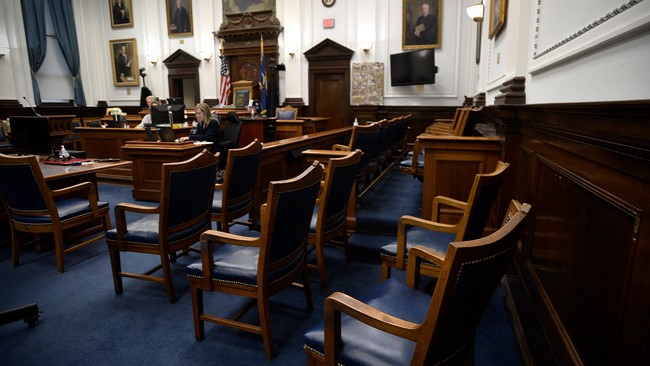
Republican attorneys general warn that taxpayer-funded science may be shaping the evidence used in major climate lawsuits against energy companies, and they want federal funding relationships reviewed to stop activist influence from tipping the scales in court.
State attorneys general led by Montana’s AG have pressed the administration to pause some federal support tied to national scientific institutions, arguing that the research and guidance courts rely on could be influenced by activists with a stake in litigation. Their concern is not hypothetical: lawsuits now target major energy producers and could impose damages that run into the billions. If the science judges use is framed or guided by parties seeking specific legal outcomes, the impartiality of the judicial process is at risk.
These climate cases are sweeping in scope and technical in nature, forcing courts to parse complex causal claims about emissions, responsibility, and harm. Ordinary jurors and many judges lack the specialized knowledge to evaluate intricate scientific debates, so they defer to authoritative summaries and expert reports. That reliance gives outsiders who shape those materials substantial sway over how disputes are perceived and decided.
“Allowing advocacy driven science to shape materials relied upon by courts threatens the expectation of impartial evidence in the judicial process,” the attorneys general wrote while requesting a review of federal funding tied to the National Academies.
When judges face scientific disputes, they often lean on established institutions to interpret evidence and explain technical issues in neutral terms. The worry from Republican attorneys general is that some of those institutions and workshops may be less neutral than they appear, with materials reflecting advocacy positions rather than a detached assessment of the facts. That would turn what should be objective guidance into a tool for advancing litigation strategies.
Institutions such as national academies have produced summaries and workshops intended to help the judiciary, and those products carry weight because judges treat them as credible reference points. But credibility evaporates if the work behind those summaries is shaped by parties expecting or wanting particular legal results. The attorneys general argue that public funds should not support outputs that could be used as ammunition in ongoing lawsuits.
“Judges increasingly confront scientific and technical evidence in emerging fields that require careful interpretation,” the workshop summary explains while describing the growing challenge courts face.
The broader campaign behind the climate suits is organized and persistent, driven by nonprofits and academic centers focused on advancing litigation as a route to policy change. Those groups track cases, advise plaintiffs, and push legal theories aimed at forcing industry-wide shifts in liability and compensation. When such networks also have a hand in drafting or influencing the scientific materials judges consult, the line between neutral expertise and strategic advocacy blurs.
Republican officials see a strategic pattern: when activists cannot secure policy through legislatures, they pivot to the courts, hoping rulings will carry the force of law without democratic debate. The risk is that taxpayer-supported research, produced for the public good, gets repurposed to underpin private litigation and policy goals. That would amount to captured expertise—where public trust in institutions is used to validate partisan legal agendas.
“Climate activists increasingly seek to impose energy policy through the courts rather than through the legislative process,” the editorial wrote while examining the rise of climate cases against energy companies.
The attorneys general have formally requested agencies to examine whether federal funding supports research or engagement that overlaps with active climate litigation. Their argument centers on preserving judicial impartiality and ensuring that institutions funded by taxpayers remain genuinely independent. If federal funds inadvertently subsidize advocacy that ends up shaping courtroom evidence, Congress and the executive should take notice and act.
Beyond funding reviews, the debate raises broader questions about how courts should handle highly technical science in politically charged litigation. Judges must decide what expert evidence is credible without defaulting to institutional pronouncements that may carry embedded assumptions. Ensuring transparency about who contributes to scientific summaries and how those materials are developed is essential to fair adjudication.
“Federal funds should not support efforts that could influence ongoing litigation or shape scientific evidence presented to courts,” the attorneys general wrote in requesting a review of federal funding relationships.
These concerns are not merely procedural. They touch on the balance of power between elected institutions and the judiciary, and on whether taxpayer-funded expertise should be used as a lever in contentious legal campaigns. If activist interests can steer the science judges use, courtrooms shift from neutral adjudication to contested political battlegrounds. Republican attorneys general insist that preserving the integrity of both science and the courts requires vigilance and a clear separation between advocacy and federally supported research.


Add comment