
This piece looks at the reaction to the shots fired near the White House, how journalists on the North Lawn reacted in real time, and how one correspondent’s confused response quickly turned into a viral meme that she handled with humor. It covers the initial confusion, the lockdown, the meme flood that followed, and the way the reporter leaned into the teasing while the security response unfolded. The focus stays on the incident, the media moment, and the public reaction without reprinting external links or source credits. Expect a sharp, plainspoken take from a conservative viewpoint on press behavior and public response.
Reporters were already on the North Lawn doing live segments when gunfire rang out, and a split-second of reaction showed how chaotic those moments can be. ABC’s senior White House correspondent Selina Wang is shown recognizing the danger immediately, ducking and taking cover like someone trained for an instant threat. That quick, professional response contrasted with the more bemused reactions from others who were still processing what they had heard. In a tense setting like that, clear instincts matter and Wang’s response read as composed and alert.
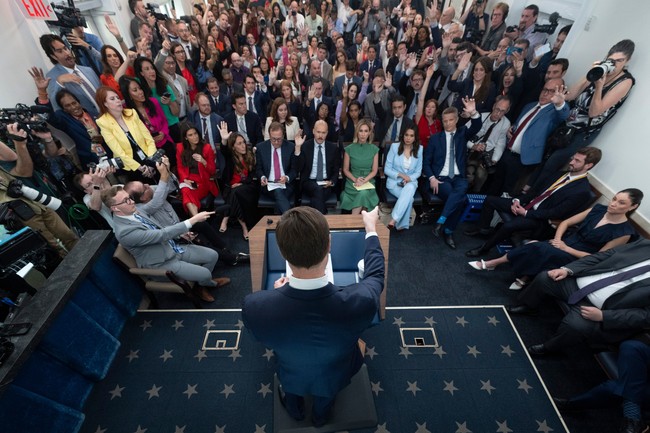
Not everyone understood what was happening at first, and that mismatch produced the moment the internet would seize on. NBC Capitol Hill correspondent Julie Tsirkin was filmed looking around and asking, “What is that?” as people tried to figure out whether the noise was celebratory, accidental, or something worse. Her cameraman guessed it might be fireworks, which shows how in public spaces people default to benign explanations when facts are thin. Within seconds, however, she and other reporters ran toward the White House Press Briefing Room for shelter, and a Secret Service agent stood guard as they waited out a lockdown.
The press corps was locked down for about thirty minutes, which is long enough for a lot of speculation and short enough to make nerves frayed once the immediate threat passed. Secret Service protocols kicked in and the reporters were protected while authorities investigated and managed the scene. That kind of coordinated response is exactly what you want when something unpredictable happens near the seat of government. Safety procedures worked, but the footage captured the human side of how journalists perform under pressure and confusion.
Predictably, the internet turned the moment into fodder for memes, because that’s the modern carnival for anything that goes slightly off-script on live TV. Social accounts and commenters ran with Tsirkin’s puzzled look, creating material that ranged from playful to relentlessly mocking. Some of the meme content targeted broader symbols and brought in commentary about institutions and personalities, not just the individual caught in the frame. Memes move fast and mercilessly, and in this case they amplified a fleeting human reaction into a cultural moment.
Among the sharper takes were jabs at the building across from the lawn: “The ugliest Presidential Center ever, courtesy of Barack Obama.” Other meme captions drifted into cultural commentary and snark about what they called indoctrination in a “Learing Center.” The online commentary mixed partisan potshots with pop-culture barbs, turning a safety moment into a wider conversation about governance, media, and public trust. Those angles show how quickly incidents near the White House get folded into political narratives.
Not all responses were vicious, and some people chose to be funny rather than cruel, which is where Tsirkin found a way to respond without being defensive. She showed she could take a ribbing and even made light of the situation with a self-aware post, saying she was glad she could “take one for the team with @nbcsnl on summer break.” That line landed because it acknowledged the joke and kept the focus on the reporting she still planned to do. Good-natured recovery like that helps defuse online pile-ons and reminds viewers reporters are human.
Tsirkin also invited the audience to “stick around for the reporting.” That was a tidy pivot back to the work at hand and a reminder that the core job is to provide facts, not theater. The episode is a snapshot of modern news: live cameras, instant reaction, a rapid meme economy, and a short arc from confusion to punchline. For conservative viewers watching media behavior up close, the moment reinforced longstanding critiques about the press being caught off-guard and sometimes too eager to perform rather than inform.
Ultimately, the incident underscored two things: security teams did their job to protect the press and the public, and the media are vulnerable to viral humiliation in a way previous generations were not. Reporters will continue to face unpredictable events while broadcasting live, and the public will continue to judge how they handle those moments. For now, a confused look became a cultural clip, the memes rolled in, and the journalist in the center of it rolled with it while returning to the core task of reporting the facts.
Add comment