
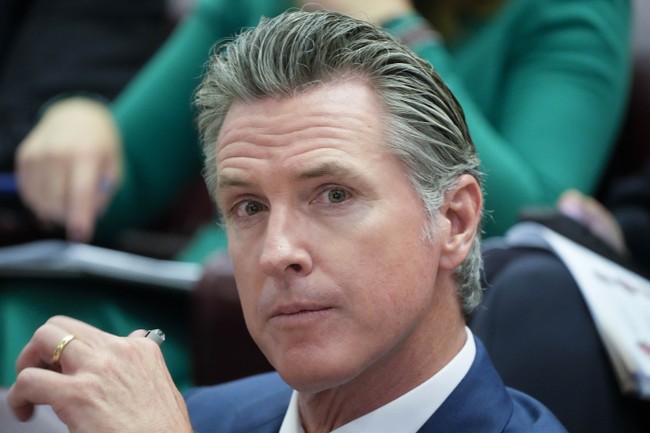
I’ll explain why Gavin Newsom’s recent self-promotion landed flat, recap the menopause bill dust-up with Halle Berry, cover the viral chair pose moment and the social media fallout, and show how these missteps matter for a potential 2028 presidential bid.
California Gov. Gavin Newsom has made his interest in higher office obvious, but his recent moves make a persuasive case that ambition is outpacing accomplishment. Voters looking at the state’s persistent problems — from wildfire responses to an ongoing homelessness crisis — are unlikely to be impressed by photo ops and press releases. Running for president demands more than optics; it requires a track record people can trust.
The Halle Berry episode crystallized that gap. Berry publicly criticized Newsom after he vetoed a menopause-related bill, saying his action sent a message that devalues women. That moment was awkward not just for the content, but for timing, because Berry spoke before Newsom did at the same summit. When a high-profile figure calls you out on stage, it’s not something spin can fully erase.
Newsom’s response was thin. He told reporters she “didn’t know” that he planned to include the measure in next year’s budget and that cost concerns were the issue. That kind of backfill sounds like damage control, not leadership. For women who might decide the next presidential contest, explanations offered after the fact are often unsatisfying.
Then there was the infamous chair posture that exploded across social platforms and late-night riffs. What might have been a minor visual oddity became a meme machine almost instantly. Attempts to laugh it off or frame it as confidence only lengthened the line of ridicule, because the internet is unforgiving and creative at the same time.
When political teams fail to anticipate how an image will play, they reveal a deeper problem: a poor sense of cultural tone and how millions will react in real time. Posting the image from both the campaign account and the press office suggested either arrogance or a serious misread of public taste. Either way, it underscored a disconnect between Newsom’s team and the broader electorate.
Social media users didn’t just mock a pose; they used it to make symbolic points about the governor’s broader fitness for national office. Memes and snark spread quickly, and conservative commentators were quick to frame the moment as emblematic of Democratic tone-deafness. In a media environment where imagery often sticks longer than policy, that’s a real liability.
Some voices called the episode a career-killer, comparing it to political implosions of the past where a single moment crystallized doubts about candidacy viability. Others used it to paint the party as out of touch, arguing that spectacle and style are no substitute for results. Either line of attack chips away at a message that should be focused on achievements, not gaffes.
Newsom’s attempts to spin both the policy veto and the viral photo show a pattern: reactive messaging instead of proactive governing. Defensive explanations handed out after the fact rarely reverse first impressions, and they can amplify perceptions of weakness. If he’s serious about national office, he’d be better off demonstrating measurable wins rather than relying on staged moments.
Republican observers and many independent voters will take these incidents as evidence that Newsom isn’t ready for the scrutiny of a presidential campaign. They see a governor who can command headlines but struggles to produce outcomes that matter to everyday Californians. For skeptics, the gap between publicity and performance remains the central problem.
Beyond the mockery and the outraged tweets, the real political cost is cumulative. A string of controversies, each small on its own, can add up to a widespread narrative of incompetence. Opponents on the right will be eager to stitch those moments into a broader case against his candidacy, and undecided voters may simply opt for someone who looks steadier under pressure.
At this stage, Newsom’s team has a choice: double down on spectacle and hope it translates into momentum, or pivot to disciplined, demonstrable policy wins that address the very problems critics cite. If the goal is to persuade middle-of-the-road Americans, the latter is the only plausible path to viability.
For now, the takeaway is straightforward: viral moments and celebrity rebukes make headlines, but they aren’t the foundation of a credible presidential bid. Voters expect leadership that solves problems, not attention-getting maneuvers that invite ridicule and raise doubts about seriousness. The 2028 field will judge him on both record and composure, and recent events haven’t helped his case.
The American people outside of California will never ever vote for Newsome they don’t want their states and country destroyed be an incompetent jackass he bankrupt California he’s got the fastest invisible train to nowhere. He destroyed thousands of people’s lives a business because he didn’t have water for fire control and wouldn’t allow them to use ocean water to fight the fires. He accomplished nothing to make his state safe or profitable he ran many businesses out of his own state. He has the highest taxes on everything and more people are homeless than any other state. Could you imagine him on the world stage making decisions around the world. Newsom is a pet monkey on a democrat string just like Biden was no common sense. But he will spend hours on is mop of a hair due. He’s just like Harris all month and no substance. Can’t wait for them to chew him up and spit him out his ego will explode. Is going to come out of the closet like Obama did or keep the lie going.