
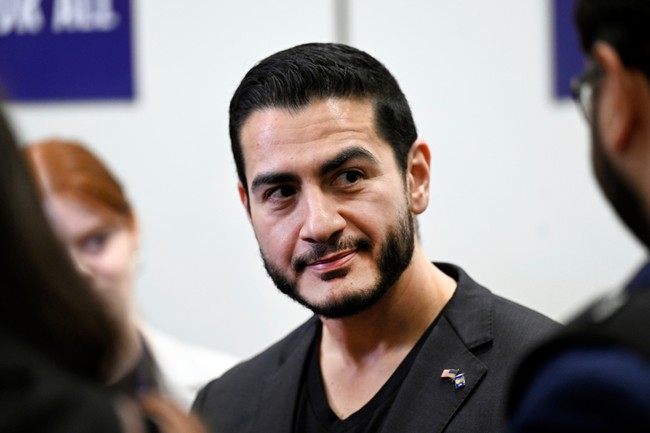
The Michigan Democratic Senate primary blew up after a leaked meeting clip where Abdul El-Sayed used the phrase “ogre on a pike,” and that language has drawn sharp criticism from Democrats and activists alike. This piece walks through the exchange, reactions from inside the party, and what it says about the factional fight for control of the Democratic coalition. The controversy highlights a bitter choice between insurgent, confrontational politics and a more traditional, electable approach. Below I present the scene, the key quotes, and the broader implications for Michigan and national politics.
The primary between Abdul El-Sayed and Haley Stevens has turned into an ugly internecine battle that Democrats will remember come November. The party establishment rallied behind Stevens, while El-Sayed pushed a much more aggressive, take-no-prisoners message. That contrast is the backdrop for the remarks that set off this controversy.
At a Zoom meeting, El-Sayed argued that winning his race would give him leverage to reshape the party’s behavior. He said he had no qualms about primarying Sen. John Fetterman and described a winner-take-all posture rather than a coalition-building one. The tone was combative and unapologetic, aimed at signaling strength to the party’s left flank.
“Like that’s the best thing about the way they’re doing this is if I win … ‘Well, y’all came at me, so now I get to come at you.’ And you know, primarying people like John Fetterman, I have no problem to do that. Like I’m looking forward to it. And people are like, ‘We don’t primary the Senate.’ I’m like: watch me do it. Tell me why I should stop.”
El-Sayed summed up his stance as more of a winner-take-all champion than a big-tent coalition builder. “You’re gonna spend $60 million to beat me — OK, two can play at that game,” he said. “And then what happens is, ideally, you put one ogre on a pike, and then everyone else gets the message, and all of a sudden starts to sound a lot different.”
The “ogre on a pike” image was jarring and predictably sparked backlash even from fellow Democrats who worry about tone and optics. Neera Tanden captured that unease, calling the language sexist and deeply troubling for a race that should avoid misogynistic overtones. The phrase landed badly because it suggested humiliation and a public shaming that many inside the party find dangerous and unnecessary.
Campaign surrogates for Haley Stevens attacked El-Sayed for making the race about personal ambition rather than governance. They argued that Michigan voters care about results, not intra-party vendettas, and that Stevens is focused on delivering for the state. Those critics framed El-Sayed’s stance as proof the far left prioritizes movement purity over electability and service to constituents.
El-Sayed later clarified that his reference was to the practice of primarying senators like Fetterman, not a specific personal attack on Stevens. That defense did little to disarm the critics who saw the imagery as emblematic of a confrontational strategy that risks alienating moderate voters. The optics matter in a state that national Republicans view as winnable, especially if Democrats fracture public support.
Gun control advocates also weighed in, pointing to broader concerns about party unity and messaging. Shannon Watts posted on X to try to steer the narrative away from the idea that the remark targeted Republicans, while others framed the comment as evidence of an internal DSA-style contempt for mainstream Democrats. Fred Guttenberg urged voters to back Stevens in order to prevent the kind of intra-party aggression El-Sayed was describing.
This kerfuffle underscores a bigger truth about national politics: insurgent tactics that energize a faction can hurt a party’s chances in a general election. El-Sayed’s rhetoric may thrill activists, but it risks damaging the party’s standing with independent and moderate voters who decide statewide outcomes. Republicans see this as proof that the left’s internal fights make them vulnerable across battleground states like Michigan.
https://x.com/neeratanden/status/2081737673946087877
For voters in Michigan, the choice is straightforward: do they want a nominee who courts confrontation and intra-party purges, or someone positioned to appeal broadly and win a general election? The establishment’s unease, and the criticism from within El-Sayed’s own ideological neighborhood, shows a clear split over which path to take. That split is what makes the primary outcome consequential beyond just one senate seat.
What happened in that Zoom room is a reminder that language and strategy matter as much as policy in modern campaigns. When a candidate talks about putting “one ogre on a pike,” it signals priorities and methods — and it gives opponents a durable talking point. As Michigan voters watch this race, they’ll be judging not just promises but temperament and judgment, which can decide who can actually govern.



Add comment