
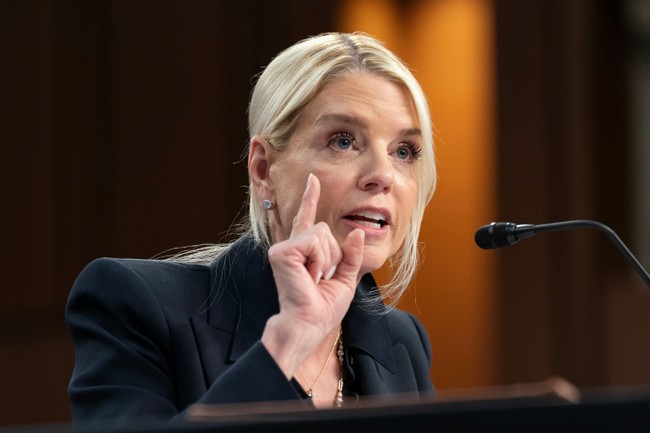
The story examines a chilling TikTok post that placed a sniper sight over the U.S. attorney general’s face and offered a $45,000 bounty, the arrest and release of the suspect, and the broader threat social media poses to public officials and the rule of law.
A 30-year-old man in St. Paul posted a photo of the U.S. attorney general with a sniper dot on her forehead and offered $45,000 to anyone who delivered her dead, a message tied to an account that displayed an anarchy symbol and linked to radical material. The FBI located the poster through digital forensics, arrested him on Oct. 16, and charged him with interstate transmission of a threat to injure. He was later released on personal recognizance with a GPS monitor and orders to continue mental health treatment.
His prior criminal record is relevant: a 2022 felony stalking conviction in Dakota County, Minnesota, a 2016 misdemeanor domestic assault, and a felony third-degree domestic battery in Florida in 2016. These are not the actions of a casual prankster but of someone with a pattern of violent behavior and a willingness to escalate online. When violent intent lines up with a documented past, law enforcement and prosecutors need to act decisively.
The FBI affidavit describes the post as a “deliberate threat of violence,” language that underscores the seriousness beyond internet posturing. Prosecutors say the conduct edges into murder-for-hire territory and note the digital trail of IP addresses and communications that back up the charges. In a politically tense environment, such threats do more than target one person; they attack the idea of public service and intimidate officials who carry out the law.
This episode did not occur in a vacuum. The attorney general has been at the center of controversy and political attacks in recent weeks, drawing intense scrutiny from across the partisan divide. Political fights are nothing new, but when rhetoric crosses into explicit threats that name price and method, it becomes criminal, not civic discourse. Americans must distinguish between heated politics and criminal plots.
Social media platforms deserve much of the blame for enabling this kind of behavior to find an audience quickly and widely. Algorithms reward outrage and engagement, not civic responsibility, and that dynamic magnifies danger when unstable actors decide to go public with violent fantasies. Anarchist slogans and bounty talk can spread fast on networks that prioritize virality over safety.
Online platforms must do better at detecting threats and quickly removing content that incites violence, and Congress should push for stronger, clearer standards for takedowns and preservation of evidence. Courts have long recognized limits to free speech where true threats and incitement are involved, so policy and enforcement should reflect those legal boundaries. The public interest demands platforms not be a refuge for plotting or encouraging murder.
Law enforcement also needs tools and resources to pursue these cases from the first viral post to any real-world act. Digital forensics, rapid preservation of account data, and cooperation among local, state and federal agencies are essential to trace threats back to their source. Prosecutors should use the full weight of the law when evidence shows deliberate threats intended to harm public servants.
Releasing a suspect on personal recognizance with monitoring and treatment conditions can be appropriate in some circumstances, but it raises questions about consistency and deterrence when the charge involves potential violence against public officials. Avalos faces up to five years if convicted, a penalty that should be meaningful enough to discourage similar stunts. Punishments that match the risk are part of restoring a credible deterrent.
The political angle here is unavoidable: our leaders are under fire from both rhetoric and real threats, and conservatives should insist on protecting them without turning law enforcement into a partisan tool. Public servants must be allowed to do their jobs without constant fear for their lives, and the institutions that preserve order should be empowered to act when threats arise. We can defend free speech while refusing to tolerate calls for murder.
Finally, this incident highlights a cultural problem as much as a legal one. When rebellion becomes a brand and violent imagery is worn as a badge of honor, we lose the common ground that holds civic life together. Anarchy marketed as activism does real harm, and citizens on all sides should demand platforms and laws that stop rewarding violent posturing. The safety of officials and the health of our civic order depend on it.

Actually posting a death threat with a 45,000 bounty goes over the line of free speech! What happened to the democrats saying that’s ‘hate speech and its a crime” and this media hit goes even beyond hate speech and the man gets release and recommended to get mental health treatment. Something is quite not right with this picture. Pam Bondi needs to be protected for doing her job that the American people voted for in 2024!! Now for sure it exposing how the Judges across the Country are usurping power over federal law. Judges so incompetent and don’t know the law or follow the law should be impeached!
Send him to GITMO and any others of the same mind-set or guilty of such Treachery so they can for a proper change be tried, found guilty and be summarily executed by a Military Firing Squad! Since the so called Summer of Love Riots triggered by the Criminal Floyd’s overdose on fentanyl death while being apprehended by the police, there’s been way too much soft on crime leniency or the allowing of Marxist, Terrorists and All Types of Criminals to push the Destroy America from Within Plan or Agenda!