
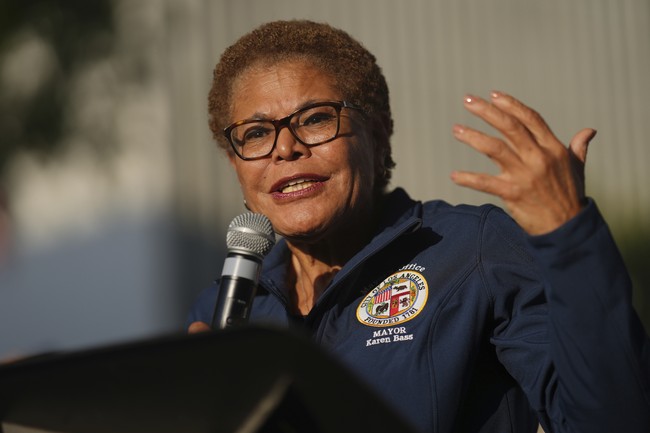
Los Angeles Mayor Karen Bass staged a pothole photo op that quickly turned into an uncomfortable exchange with a local reporter, exposing the limits of flashy gestures when core services still lag. The interaction highlighted complaints about slow 311 responses, minimal road resurfacing plans, and broader questions about priorities and accountability in city leadership.
Karen Bass’s Pothole Photo Op Backfires
On a rainy Friday, Mayor Karen Bass joined city crews to fill potholes and touted that crews had paved 60 miles and fixed over 10,000 potholes since the storms. The scene was clearly meant to show action and competence, but the optics shifted fast when a KTLA reporter pressed her on whether those numbers matched Angelenos’ everyday experience.
The reporter, Eric Spillman, punctured the photo-op narrative by asking pointed questions about the city’s real progress and the effectiveness of the 311 system. “You don’t have to be a detective to find the potholes, they’re everywhere,” Spillman observed before Bass even arrived, and his follow-up made clear the disconnect between press releases and street-level reality.
Bass briefly grabbed a shovel and tamped asphalt herself, a classic mayoral moment that reads well in a photo but does little for the thousands of drivers who see crumbling streets daily. The performance angle is obvious: one mayor, one pothole, a camera and a line about ongoing repairs. The problem is the scale—Los Angeles has about 22,000 lane miles, and the 60 miles pitched as a victory amounts to a sliver of the need.
When Spillman asked, “Potholes are an issue now, especially since it has rained and we’ve seen so many of them, uh, what are you going to do about it?” Bass leaned on the familiar talking points: repairs are happening, and the city has fixed “over 10,000 potholes” in recent months. She repeated that number more than once during the exchange, using it as proof the administration is responding.
The reporter challenged the claim by pointing out how many calls to 311 go unanswered, saying he knew people who called repeatedly and saw no action. “They called several times over a couple of months,” he said, and that reality undercuts any narrative that civic services are simply humming along under current leadership. Residents care about whether problems get fixed, not whether a mayor can perform a photo-op for a single pothole.
Spillman also pressed StreetsLA General Manager Keith Mozee, who had accompanied Bass to the scene, about the pledge to pave 60 lane miles this year. The reporter emphasized the scale problem: 60 lane miles out of 22,000 is roughly 0.27 percent of the city’s streets. Mozee called that number “an accomplishment,” but many Angelenos see it as a tiny step at best, especially when repaving appears to have stalled in parts of the city.
Bass framed the slow progress as the result of long-term funding shortfalls and pointed to infrastructure budgets from prior administrations. The reporter pushed back, noting that even significant federal infrastructure spending in past years has not translated into noticeable improvements on local streets. The exchange raised the familiar question: where did the money go and why are Angelenos still driving over shattered pavement?
The confrontation grew testy as Bass reiterated her numbers and defended the administration’s approach, but the moment left a clear impression: optics and announcements do not equal systemic fixes. Voters see potholes, traffic delays, and broken sidewalks every day, and they expect decisions from city hall that move beyond symbolic gestures to durable solutions.
Political context matters here. Bass faces reelection in 2026 with approval ratings that have trended low, and critics point to wildfire response, homelessness, and budget crises alongside road maintenance failures. The pothole exchange is a compact example of a larger accountability problem: responses that sound good in a press release but fail to resolve the underlying issues that drive public frustration.
For conservative critics and many everyday residents, the episode reinforces a basic GOP argument about priorities and governance: citizens want practical fixes, clear metrics, and timely follow-through, not staged moments. A mayor filling one pothole on camera may make a good photo, but real leadership is measured by the scale and speed of repairs and by whether 311 calls actually produce results for the people who use them.
In the end, the street-side back-and-forth forced a simple truth into the open: political theater cannot substitute for durable public works, and voters will remember whether the next pothole they hit is patched or simply used as a prop. The exchange left more questions than answers about infrastructure, responsiveness, and where the city intends to go from here.
The spat also put a spotlight on managerial accountability at StreetsLA and how the city prioritizes projects across neighborhoods. Residents and business owners want transparent timelines, clear resource allocation, and predictable follow-up when they report hazards that affect safety and commerce.
Patchwork approaches and 311 frustrations erode trust in local government regardless of party, but Republicans and other critics will use moments like this to argue for different management priorities and fiscal discipline. The practical takeaway for voters is straightforward: look for measurable delivery, not staged moments.


Add comment