
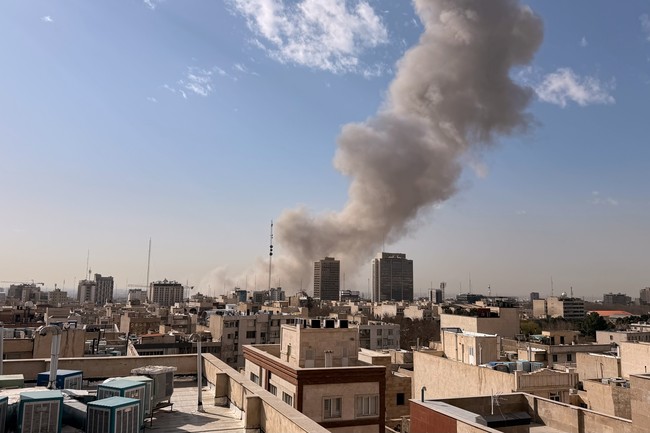
I’ll lay out what happened after recent strikes on Iran: their military capability is taking heavy hits, their leadership is scrambling with unlikely claims, regional neighbors are growing alarmed, economic pressure is mounting, and U.S. pressure — under a strong stance from Washington — is forcing a choice Iran should not ignore.
The latest round of strikes has visibly degraded Iran’s military options, and that reality is hard to argue with. Reports from the field point to large numbers of missiles and production facilities being struck, along with damage to naval assets that limited their ability to project power. From a Republican standpoint this is exactly the kind of decisive action we need to protect American interests and deter further aggression.
Iran responded by making an incredible public claim that U.S. and Israeli attacks had not damaged their military, even though satellite imagery and independent reporting suggest otherwise. That rhetoric reads like propaganda designed to shore up domestic support, but it does not change the facts on the ground. When a regime chooses spin over substance, it usually signals panic more than confidence.
One dramatic target that drew attention was a major bridge that was struck, which sent Tehran into a rhetorical overdrive threatening neighboring Gulf states. Those threats backfired, pushing regional governments closer to the United States and prompting tighter security coordination among Gulf partners. Every aggressive public posture from Tehran is pushing its neighbors away instead of bringing them in, and that isolation is costly in both security and diplomacy.
There are also credible reports that strike teams hit an IRGC missile base near Isfahan, a location that Iran had long tried to conceal as part of its strategic production network. The idea that critical infrastructure is hidden “in places that you are completely unaware of and will never be able to reach” no longer carries the same weight when precision targeting keeps finding new sites. Claims of untouchable sanctuaries are weakening as evidence accumulates that Iran’s logistics and weapons flows are under sustained pressure.
Beyond the battlefield, strikes reportedly targeted headquarters tied to financing for Iran’s military operations, which raises the stakes on Tehran’s already fragile economy. Iran’s economy has been strained for years by inflation and mismanagement, and resources poured into proxy groups like Hamas and Hezbollah make ordinary people pay the price. Hitting financial hubs that support militant activity doesn’t just degrade capability, it also forces hard budget choices inside the regime.
Iranian political figures have privately expressed concern that without a deal the economy could collapse, a point that underlines how vulnerable the regime has become. When leadership chatter shifts from ideology to survival, you can see the contours of a crisis-forming. Washington’s negotiating posture, backed by demonstrable military results, gives the U.S. leverage that should be used to push for genuine constraints on Tehran’s malign behavior.
Threatening to strike infrastructure in neighboring countries is a terrible long-term tactic for Tehran because it hardens opposition against them across the Gulf. Instead of rallying allies or deterrence partners, Iran’s moves are convincing those governments to work more closely with the United States. That regional realignment reduces Iran’s room to maneuver and increases political costs for continued aggression.
For American policymakers and the public, the choice is clear: sustained pressure paired with credible offers that incentivize real change produce results. Iran has to decide whether it will respond to leverage or keep digging a deeper hole. The current mix of military pressure, economic targeting, and diplomatic isolation is designed to force that decision, and from a Republican viewpoint it is the right approach to protect U.S. interests and restore stability in the region.
The facts on the ground show a regime under stress — militarily constrained, economically squeezed, and diplomatically isolated. Tehran’s public bravado is not matched by what we can observe, and that mismatch erodes their credibility at home and abroad. If Iran wants a different outcome, the smart move is to accept a negotiated settlement that stops funding proxies and curtails weapons production instead of doubling down on failed strategies.



Everybody can earn 250$h+ 1k$ daily… You can earn from 6000-12000 a month or even more if you work as a full time job…It’s easy, just follow instructions on this page, read it carefully from start to finish… It’s a flexible job but a good eaning opportunity.. go to this site home tab for more detail thank you .
open here → → PayAtHome1.Com