
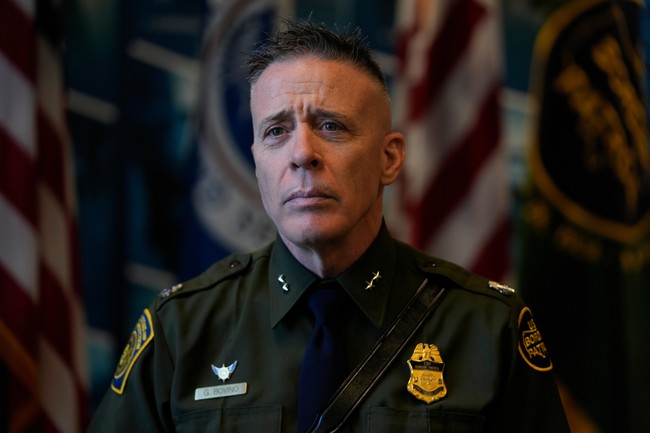
At a tense Minneapolis press event, Border Patrol Commander-at-Large Greg Bovino and ICE ERO Acting Executive Associate Director Marcos Charles described an ongoing enforcement surge aimed at removing criminal illegal aliens, saying the effort will continue until every offender is in custody; officials shared arrest totals, discussed a violent assault on an agent, and blamed heated public rhetoric for escalating risks to law enforcement.
The press conferences in Minneapolis overlapped in a chaotic way, with Bovino’s appearance scheduled first and local leaders holding their own event nearly simultaneously. That timing underscored the tension between federal enforcement teams and state and city officials who have publicly criticized ICE actions. From a law-and-order perspective, the federal message was blunt and uncompromising: the operation will not stop on a calendar date.
A local journalist asked Bovino directly, “People in Minnesota want to know when this surge will end. Has there been a date set? Is there a certain number of people you want to apprehend before you decide to ease the surge?” The answer was framed as absolute and resolute rather than statistical or temporary. Bovino made clear the mission’s endpoint is defined by achieving its public safety goal, not by an arbitrary deadline.
“We continue to apprehend dozens, if not hundreds, of these criminal illegal aliens a day. We’re gonna continue conducting that mission. We’re not gonna put a date or a timeline to stop this mission. This mission’s ongoing until there are no more of those criminal illegal aliens roaming the streets of Minneapolis.”
The follow-up question sought a concrete target number, but Bovino offered a terse, principle-driven response. He said, “There is a number, and it’s called ‘all of them.'” That phrasing left no room for compromise; the federal stance is full enforcement until the threat is removed from the streets. For officials who prioritize public safety, that is the kind of clarity citizens expect from law enforcement leaders.
Acting Executive Associate Director Marcos Charles provided arrest figures to put the operation’s scale in context. He announced that over 3,400 illegal aliens have been arrested since the start of Operation Metro Surge, emphasizing that many arrests are of individuals with criminal records. The implication was straightforward: removing repeat offenders prevents future victimizations in the community.
“We’re out here to arrest dangerous criminal illegal aliens so they can’t victimize innocent people in our communities anymore. Since, the beginning of this operation, we’ve arrested three over 3,400 illegal aliens… Those are criminals who won’t reoffend in our communities.”
Federal agents also apprehended the individual who bit off an ICE agent’s finger during a confrontation, a violent act that drew national attention. That assault highlighted the risks agents face while carrying out arrests and the potential for chaotic scenes when enforcement meets protest activities. The incident became a focal point for federal officials underscoring the need for firm action to protect officers and the public.
Bovino declined to provide details about a separate Saturday shooting under investigation, noting that specifics must wait until investigators complete their work. He reminded journalists that while the public can dissect video footage at leisure, officers in the field make split-second decisions under pressure. That distinction between after-the-fact analysis and real-time judgment was a recurring theme in his remarks.
Echoing concerns raised by other federal voices, Bovino said heated public rhetoric had consequences for safety on the ground. He pointed to criticism from certain state and local officials and connected harsh language to increased threats against law enforcement. His tone made clear that vilifying officers in public forums can produce real-world dangers for those who enforce the law.
“When politicians, community leaders and some journalists engage in that heated rhetoric, we keep talking about, they make the choice to vilify law enforcement…using the term kidnaping. There are actions and consequences that come from those choices.”
At the same time, Bovino acknowledged the right to protest and assemble, but he urged that demonstrations be conducted at a safe distance to avoid direct confrontations with agents. He stressed the need to preserve public safety and protect both the exercise of free speech and the security of law enforcement personnel. The federal message combined respect for civil liberties with a firm demand for order and officer protection.
An editor’s note included in the briefing materials criticized mainstream media coverage, stating, “The mainstream media continues to deflect, gaslight, spin, and lie about President Trump, his administration, and conservatives.” That perspective framed the press moment within a broader argument about media bias and perceived double standards in reporting. The political context was unmistakable: enforcement actions and media narratives remain deeply contested.



Add comment