
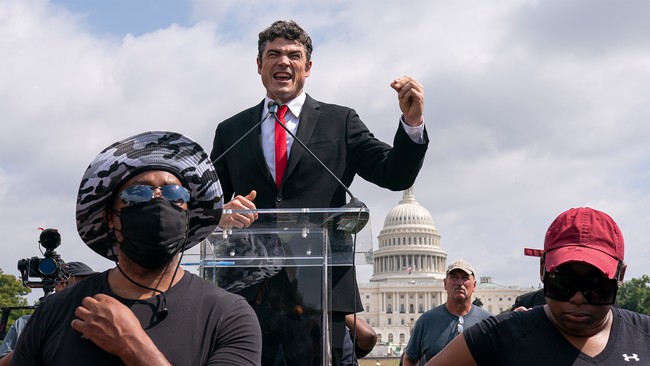
Former National Counterterrorism Center director Joe Kent abruptly resigned, publicly accused allies and media of pushing the United States into an unnecessary war with Iran, and now faces a federal probe over alleged unauthorized disclosures tied to classified information. Reporting indicates the investigation began months before his resignation, shifting this from a policy spat into a potential national security and legal matter. Inside the administration, officials have pushed back hard against Kent’s claims while the FBI reportedly continues to examine his handling of sensitive material. The story combines explosive public accusations with a quiet, ongoing investigation into classified leaks.
Joe Kent walked away from a senior intelligence post with a blistering letter that stopped a lot of Washington traffic. He framed his resignation not as a policy debate but as a moral break, saying he could not, in good conscience, support what he described as an ongoing war with Iran. Such a departure from a top counterterrorism role is bound to draw attention, and it did—fast and loud.
In his resignation letter Kent wrote, “I cannot in good conscience support the ongoing war in Iran. Iran posed no imminent threat to our nation, and it is clear that we started this war due to pressure from Israel and its powerful American lobby.” That line landed like a grenade in D.C., calling into question the motives and actors behind a major foreign policy decision. Accusing allies and domestic groups of driving military action is extraordinary behavior for someone who headed a national security agency.
Kent doubled down in the same letter with another striking charge: “High-ranking Israeli officials and influential members of the American media deployed a misinformation campaign that wholly undermined your America First platform… to deceive you into believing that Iran posed an imminent threat… This was a lie.” Those words spell out an accusation that goes beyond disagreement into an allegation of deliberate deception directed at both foreign officials and U.S. media. For supporters of a strong, secure America the suggestion that intelligence or messaging was manipulated is deeply unsettling.
Meanwhile, the criminal and counterintelligence sides of the government reportedly were not idle. According to reporting, federal authorities have been investigating Kent for months over possible unauthorized disclosures of classified information. That probe allegedly predates his resignation, which complicates any narrative portraying the scrutiny as merely political blowback. If true, the timeline suggests the investigation was already underway as he wrote his explosive letter.
Four people with direct knowledge of the inquiry have described it as ongoing and focused on the handling of classified material. That kind of probe typically looks at whether sensitive information was shared in ways that could jeopardize operations, sources, or national security. For a former intelligence chief, even the appearance of mishandling classified information raises serious concerns—both legal and operational.
The White House response was terse and unmoved, with the president signaling little sympathy for the departing official. Across the administration, officials pushed back on Kent’s contention that the Iran conflict stemmed from outside pressure and misinformation. They argued his claims distort the intelligence that informed policy and dismissed the letter as politically charged rather than a straightforward account of intelligence failures.
This collision of high-stakes public accusation and a quiet federal investigation changes the story from an insider blowing the whistle to an insider under scrutiny. Kent has cast himself as someone exposing a scandal; investigators appear to be treating him as someone who may have exposed classified details improperly. Those are two very different lanes, and Washington is watching which one the evidence supports.
The implications reach beyond one resignation. If senior officials can publicly accuse allies and media of manufacturing a casus belli, it undermines trust in the institutions that inform national security decisions. At the same time, if classified information was shared without authorization, the damage could be concrete and immediate, affecting operations and partnerships. Both outcomes are problematic for a country that relies on clear, accountable intelligence and strong alliances.
This dispute will keep testing the boundaries between politics, policy, and legal accountability. A former national security official leveling explosive public accusations while under reported investigation forces a choice for observers: treat the episode as a principled stand or as a reckless breach. Either way, the stakes are high and the consequences could reverberate through the intelligence community and the halls of power for some time.

Add comment