
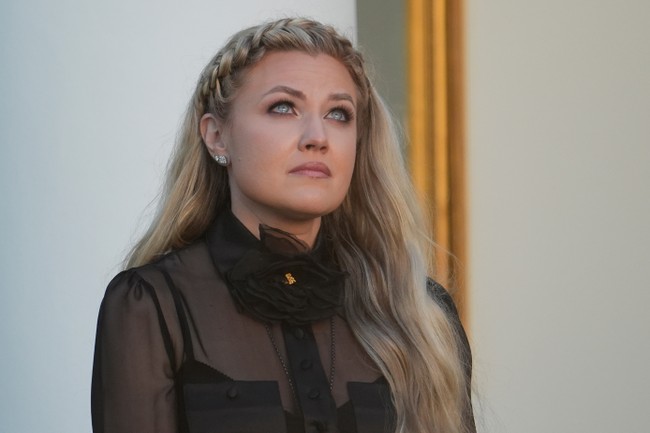
This piece reviews the CBS town hall where Bari Weiss spoke with Erika Kirk following Charlie Kirk’s assassination, highlights the tough questions on political violence and antisemitism, preserves Erika Kirk’s direct responses, and examines the tension between a news division seeking balance and legacy media resistance.
The town hall aired on CBS News and centered on Erika Kirk stepping into the public role after her husband Charlie Kirk’s murder. Bari Weiss moderated, and the event focused on political violence, public responsibility, and whether civil discourse can survive the current polarization. The format was intentionally confrontational at times, driven by questions from people directly affected by violence and students wrestling with provocative ideas. That setup gave viewers an unfiltered look at grief, principle, and the practical demands of leading an organization under siege.
Weiss framed the event as a new direction for the news division, aiming to break out of predictable partisan echo chambers. She said, “We live in a divided country. A country where many people feel that they can’t speak across the political divide — or across their own kitchen table. One of the goals of the new CBS News is to change that. Tonight’s town hall with Erika Kirk is the first of many conversations and debates about the things that matter most, which are often the hardest to talk about.” That pledge set the tone and exposed a fault line between editorial intent and how legacy media and advertisers react.
Erika Kirk was introduced as someone carrying forward her late husband’s work, and she answered raw questions with clear emotion and resolve. When asked how she responds to those who justify the killing, she said, “You’re sick. He’s a human being. You think he deserved that? Tell that to my 3-year-old daughter…” and then added, “You want to watch in hi-res the video of my husband being murdered and laugh? And say he deserved it? There’s something very sick in your soul and I pray that God saves you.” Those moments underscored both the personal cost and the broader moral alarm about celebrating violence.
Weiss pressed with a recent poll about whether words can be considered violence, asking whether Charlie Kirk’s rhetoric could be blamed for incitement. Erika Kirk pushed back forcefully, insisting her husband gave people a platform rather than a target, and pointing out the key difference between speech and a bullet. “He never once said, ‘Go after them because they’re saying X, Y, Z and they deserve to die.’ He gave them a microphone. He didn’t take away a moment for them to speak back. He gave them a microphone. And what’d they do? They gave him a bullet in the neck. Totally different.” That answer aimed to separate vigorous political speech from the criminal act of murder.
Watchfulness over how clips and quotes are used online featured heavily in the conversation. Erika warned against reducing a person to a few sound bites, arguing that context matters and that her husband was a thinker and communicator, not a caricature. “My husband is not to be deteriorated to two sentences. He’s not. He is a thought leader, and he was brilliant of a man. So that’s fine if you want to take words out of his mouth or out of context without the whole thing in perspective. But that’s the problem.” Her point was plain: political opponents often weaponize snippets, and the public loses nuance in the rush to condemn.
Antisemitism came up sharply when Robert Milgrim spoke about his daughter Sarah’s murder and asked how TPUSA would confront hatred from any quarter. Erika expressed solidarity and condemned Jew-hatred in unequivocal terms. “Charlie always would say clearly: Jew hate is brainrot. We’ve been to Israel twice together, and be able to walk where our Savior walked and see the Bible come alive in technicolor. How could you hate that place? How could you?” That line tied moral clarity to personal experience and faith.
She described specific efforts to foster dialogue within TPUSA, from Shabbat dinners to chapters with Jewish members, and framed conversation as the primary antidote to hate. “We have these conversations. We have Shabbat dinner happening at AmFest. We have individuals in our chapters who are Jewish. The only way to combat evil, just as Charlie did, is with dialogue and to not be afraid to do it.” The answer stressed practical steps aimed at local engagement rather than top-down declarations.
A student from Utah Valley sought to press Kirk on accountability and the responsibility of leaders when some followers become radicalized. Erika turned the point toward personal responsibility and the limits of control over others, saying she’s doing her part and cannot make other people act rightly. “Well, I think everyone has a responsibility to do that, and I’m doing my part,” Kirk said. “I’m not in control of other people.”
Questions about conspiracy theories and profiteering from tragedy were met with a blunt rebuke. Erika’s single-word plea was simple and unmistakable: “Stop. That’s all I have to say. Stop.” Those three words cut to the exhaustion of a family under repeated scrutiny and reminded viewers that grief should not be commodified for clicks.
On questions about family, career, and faith, Erika offered traditional counsel rooted in her worldview: remain open, prayerful, and ready for the responsibilities of family even as you pursue meaningful work. She told a young journalist, “You have to be the type of woman that will attract a Charlie,” and urged that motherhood is a short, precious window not to be taken for granted. The advice reflected values that animate many conservative activists: faith, family, and intentionality in life choices.
Editor’s Note: The mainstream media continues to deflect, gaslight, spin, and lie about President Trump, his administration, and conservatives.



Add comment