
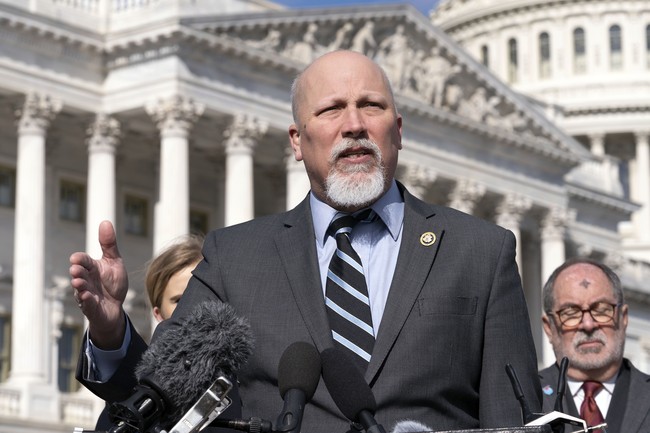
Representative Chip Roy has filed legislation aimed at stopping hostile foreign actors from owning American residential property and certain land, arguing this is a national security and fairness issue as families struggle with housing costs. The bill would bar citizens of designated adversary nations and state sponsors of terrorism from buying homes, and require divestment of qualifying properties within two years if the law passes. It targets foreign-controlled acreage tied to unfriendly interests, highlights concerns about Chinese investment in Texas property, and frames the move as restoring American homes to American families. This article lays out the bill’s basics, the scale of foreign land ownership, the Texas dimensions, and the security rationale behind the proposal.
The bill introduced by Rep. Chip Roy would prohibit foreign adversaries from purchasing homes in the United States and would force divestment of covered residential property within two years of enactment. The measure is focused on nationals from countries of concern and any nations officially designated as state sponsors of terrorism, making clear that ownership by hostile actors is not acceptable. This is positioned as a response to what supporters see as an unfair dynamic where adversarial regimes can acquire stakes in American communities while ordinary families face soaring housing costs. The legislation also mandates that any divested property be sold to U.S. citizens.
Foreign ownership of American land and housing has grown into a politically charged issue, especially among Republicans who tie it to national security and community integrity. Federal data cited in discussions shows millions of acres under foreign ownership and valuations in the tens of billions, which prompts lawmakers to ask whether unfriendly governments should be permitted to hold strategic parcels. Advocates argue that when hostile actors control land near military bases or critical infrastructure, the risk is more than economic. The proposal seeks to remove that risk by legally barring those adversaries from owning residential property in the first place.
At the end of 2024, USDA figures pointed to roughly 46 million acres of agricultural land in foreign hands, with an estimated value exceeding $86 billion. Under the terms Roy’s bill, nearly 338,000 acres tied to unfriendly foreign interests would qualify for divestiture, representing about $1.1 billion in property value. Those are not small numbers, and they feed into the argument that targeted divestment can both improve national security and shift ownership back toward American families and investors. The legislation is tailored to make a legal distinction between benign foreign investment and ownership by actors the U.S. regards as strategic threats.
Texas is a focal point in the debate because it already has a high concentration of foreign-owned land, with some 5.6 million acres reportedly owned by non-citizens. Roy’s home state could see significant effects: the bill’s backers note that about 20 counties might be affected, with roughly 124,000 acres in play for possible divestment under the bill’s criteria. Residential and commercial development parcels are also highlighted, with specific claims that hundreds of acres zoned for those uses are tied to Chinese investors. For Republicans who emphasize securing national assets and protecting local communities, Texas statistics provide a persuasive local case study.
The political argument for the bill goes beyond raw acreage and values to a broader claim about fairness and sovereignty. “American homes belong to American families — not the Chinese Communist Party, foreign Islamists, or our geopolitical foes. While Americans struggle to afford housing, hostile regimes are buying up our land and neighborhoods. This bill slams the door on foreign adversaries owning American housing and forces them to sell what they already control. We’re putting America’s homes back in American hands.” That direct statement encapsulates the bill’s core message and its appeal to voters concerned about both housing affordability and foreign influence.
Security examples cited by supporters include past local moves to block foreign-controlled projects near sensitive sites and legislative scrutiny of foreign land near military installations. State-level interventions have precedent, and Republicans point to those cases as proof that restricting certain foreign investments is both practical and necessary in some circumstances. The proposed federal standard would create a consistent rule across states rather than leaving action to a patchwork of local measures. That consistency is pitched as essential to defending national interests while preserving property markets for Americans.
How much congressional backing Roy’s bill will attract remains uncertain, but its framers expect to rally members who prioritize borders, sovereignty, and national security. The thrust of the proposal is straightforward: protect American neighborhoods from ownership by adversarial nations, require divestiture where appropriate, and ensure that homes end up in civilian American hands. For Republicans focused on protecting families and national assets, the bill is presented as a commonsense step toward reclaiming property and safeguarding communities.
The debate ahead will hinge on legal questions, market impacts, and how broadly the label of “foreign adversary” is applied in practice. Proponents emphasize that the measure targets specific hostile actors and does not aim to close the door on legitimate foreign investment from friendly partners. Whatever the legislative fate of the bill, it has already put the issue of foreign-held housing and land into the spotlight for policymakers and voters concerned about who controls land in America.



Add comment