
The United States’ raid in Venezuela and the capture of Nicolás Maduro has set off a diplomatic firestorm, with China publicly denouncing the action as a blatant use of force. This piece examines the Chinese response, the political context around Maduro’s legitimacy, and what Washington might do next regarding trade and security ties with Caracas. It also considers how this episode fits into broader contests for influence in Latin America and how a Republican administration would approach rebuilding order and protecting American interests.
Nicolás Maduro, long criticized for undermining Venezuela’s democratic institutions, is now facing U.S. charges, and that has triggered predictable international reactions. European capitals voiced concern, but their priorities differ from ours given geography and strategic interests. The core debate here is about sovereignty, legitimacy, and how democracies respond when a regime flagrantly defies its electorate.
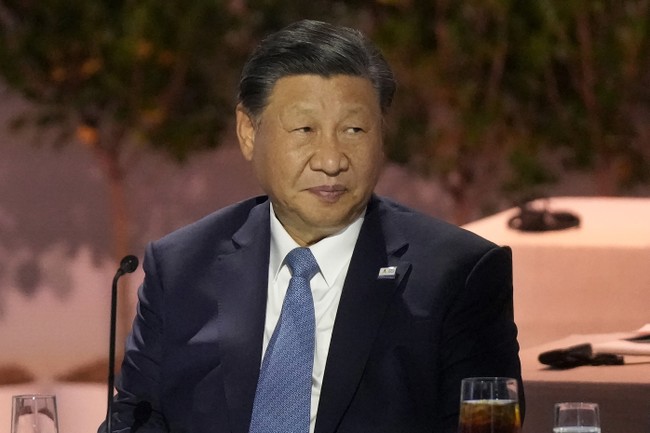
China, which has developed deep economic ties with Venezuela, wasted no time issuing a strong protest after the raid, framing it as a breach of international norms. That reaction is unsurprising: Beijing protects its investments and geopolitical footholds and will loudly object when they are threatened. The Chinese Communist Party’s statement read like a defense of a client state’s security rather than an impartial legal analysis.
Beijing’s statement included the following language verbatim:
China said it’s “deeply shocked” by the US’s military strikes on Venezuela and its capture of President Nicolas Maduro.
China “strongly condemns the US’s blatant use of force against a sovereign state and action against its president,” a Foreign Ministry spokesperson said in a statement late Saturday. “Such hegemonic acts of the US seriously violate international law and Venezuela’s sovereignty, and threaten peace and security in Latin America and the Caribbean region. China firmly opposes it.”
The US strikes and Maduro’s capture came just after he received a high-level Chinese delegation in Caracas on Friday, including Special Representative of the Chinese Government on Latin American Affairs Qiu Xiaoqi.
“We call on the US to abide by international law and the purposes and principles of the UN Charter, and stop violating other countries’ sovereignty and security,” the Chinese ministry said.
It is fair to point out the hypocrisy here. China loudly defends noninterference while building a maritime empire in the South China Sea and extending economic leverage across continents. Beijing’s protection of Maduro looks less like principled defense of sovereignty and more like guarding its strategic investments and supply lines.
Venezuela’s status complicates Beijing’s moral high ground. After the disputed 2024 election, many outside observers considered Maduro’s claim to legitimacy tainted, and opposition leaders have argued that his hold on power defied the clear will of Venezuelans. From a Republican perspective, the United States acted to remove an unrepentant authoritarian who had refused the basics of democratic accountability.
There is also a real security angle. For years Venezuela was a transactional partner, supplying oil and other resources while tolerating illicit flows and harsh repression. A reset means the era of privileged deals for a corrupt regime is over, and any country that hopes to trade with Caracas will have to accept new realities. Beijing will be told plainly that commercial ties must meet transparent, legal standards, not the old backroom arrangements.
Practical diplomacy will follow. Whoever represents the U.S. in Caracas after the raid will need to stabilize a chaotic situation, protect American citizens and interests, and push for legitimate governance structures. That is not the same as ceding influence to China; it is about restoring order so Venezuelans can choose their future without interference from kleptocrats or foreign patrons.
Expect a tough line on trade and security. That means sanctions and enforcement where necessary, and an insistence that no more subsidized tanker shipments or illicit precursor chemicals flow into China’s markets. The message will be simple: legitimate commerce is welcome, but support for stolen elections, narco-trafficking, and repression will not be tolerated.
China’s loud statement should be understood as a defensive reflex, not a law lecture. Beijing will test how far it can push, but the geopolitics are changing now that an illegitimate regime has been removed. The United States, speaking from a Republican worldview, should make clear that power vacuums get filled by legitimate institutions or by chaos, and our policy will favor rebuilding sovereign, accountable governance in Venezuela.
Diplomacy, deterrence, and clear-eyed enforcement of laws governing trade and security will shape the next phase. The region will watch whether Washington pairs muscular action with a steady hand to help Venezuela transition away from kleptocracy and toward stability. .
China’s protest will be noisy, but actions speak louder than rhetoric. The new reality in Caracas creates an opening to push for transparent trade, oversight of sensitive flows, and the restoration of a functioning state that answers to its people rather than foreign patrons.
Any American team on the ground must balance firmness with practical statecraft, encouraging Venezuelans to build institutions that prevent future abuses. Rebuilding trust in the region requires both a willingness to confront malign actors and a plan to help restore civic order and economic normalcy.
Add comment