
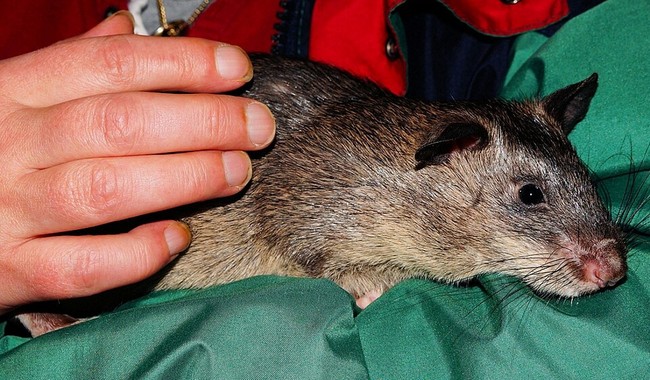
Magawa, the African giant pouched rat who spent years clearing landmines in Cambodia, has been honored with a seven-foot statue after retirement and death; this article covers his life-saving work, the scale of Cambodia’s mine problem, how rats like him help, and why his story matters.
I don’t usually plan to write about critters when national and international headlines loom, but Magawa’s story interrupts that routine in a meaningful way. His career with the demining charity turned an unlikely animal into a public hero and a practical tool for saving lives. The unusual combination of charm and service makes his legacy worth retelling.
Rats rarely get celebrated in human stories, and many people think of them as pests rather than partners in humanitarian work. Magawa changed that perception by sniffing out explosive devices across acres of dangerous terrain. His training and unique biology let him do in minutes what would take humans with detectors days to accomplish.
Magawa was an African giant pouched rat operating in Cambodia, where decades of conflict left huge swaths of land seeded with lethal munitions. He detected more than 100 mines and cleared over 1.5 million square feet during a five-year career, making him one of the most effective animals in that role. After retirement in 2021 and his death in 2022, a seven-foot statue was unveiled as a public tribute to his service.
The Cambodian landmine problem is vast and tragic, the result of decades of war and chaotic battle lines. Millions of mines were laid by various forces, often without maps, and the long-term human toll is severe with tens of thousands of amputees and dozens of new casualties each year. The presence of unexploded ordnance keeps farmland unusable and communities unsafe, stunting recovery and everyday life.
Humanitarian groups and governments have tried many approaches to clear these fields, from mechanical demining to technical surveys. APOPO, the charity that trained Magawa, took a different tack by using the exceptional noses of rats to detect explosives. Because these rats are large enough to carry out searches but light enough not to detonate pressure-triggered devices, they can inspect areas quickly and safely.
Magawa, a rat who gained fame in the country for sniffing out more than 100 mines (more than 1.5 million square feet) in his five-year career — more than any other rat in the country — retired in 2021 and died at age 8 in 2022.
The African giant pouched rat was trained by the Belgian charity APOPO to use his keen sense of smell to sniff out landmines and other explosives.
The numbers behind the contamination are hard to grasp without perspective: huge areas remain dangerous, and clearing them is painstaking work. Estimates describe contaminated zones spanning many hundreds of square kilometers, including both minefields and unexploded ordnance. The scale explains why innovative, scalable techniques matter for returning land to productive, safe use.
Cambodia’s modern history is tangled and brutal, and the violent years under the Khmer Rouge, among other conflicts, left a legacy of buried munitions. Various forces laid mines across borders and battle zones, which later generations inherited. That legacy means farmers, children, and ordinary citizens still face daily risks in places that should be peaceful.
Magawa’s method was straightforward but effective: trained to indicate buried explosives by pawing and sitting near them, he could survey a field far faster than human teams carrying metal detectors. His small size and agility were advantages, and his work enabled people to return to fields and playgrounds they once avoided. The statue recognizes that contribution and keeps his memory visible.
Cambodia still has a vast expanse of landmine and explosive remnants of war (ERW) contaminated areas throughout the country, covering an area of approximately 1,856 km2. This contamination includes 652 km2 of minefields, 1,204 km2 of UXO and cluster submunitions fields (as of Jan. 2024).
Beyond the symbolism, Magawa’s life points to practical benefits: quicker clearance, lower cost, and reduced risk for human deminers. These advantages have real consequences for development, safety, and dignity in affected communities. When technology and animal training meet on-the-ground needs, people’s lives improve in immediate, measurable ways.
During his five-year career, he used his incredible sense of smell to sniff out over 100 landmines and unexploded explosives.
Because he was so light, he could walk across minefields without ever setting them off- doing in 20 minutes what would take a human with a metal detector four days.
Magawa passed away peacefully a few years ago, but the statue unveiled this April serves as a permanent thank-you from a nation.
He saved thousands of lives and allowed farmers to return to their fields and children to play safely.
Rest easy, little hero. The fields are safe because of you. 🕊️❤️
Stories like Magawa’s shift how people think about solutions to brutal, persistent problems. They also remind us that innovation can come from unexpected places and that small actions can have large effects. Honoring those contributions with a statue is more than nostalgia; it’s a reminder that practical compassion can clear a path to normal life.



Add comment