
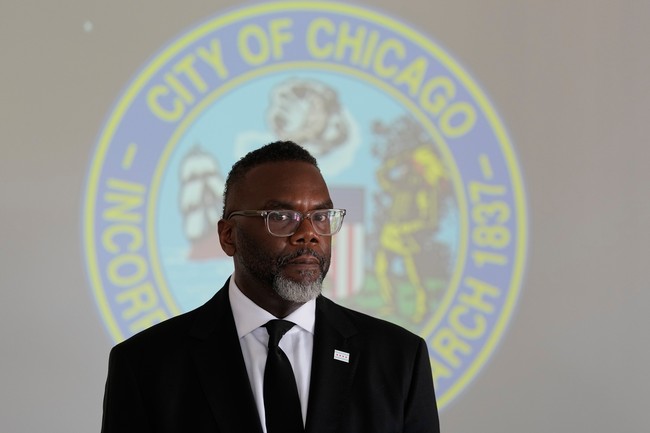
Mayor Brandon Johnson has publicly ruled out school closures, consolidation, and what he calls “privatization,” pitching an expanded community-school model backed by the Chicago Teachers Union and staking out a fight against alternatives like private and charter options while seeking more state money to cover the cost.
Chicago’s mayor stood on a stage flanked by union leaders and announced an end to policies that once led to large-scale school closures. He framed the moment as a hard stop on any return to market-driven or outside-managed school options, casting those approaches as hostile to Chicago families and neighborhoods. The declaration lands in the middle of a brewing mayoral debate over how to manage buildings, budgets, and family choice.
A newly entered mayoral candidate has called attention to the math: the district operates roughly 145 schools in an environment where many campuses have more seats than students. He proposed a community-led review of underused buildings coupled with targeted investments for students and staff instead of unilateral closures. That idea drew a rebuttal from the mayor, who chose to present his policy as a defense of public schools and union-backed models rather than a neutral fiscal exercise.
Johnson’s rhetoric made a point of lumping charter schools, private options, contractors, and other alternatives together under a single label he opposes. He used a phrase that paints any non-CTU-preferred arrangement as part of a punitive model for students and communities. That blanket framing removes nuance about why families pick different schooling options and shifts the discussion into a political contest for control of education policy.
Johnson responded from the stage with CTU President Stacy Davis Gates beside him.
https://x.com/OffThePress1/status/2084291364989112578
The mayor said:
“The days of school closures, consolidation and privatization has ended, officially. And to anyone, billionaire or not, that believes that you can take us back to a model of torment and torture, you got another thing coming.”
He doubled down later in remarks that equated any push for outside options with an intent to harm the public-school system. That framing aligns the mayor firmly with union priorities and narrows the field for policy debate in a city that already struggles with enrollment shifts and budget stress. It also signals political alignment ahead of the next mayoral election.
Private schools, charters, magnets, and selective-enrollment options exist because many parents seek alternatives when neighborhood schools fail to meet needs. Programs that once subsidized access for low-income families helped create more choices for households that wanted them but could not afford tuition. Those mechanisms have since lapsed, and the mayor’s stance makes clear his administration is not prioritizing replacement programs that would expand choice beyond the traditional district model.
The Sustainable Community Schools expansion the mayor announced promises integrated services—academic supports, health care links, and partnerships with community groups—wrapped into neighborhood campuses. That model is popular with union leadership because it preserves district control and staff while offering a fuller set of student services. The promise is appealing in theory, but the reality is that scaling such a model citywide costs real money in a district already short on stable revenue.
Johnson’s plan hinges on finding about $150 million from the state to fund the next phase of expansion, even as city and district leaders warn of a looming fiscal crisis. The governor has publicly said the state cannot afford to send that level of additional funding, and the mayor has redirected questions about financing back toward Springfield. That leaves an unresolved gap between political promises and the practical fiscal choices needed to sustain them.
Critics point out the Chicago Board of Education approved a nearly $10 billion budget that assumes the promised $150 million will arrive, a risky assumption if state leaders stand firm against new spending. Opponents argue the board and CTU-aligned members avoided hard structural choices in favor of a budget that preserves staffing and programs at current levels. Those who favor more fiscal discipline say embracing such optimistic revenue projections is irresponsible during a budget squeeze.
“Instead of adopting the CPS CEO’s proposed budget, which included some staffing cuts, the CTU-linked members jammed through this alternative budget, which avoids any hard choices about structural changes. That’s not leadership. I will work with the board president to advocate for more funding. But we have to start with a more responsible budget. Glittery possible revenue is not responsible.”
The mayor’s posture effectively promises no school will be shuttered and no consolidation will be pursued, while rejecting private options that some parents prefer. That stance keeps political favor with the union but leaves families who want alternatives or more competitive choices with fewer avenues. It also places the city at odds with fiscal reality unless new revenue streams appear.
Parents choosing other schools are making practical decisions based on what serves their children, not on a political philosophy. Labeling those choices as part of a punitive or harmful plan dismisses real concerns families raise about safety, curriculum, and outcomes. The debate now is whether Chicago will prioritize a single system favored by the union or accommodate a broader set of options while facing a tight budgetary picture.

Add comment