
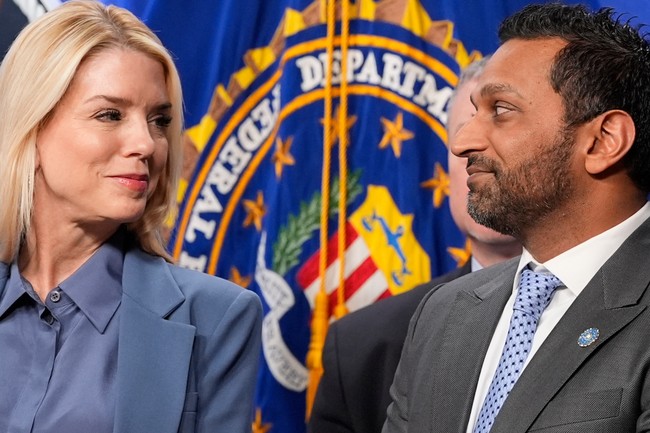
The piece examines Attorney General Pam Bondi’s directive for a nationwide probe into what she calls Obama-Biden “lawfare,” outlines the claims about weaponized government institutions, cites Bondi’s statements on ongoing investigations and the statute of limitations, and warns about the challenges of holding high-level figures accountable in Washington’s entrenched bureaucracy.
From the moment Donald Trump entered the national stage in 2015, many conservatives saw a coordinated effort by Democratic institutions to neutralize him. That perception has hardened into an allegation of institutional lawfare, where investigative and intelligence powers were allegedly used to target political opponents. Attorney General Pam Bondi has publicly asked federal prosecutors to examine the scope and duration of what she labels a systemic pattern of election interference and selective enforcement. Her move signals a formal attempt to treat those allegations as a nationwide, organized problem rather than isolated missteps.
Bondi frames the conduct as more than politics; she calls it an ongoing, organized campaign that may have shielded certain figures from scrutiny while infringing on the civil liberties of others. The claims center on the Obama-Biden era and the aftermath of the Russia collusion narrative, suggesting intelligence and law enforcement instruments were bent to partisan ends. If proven, these are not simple policy disagreements but abuses of power that undermine public trust in key institutions. The political stakes are high because the integrity of investigations matters to both rule of law and fair elections.
Attorney General Pam Bondi told Just the News that she has asked prosecutors to investigate the Obama-Biden era of lawfare as an ongoing election-meddling conspiracy that protected Democrats from criminal investigation and infringed the civil rights of Republicans like President Donald Trump and his supporters.
Recovering from eye surgery, Bondi made the revelation in written answers Sunday to questions submitted by Just the News, signaling she agrees with FBI Director Kash Patel, who earlier this year penned a memo predicating an investigation looking at the weaponization of intelligence of law-enforcement powers dating to the Russia collusion case as an ongoing conspiracy.
Bondi also stresses a legal strategy sometimes used in long-running conspiracies: tying individual acts to a broader enterprise so earlier statutory limits can be avoided. That approach, familiar from prosecutions of mafia and cartel networks, allows prosecutors to charge conduct that might otherwise fall outside the statute of limitations. She told colleagues that U.S. Attorneys and federal agents are actively investigating instances of government weaponization nationwide and described the conduct as a “ten-year stain on the country.” Those are strong words coming from a state attorney general turned national figure in conservative legal circles.
Such an approach allows prosecutors to charge defendants with alleged crimes outside the statute of limitations because they were connected to an ongoing conspiracy, much like those cases brought against the mafia and drug cartels.
“At my direction, our U.S. Attorneys and federal agents are actively investigating instances of government weaponization nationwide,” Bondi said. “This is a ten-year stain on the country committed by high-ranking officials against the American people.
Still, Republicans who welcome the investigation are realistic about the outcome. Washington’s bureaucracy runs deep and many career officials occupy decision-making roles that can blunt or slow inquiries. Even with directives from a politically sympathetic attorney general, much depends on prosecutors, inspectors general, and judges who are often insulated from immediate political control. That practical reality tempers hopes for dramatic, headline-grabbing consequences at the highest levels.
Conservative readers will note the frustration: if there was coordinated lawfare, it would explain why certain investigations into Democratic figures drew less scrutiny than those aimed at Republicans. The public wants accountability, but accountability is a process that requires patience, evidence, and legal rigor. Mid-level officials, some contractors, and perhaps a small number of senior aides could find themselves under serious legal pressure, but the path to prosecuting former presidents or living ex-presidents remains narrow and politically fraught.
The broader concern is institutional: if law enforcement and intelligence tools are perceived as partisan weapons, citizens lose faith in impartial administration of justice. Restoring trust will mean transparent, evidence-driven investigations and concrete reforms that limit politicized decision-making. Republicans will argue that confronting these alleged abuses is essential to preserving constitutional safeguards and ensuring fair treatment across party lines.
There is also a cultural dimension in play. For years, Washington tolerated informal understandings and mutual conveniences that kept scandals contained. Breaking that pattern will unsettle many who prefer stability over upheaval. Still, advocates for inquiry insist that the rule of law cannot be sacrificed for the sake of comfort, and they want investigators to follow the facts wherever they lead, even when the result is uncomfortable for entrenched interests.
The story matters because it raises fundamental questions about how power is used and who gets to police the police. Bondi’s directive is a political and legal opening salvo, but the real test will be what career prosecutors and independent investigators uncover and how they act on it. That process will shape both legal outcomes and the political narrative heading into future races.

More Window Dressing Horse and Pony Show Psyops!